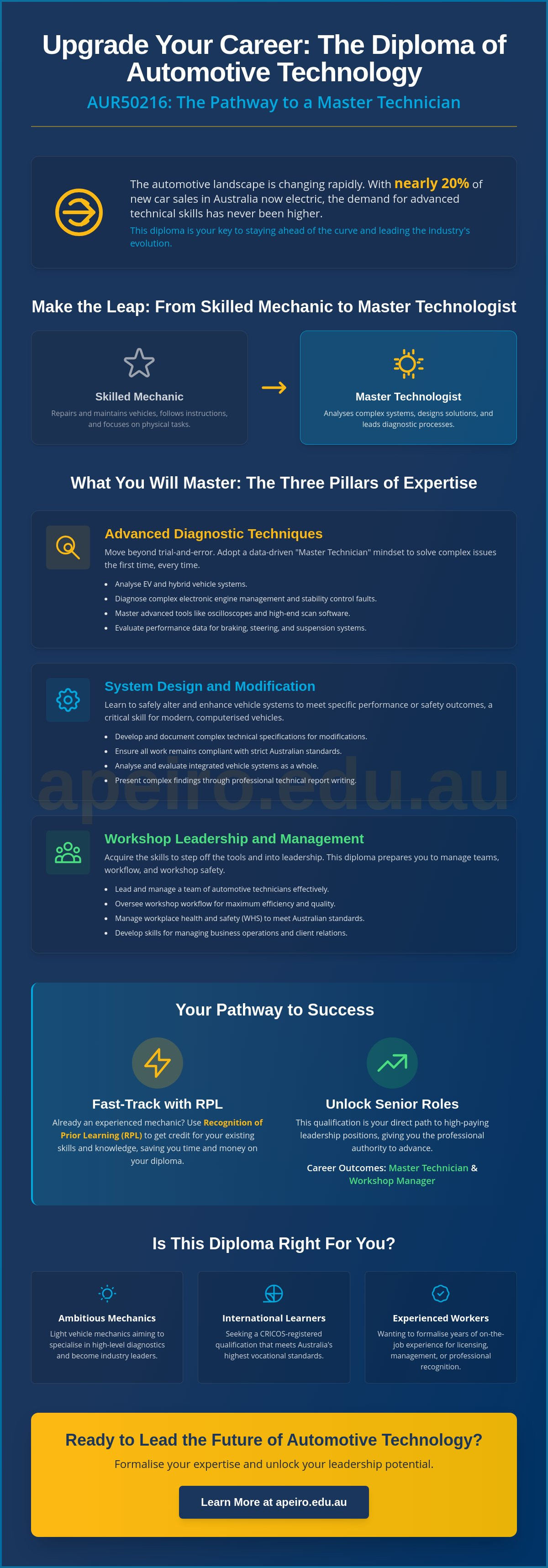
Did you know that electric vehicles now account for nearly 20% of all new car sales in Australia? It's a massive shift that's leaving many talented mechanics feeling like they're falling behind the technical curve. If you're looking to stay ahead, the Diploma of Automotive Technology is the key to moving beyond basic repairs. You've spent years on the tools, yet the leap to diagnosing complex 2026 vehicle systems can feel intimidating. We understand that frustration. You want to move beyond entry-level roles and finally be recognised for the expert you truly are.
This AUR50216 qualification transforms skilled mechanics into master technicians and workshop leaders. It's designed to help you master advanced diagnostics and system modifications while formalising the years of experience you already have. In this guide, we'll break down the RPL process for experienced workers, explore the latest industry trends, and show you exactly how this course prepares you for the high-paying leadership roles of the future.
Key Takeaways
- Learn how to transition from simply repairing vehicles to analysing and designing complex automotive systems for the 2026 market.
- Master the data-driven diagnostic techniques required to adopt a "Master Technician" mindset and eliminate inefficient trial-and-error work.
- Discover how to use Recognition of Prior Learning (RPL) to fast-track your Diploma of Automotive Technology by valuing your existing trade experience.
- Identify the clear career pathways leading to senior roles like Workshop Manager and the significant salary growth these positions offer.
- Find out how to choose a training provider that offers the right blend of professional expertise and student-centred support for your career goals.
What is the AUR50216 Diploma of Automotive Technology?
The AUR50216 Diploma of Automotive Technology is the premier advanced vocational qualification for the Australian automotive industry. It sits at Level 5 of the Australian Qualifications Framework (AQF), marking it as a significant step up from the standard trade certificate. While a Certificate III teaches you how to repair and maintain vehicles, this diploma focuses on the high-level analysis and design of complex systems. It's the difference between a mechanic who follows instructions and a technologist who creates solutions.
In the fast-moving world of modern transport, simply knowing how to swing a spanner isn't enough. You need to understand the deeper principles of Automotive Engineering Overview to stay relevant. This qualification is nationally recognised, meaning your skills will be valued by employers across Australia. It's a professional badge of honour that proves you have the technical depth to handle the most challenging diagnostic tasks in a modern workshop.
The Core Philosophy: Diagnose, Analyse, Evaluate
The heart of this course is a shift in mindset. Instead of looking at a car as a collection of separate parts, you'll learn to see it as a series of integrated systems. You'll move beyond simple parts replacement to a process of deep evaluation. This includes mastering the art of technical report writing and learning how to present complex findings to stakeholders or workshop owners. It's about data and logic. You'll also explore the "modify" aspect of the trade, where you'll learn to safely alter vehicle systems to meet specific performance or safety outcomes. This is a critical skill as vehicles become more computerised and technically demanding.
Who Should Enrol in 2026?
This program is perfect for ambitious light vehicle mechanics who want to specialise in high-level diagnostics. It's also a popular choice for international learners seeking a CRICOS-registered pathway that meets strict Australian standards. If you're an experienced worker who has been on the tools for years, you can use this qualification to formalise your skills for licensing or management positions. We specifically support these experts through our Trade Pathways for Experienced Workers (TPEW) program. Whether you're aiming to become a Master Technician or a Workshop Manager, this diploma provides the professional authority you need to succeed.
Key Skills and Units: What You Will Master
The Diploma of Automotive Technology isn't just about learning more of the same. It's a complete shift in how you approach a vehicle. While a Certificate III focuses on the physical repair, the Diploma curriculum is built around three core pillars: technical diagnostics, business management, and system design. You can find the official AUR50216 qualification details on the national register, which outline the 12 units required to reach this level. These units are specifically curated to bridge the gap between a standard mechanic and a specialist technologist.
One of the most significant changes you'll experience is adopting the "Master Technician" mindset. This means moving away from the costly and frustrating trial-and-error approach to parts replacement. Instead, you'll use data and logic to find the root cause of a problem. You'll also take on more responsibility for workplace health and safety (WHS). At this level, it's about managing the safety of your whole team and ensuring the workshop meets strict Australian standards. You'll master the use of advanced diagnostic tools and scanning software that are becoming standard in 2026 workshops.
Advanced Diagnostic Techniques
In 2026, being a top-tier technician means being comfortable with electric vehicle (EV) and hybrid system evaluation. You'll learn to analyse complex faults in electronic engine management and stability control systems. This involves mastering advanced tools like oscilloscopes and high-end scan software to track down intermittent faults that standard tools might miss. You'll also learn to evaluate performance in braking, steering, and suspension systems through rigorous data analysis. It's about being the person the rest of the workshop turns to when a vehicle presents a technical puzzle that others can't solve.
Automotive Business and Management Units
Advancing your trade also means learning how a workshop actually runs. You'll study how to develop and document complex technical specifications for vehicle modifications. This is crucial for staying compliant with Australian legal standards and safety regulations. You'll also gain the skills to lead a team of technicians and manage workshop workflow effectively. This management training is what allows you to step off the floor and into a leadership role where you're evaluating systems rather than just fixing them.
If you're already an experienced mechanic, you might be closer to these outcomes than you think. You can explore how your current skills count toward your qualification through our Trade Pathways for Experienced Workers (TPEW) program. It's a supportive way to formalise what you already know while filling in the gaps needed for 2026 technology.
Pathways to the Diploma: Cert III vs. RPL
The journey to earning a Diploma of Automotive Technology isn't a one-size-fits-all process. Depending on where you are in your career, you might choose a traditional classroom approach or a more flexible, experience-based route. Most technicians begin their journey by completing the AUR30620 Certificate III in Light Vehicle Mechanical Technology. This provides the essential foundation. From there, many choose to "stack" their qualifications, moving through a Certificate IV before reaching the Diploma level. This stacking approach builds a comprehensive professional profile that shows employers you're committed to lifelong learning and technical excellence.
Choosing the right path depends on your current circumstances and your long-term goals. Whether you're an international student looking for a solid start in Australia or a local veteran wanting to move into management, there's a pathway designed to support your growth. We believe in making education attainable, not intimidating, by offering options that respect your time and your existing talents.
The Traditional Academic Pathway
A structured campus-based pathway is often the best fit for international students or those who are new to the Australian regulatory environment. This model focuses on steady, mentor-led learning within a simulated workshop. You'll get the chance to practice complex diagnostics in a safe, controlled setting before taking those skills into mandatory work placements. The real value here is the networking. Studying alongside other ambitious mechanics allows you to build professional connections that can last an entire career. It's an inclusive environment where you can ask questions and receive immediate, expert feedback.
The RPL and TPEW Shortcut
If you've already spent years on the tools, you shouldn't have to sit through training for things you already do every day. This is where Recognition of Prior Learning (RPL) comes in. Through our Trade Pathways for Experienced Workers (TPEW) program, we help you turn your existing skills into a formal qualification. You'll need to provide evidence of your expertise, such as employer references, photos or videos of your work, and participating in technical interviews. It's a respectful way to acknowledge your hard-earned experience without making you repeat redundant units. For a deeper dive into this process, check out our sibling article, Trade Pathways for Experienced Workers Australia: The 2026 Guide. We're here to act as your partner, ensuring your transition to a higher-level role is as smooth as possible.
Career Outcomes: Life After the Diploma
Completing the Diploma of Automotive Technology marks the moment you officially transition from being a mechanic to becoming an Automotive Technologist. It's a significant professional shift. While a mechanic is primarily focused on the physical repair and maintenance of vehicles, a technologist is the person who understands the "why" behind the "how". You'll find yourself moving away from the daily grind of basic servicing and into a world where your brain is your most valuable tool. This qualification is your ticket to the top tier of the industry, where the work is cleaner, the challenges are more intellectual, and the rewards are far greater.
The financial benefits are a major drawcard. In Australia, while a standard technician might earn between $80,000 and $90,000, those with advanced diagnostic or management skills can see their earning potential climb well over $100,000, especially in high-demand regions. You're also no longer limited to the workshop floor. Many graduates move into corporate roles, becoming Technical Trainers for major brands or Insurance Assessors who evaluate complex claims. If you've ever dreamt of being your own boss, this diploma provides the technical and business foundation needed to open a specialised workshop that handles the high-end diagnostic work other shops can't manage.
Master Technician and Diagnostic Specialist
As a diagnostic specialist, you'll be the one solving the problems that leave junior mechanics scratching their heads. You'll focus on complex "limp mode" issues, intricate electrical faults, and advanced driver-assistance systems (ADAS). In large dealerships or fleet centres, you'll act as the technical "go-to" person, supervising the most difficult jobs. This role is a natural progression for those who have already completed the AUR40216: The Master Technician Pathway. It's about being the expert in the room, using logic and data to keep modern fleets on the road.
Workshop Management and Leadership
For those who want to lead, the diploma prepares you for the role of Service Manager. This position is the heartbeat of a modern Australian dealership. You'll manage staff, handle customer relations, and keep a close eye on the financial health of the business. It's a role that requires a balance of technical authority and people skills. You'll also be responsible for ensuring the workshop remains compliant with strict Australian environmental regulations and safety standards. It's a career path that offers long-term stability and the chance to shape the future of your team.
Because the AUR50216 is a nationally recognised qualification, it also offers incredible global mobility. Your skills will be respected in workshops around the world, giving you the freedom to take your career wherever you choose. If you're ready to stop just "doing" and start leading, you can explore our Trade Pathways for Experienced Workers to see how your current experience can fast-track your journey to these senior roles.
Choosing the Right RTO for Your Diploma
Selecting the right Registered Training Organisation (RTO) is the final, crucial step in your professional progression. It isn't just about finding a classroom; it's about finding a partner that understands the specific challenges you face as a technician in 2026. Whether you're a local mechanic looking to move up or an international learner building a life in Australia, your RTO should offer a blend of professional authority and genuine, student-centred support. This balance ensures you gain the technical depth required for the Diploma of Automotive Technology while feeling encouraged every step of the way.
For international students, the choice is even more significant. You must ensure your provider is CRICOS-registered to maintain your visa compliance. A good RTO acts as a bridge, helping you adapt to Australian industry standards while recognising the global diversity of the automotive trade. You aren't just a number in a system. You're a future leader in a critical industry, and your training environment should reflect that level of respect and investment.
What to Look for in a Training Provider
When you're evaluating different providers, look beyond the brochures. You need access to industry-aligned facilities and modern diagnostic software that reflects what you'll actually use in a 2026 workshop. The trainers should be industry veterans with real-world experience in Australian service centres. They should be mentors who can guide you through complex logic, not just read from a textbook. Additionally, look for an RTO that makes the administrative side of things easy. This includes having clear, supportive processes for RPL and credit transfers from your previous studies. It should feel like a logical progression, not a series of hurdles.
The Apeiro Advantage
At Apeiro Institute, we've built a welcoming community that supports students from over 38 different nationalities. We focus on practical vocational outcomes because we know that "passing the test" isn't enough in the real world. You need the confidence to lead a team and solve the technical puzzles that others can't. We provide direct support for International Student Vocational Programs, ensuring you have a clear, compliant pathway to success. Our goal is to make your transition into a senior role as smooth and rewarding as possible. If you're ready to take that next step, enquire about the AUR50216 Diploma of Automotive Technology today and let's start planning your future together.
Drive Your Career Forward in 2026
The Australian automotive landscape is evolving rapidly, and staying on the tools alone isn't enough to secure your long-term future. By earning your Diploma of Automotive Technology, you move beyond basic repairs into the high-level analysis and leadership roles that the industry desperately needs. You've seen how this qualification bridges the gap between being a mechanic and becoming a true technologist, whether you're mastering complex diagnostics or stepping into workshop management.
At Apeiro Institute, we're committed to your growth as a professional. As a Nationally Recognised RTO (45394) and CRICOS Provider (03703M), we offer the expert mentoring and industry-expert trainers you need to succeed. Our team has real workshop experience, so we understand exactly what it takes to thrive in a modern service centre. Whether you're an international student or an experienced local trade veteran, we're here to help you formalise your skills and unlock new salary potential.
Don't let the technical shift leave you behind. Start Your Journey to Becoming a Master Tech – Enquire at Apeiro Institute today. We're ready to partner with you on this exciting next chapter of your career.
Frequently Asked Questions
What is the difference between a Certificate IV and a Diploma of Automotive Technology?
The primary difference lies in the shift from technical diagnosis to system evaluation and management. While a Certificate IV focuses on mastering complex mechanical and electrical diagnostics, the Diploma of Automotive Technology prepares you to design modifications, evaluate workshop performance, and lead technical teams. It's the professional step from being a senior technician to becoming a workshop manager or automotive technologist.
Can I get a Diploma of Automotive Technology through RPL if I have 10 years of experience?
Yes, your decade of experience on the tools is incredibly valuable and can certainly be used for Recognition of Prior Learning (RPL). We believe in respecting the expertise you've already built. You'll simply need to provide evidence such as employer references, technical logs, and photos of your work to prove you meet the competency standards for specific units.
Do I need to be currently working in a workshop to enrol in this course?
You don't strictly need to be employed in a workshop to enrol, but you will need access to a workshop environment to complete your practical assessments. Most students find that being active in the trade allows them to apply new diagnostic logic to real-world problems immediately. If you aren't currently employed, we can discuss how work placements can satisfy these requirements.
Is the AUR50216 qualification recognised internationally?
The Diploma of Automotive Technology is part of the Australian Qualifications Framework (AQF), which is highly regarded by employers worldwide. This national recognition means your advanced skills in system analysis and management are portable. Whether you're looking to work in Australia or take your career overseas, this qualification serves as a respected benchmark of technical excellence.
How long does it typically take to complete the Diploma of Automotive Technology?
Most students complete the program within 26 to 52 weeks depending on their study load and chosen pathway. If you're an experienced mechanic using the RPL pathway, you might finish much sooner by skipping units you've already mastered. The duration is designed to be flexible, allowing you to balance your professional development with your existing work commitments.
What are the English language requirements for international students?
International students generally need to demonstrate an English proficiency level equivalent to an IELTS score of 5.5. This ensures you can successfully navigate the technical documentation, report writing, and management units included in the curriculum. We provide a supportive environment to help all our students, regardless of their background, reach these professional standards.
Are there government-funded spots available for this automotive diploma?
Government funding is often available through state-based initiatives such as Smart & Skilled in New South Wales. These programs are designed to reduce the cost of training for eligible students looking to upskill in priority industries. Eligibility usually depends on your residency and current qualification level, so we recommend checking the latest criteria for your specific state.
Does the Diploma cover electric (EV) and hybrid vehicle systems?
Yes, the latest versions of the diploma include units specifically focused on evaluating and diagnosing hybrid and electric vehicle systems. With EV sales in Australia growing by 114.3% in the first part of 2026, these skills are no longer optional. You'll learn the safety protocols and technical logic required to work on the high-voltage systems found in modern transport.
Disclaimer
The information provided on this blog is for general informational and educational purposes only. While every effort is made to ensure the accuracy and reliability of the content, the author makes no representations or warranties of any kind, express or implied, about the completeness, accuracy, suitability, or availability of the information contained on this blog.
The views and opinions expressed in blog posts are those of the individual author and do not necessarily reflect the official policy or position of any organization, company, or employer.
This blog may contain links to external websites or third-party content. These links are provided for convenience only, and the author has no control over and assumes no responsibility for the content, privacy policies, or practices of any third-party sites.
Nothing on this blog constitutes professional advice (legal, financial, medical, or otherwise). Readers are encouraged to seek appropriate professional guidance before making any decisions based on the information provided here.
By using this blog, you acknowledge that any reliance on the information is at your own risk.


