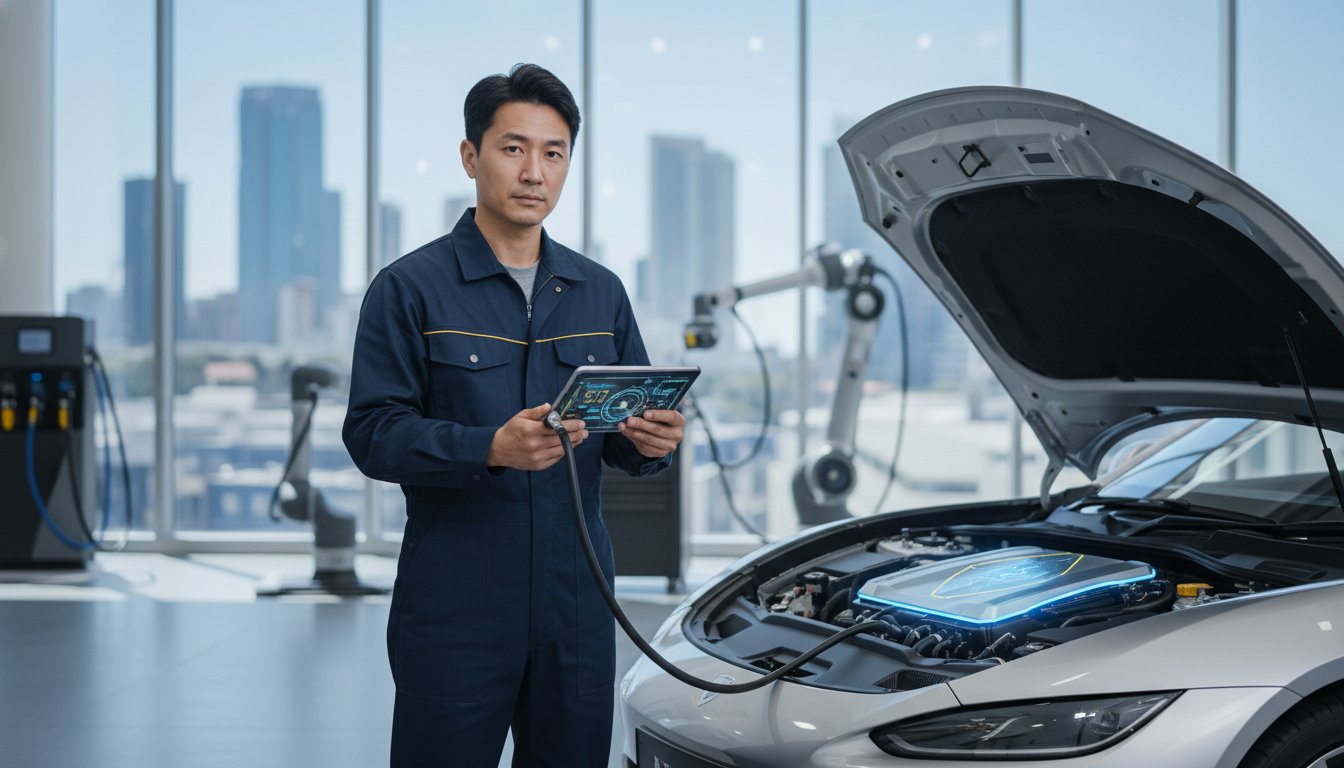
Did you know that battery electric vehicles accounted for a record 16.46% of all new car sales in Australia in April 2026? If you are still spending your days on basic logbook servicing while these complex machines roll into the workshop, it is easy to feel like the industry is passing you by. You might have years of experience under the bonnet, yet without formal recognition, your pay growth often remains stuck. It is a common frustration to feel overwhelmed by modern electronics or feel your hard-earned skills are undervalued in a rapidly changing market.
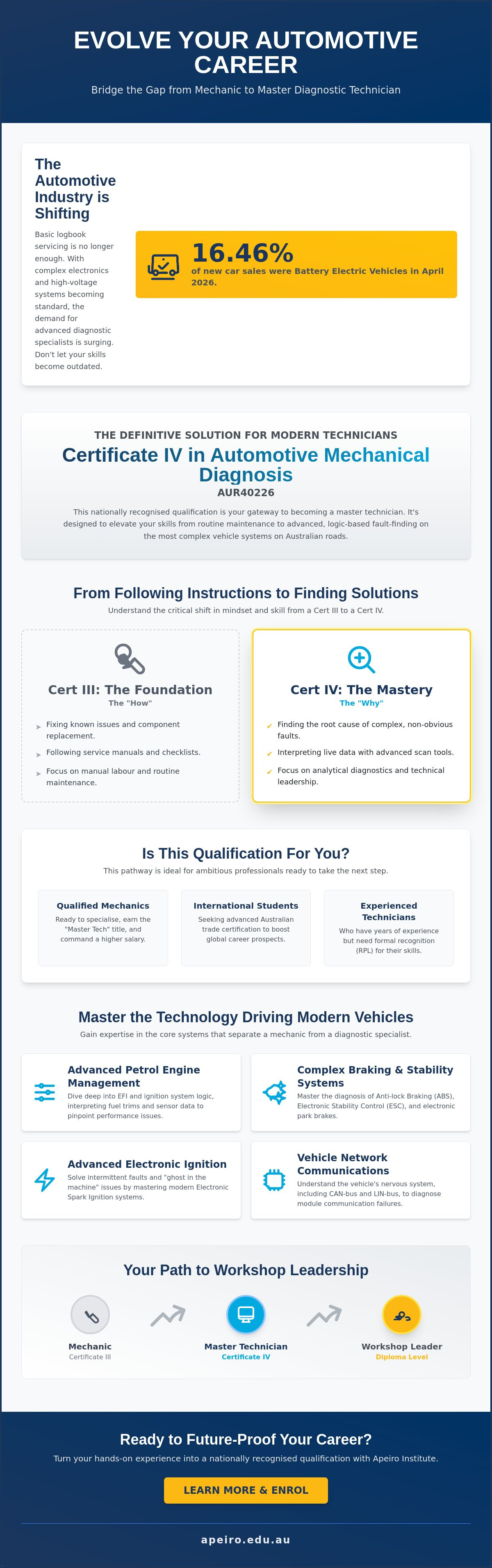
We understand that stepping up to the next level can feel daunting, but gaining your Certificate IV automotive mechanical diagnosis is the definitive way to secure your future. This qualification, which was updated to the AUR40226 standard in March 2026, acts as your gateway to master technician status and the higher hourly rates that come with it. In this article, we will explore the industry shift toward high-voltage hybrid and electric vehicle units, the power of advanced diagnostic logic, and how you can use Recognition of Prior Learning (RPL) to turn your existing expertise into a nationally recognised credential.
Key Takeaways
- Learn how to bridge the gap between basic servicing and master technician status with a post-trade qualification designed for modern workshops.
- Master the logic behind advanced petrol engine management and complex electronic braking systems through the Certificate IV automotive mechanical diagnosis.
- Discover how to command a higher hourly rate and future-proof your skills for the growing Australian market of electric and hybrid vehicles.
- Explore flexible study pathways including Recognition of Prior Learning (RPL), which allows you to turn your years of hands-on experience into a formal qualification.
- Understand the Apeiro Advantage and how industry-focused training from a premier RTO can help you achieve your career goals with confidence.
What is the AUR40216 Certificate IV in Automotive Mechanical Diagnosis?
The AUR40216 (and the updated AUR40226) Certificate IV in Automotive Mechanical Diagnosis is a specialised post-trade qualification. It is built for technicians who are ready to move beyond routine maintenance and master the intricacies of modern vehicle systems. While a standard apprenticeship provides the foundation, this course focuses on advanced diagnostic mastery. It serves as the essential bridge between your initial Certificate III in Light Vehicle Mechanical Technology and the higher-level Diploma of Automotive Technology.
This qualification represents a significant shift in your professional mindset. Instead of simple component replacement, you focus on "logic-based" repair. You aren't just following a checklist; you're interpreting live data and understanding complex system interactions. Because it is nationally recognised under the Australian Qualifications Framework (AQF), your expertise is respected in workshops right across Australia. It’s the industry standard for those who want to be known as the best in the business.
The Difference Between Cert III and Cert IV
The main difference comes down to one question: "Why did it fail?" A Certificate III teaches you how to fix a known issue. However, the Certificate IV automotive mechanical diagnosis teaches you how to find the root cause of a fault that isn't obvious. You move away from heavy manual labour toward analytical diagnostic work. It's about using advanced scan tools and oscilloscopes to see what others miss. This transition often leads to shop-floor leadership. You become the person other mechanics turn to when they're stuck, taking on a technical mentoring role that's vital for the survival of modern workshops.
Who is this qualification for?
We've designed this pathway to support a diverse range of ambitious professionals. It is the ideal fit for:
- Qualified mechanics who want to specialise in high-tech diagnostics and finally earn the "Master Tech" label.
- International students aiming for advanced trade certification within the Australian auto mechanic profession to boost their career prospects and global employability.
- Experienced workers who have spent years "on the tools" but lack the formal paperwork to prove their diagnostic mastery.
Whether you're looking to command a higher salary or simply want to stop feeling frustrated by modern vehicle electronics, this qualification provides the security and confidence you need to thrive. It's about turning your existing passion for cars into a high-level technical career.
Master the Tech: Advanced Skills and Units Covered
Modern vehicles are essentially high-powered computers on wheels. Gone are the days when a simple socket set was enough to solve every problem. To stay relevant, you need to understand the complex interplay between mechanical components and digital control units. The Certificate IV automotive mechanical diagnosis provides the technical depth required to decipher these systems. You can find the official course details online to see the full list of competencies that turn a standard mechanic into a diagnostic specialist.
One of the most critical areas you'll explore is Advanced Petrol Engine Management. This isn't just about changing spark plugs; it's a deep dive into Electronic Fuel Injection (EFI) and ignition system logic. You'll learn to interpret fuel trims and sensor data to pinpoint why an engine is underperforming. Similarly, the course covers complex braking systems. You will master the diagnosis of Anti-lock Braking Systems (ABS), Electronic Stability Control (ESC), and electronic park brakes. These systems are now standard, and understanding their electronic "brain" is vital for safety and performance.
Modern ignition systems often feel like a "ghost in the machine." Through this qualification, you'll master Electronic Spark Ignition to solve intermittent faults that leave others scratching their heads. You also gain a thorough understanding of Network Communications, including CAN-bus, LIN-bus, and vehicle multiplexing. This is the nervous system of the car. When a module stops talking to the rest of the vehicle, you'll have the skills to find the break in communication.
Core vs Elective Units: Tailoring Your Expertise
Your journey begins with mandatory core units focused on implementing safe working practices. Safety is paramount when dealing with high-pressure systems and advanced electronics. Beyond the basics, you have the flexibility to select electives that match modern workshop demands. Many students now choose units focused on hybrid and electric vehicle systems. This choice directly influences your future specialist status. If you want to lead the way in new tech, enrolling in a forward-thinking program is your best first step.
The Tools of the Trade in 2026
Diagnostic work in 2026 requires a sophisticated toolkit. You'll move far beyond basic OBD-II scan tools. The course introduces you to advanced oscilloscopes that allow you to see electrical signals in real-time. You will also use thermal imaging to find parasitic draws or overheating components and pressure transducers for non-invasive engine testing. The AUR40216 teaches you how to use specialised diagnostic software to interpret live data streams and identify patterns that indicate a failing component before it breaks.
Career Progression: From Mechanic to Master Diagnostic Technician
Moving beyond basic servicing isn't just about technical skill; it's a strategic career move. Diagnostic specialists command what many in the industry call the "Master Tech" premium. They are often the highest-paid members of the floor staff because they solve the high-stakes problems that keep vehicles off the road for weeks. While a general mechanic handles the bulk of routine maintenance, the specialist is the one who handles the complex troubleshooting that others find intimidating.
This expertise is your best insurance against a changing market. As we saw with the record-breaking sales of electric vehicles in early 2026, the mechanical side of cars is evolving. Diagnostic skills are perfectly transferable to the coming wave of Electric Vehicles (EVs) and Hydrogen fuel cell technology. You're no longer just a mechanic; you're a data analyst for high-tech machines. This shift ensures your skills remain in high demand regardless of what is under the bonnet.
This industry-wide shift also impacts how new motorists learn to drive globally; for example, specialist schools like Brinks Køreskole provide the necessary training for those operating modern automatic and electric vehicles.
Industry Demand for Diagnostic Specialists
Dealerships and prestige workshops across Australia are currently facing a critical shortage of technicians who can "read a circuit" rather than just "read a code." A basic scan tool might point to a faulty sensor, but a diagnostic expert knows how to verify if the issue is the sensor, the wiring, or the control module itself. By reducing "comebacks" and improving workshop efficiency, these technicians become indispensable assets to any business. Holding a AUR40216 Certificate IV in Automotive Mechanical Diagnosis proves to employers that you have the analytical mindset and formal training they are looking for.
Pathways to the Diploma of Automotive Technology
For those who want to reach the very top of the Certificate IV automotive mechanical diagnosis provides the perfect foundation. It acts as the direct stepping stone to the AUR50216 Diploma of Automotive Technology. This advanced pathway can lead to corporate roles within major automotive brands, such as technical training, field engineering, or regional service management. You'll develop the business acumen to complement your technical brilliance, ensuring you aren't just working in the industry, but leading it.
This qualification also opens doors to leadership on the workshop floor. Many graduates find themselves naturally progressing into roles such as:
- Workshop Foreman: Overseeing the technical quality of all repairs.
- Service Manager: Bridging the gap between customers and the workshop team.
- Independent Shop Owner: Having the technical confidence to run a successful diagnostic-led business.
Whether you want to climb the corporate ladder or build your own independent brand, this qualification gives you the authority to make it happen. It's about taking control of your professional journey and being recognised for the expert you are.
Choosing Your Pathway: RPL, Apprenticeships, and Funding
Deciding to advance your career is a big step. Finding the right way to study shouldn't be. Whether you are an experienced local mechanic or an international student, several pathways lead to the Certificate IV automotive mechanical diagnosis. The best route for you depends on your current workload, your location, and your previous experience on the workshop floor. Follow these steps to map out your journey.
- Step 1: Assess your current experience against the unit requirements. Look at the skills you already use daily, like advanced EFI tuning or ABS troubleshooting.
- Step 2: Choose your delivery mode. You might prefer on-campus learning, workplace-based training, or Recognition of Prior Learning (RPL).
- Step 3: Check for government funding eligibility. In 2026, programs like NSW Smart and Skilled offer significant support for eligible learners.
- Step 4: Gather your evidence if you're pursuing RPL. This includes videos of you performing tasks, job cards, and references from your employer.
- Step 5: Enrol with a CRICOS-registered RTO if you are an international student. This ensures your qualification meets all Australian visa and educational standards.
Recognition of Prior Learning (RPL) for Experienced Mechanics
Many "old school" mechanics have the skills of a master technician but lack the formal paperwork. If this sounds like you, RPL is the fastest way to get certified. You don't need to spend months in a classroom learning things you already do every day. Instead, you provide evidence of your expertise. This process turns your years of "on-the-tool" history into a nationally recognised trade qualification. It is a practical solution for busy professionals who can't afford to take time away from the workshop. You can start this process today by checking our Trade Pathways for Experienced Workers.
Government Funding and Support (NSW Focus)
Upskilling doesn't always have to be a major financial burden. In New South Wales, the Smart and Skilled program provides subsidised training for apprentices and trainees. For 2026, there are various fee-free training options available for eligible NSW learners in high-demand trade sectors. Employers also benefit from these funded pathways. By upskilling current staff, workshops improve their overall efficiency and reduce the need for external hires. It's a win-win for the business and the individual. If you're unsure about your eligibility, it's a good idea to check the current NSW government criteria for vocational training subsidies.
Your path to becoming a diagnostic specialist is unique. By choosing the right delivery method and looking into available funding, you can reach your goals without unnecessary stress. It's about finding the balance that works for your life and your workshop.
Why Study Your Certificate IV with Apeiro Institute?
Choosing where to study is just as important as the qualification itself. At Apeiro Institute, we don't just provide a certificate; we offer a bridge to your next professional milestone. As a premier Registered Training Organisation (RTO 45394) and CRICOS Provider (03703M), we maintain the highest standards of automotive education. Our approach is built on the "Apeiro Advantage," which means every unit we teach is designed for practical, real-world workshop outcomes. We focus on the skills you actually need to solve complex problems on the shop floor.
You'll find a supportive environment here that feels different from cold, institutional settings. Our trainers are genuine automotive experts who have spent years in the trade. They act as empowering mentors, guiding you through the nuances of the Certificate IV automotive mechanical diagnosis with patience and clarity. Whether you are navigating the complexities of CAN-bus systems or mastering advanced engine management, our team is there to ensure you feel confident and secure in your learning. We also specialise in Trade Pathways for Experienced Workers (TPEW), providing the flexibility you need to balance your existing career with your studies.
A Global Community of Learners
When you join Apeiro, you become part of a welcoming, community-focused outlook. We are proud to host a diverse student body representing over 38 nationalities across our national campuses. This creates a rich learning environment where you can build a professional network that spans the globe. For our international students, we provide tailored support to help you navigate the Australian automotive industry with ease. We understand the unique challenges of moving to a new country to study, and we're here to make that transition as smooth as possible. It's about combining local reliability with high-level expertise.
Ready to Level Up Your Career?
Taking the first step toward becoming a Master Diagnostic Technician is easier than you think. Our student support team is ready to help you start your application process today. If you have years of experience but no formal paperwork, we encourage you to contact us for a free RPL pre-assessment. This simple conversation can clarify exactly how your existing skills align with the current national standards. Don't let your career stay stuck in basic servicing when you have the potential to lead the workshop.
Your future in the automotive industry is waiting. We are here to partner with you in your success and provide the expert guidance you need to reach your goals. Take that first step toward professional mastery and secure your place in the modern workshop.
Take the Next Step Toward Technical Mastery
The automotive industry isn't waiting for anyone. With the rapid rise of electric vehicles and complex network communications, the gap between a general mechanic and a master technician is widening every day. By mastering advanced diagnostic logic and the latest scan tool technology, you don't just keep up with the market; you lead it. You've seen how this qualification can boost your earning potential and provide the formal recognition your years of experience deserve.
At Apeiro Institute, we're dedicated to helping you bridge that gap. As a Nationally Recognised RTO (45394) and CRICOS Provider (03703M), we specialise in Trade Pathways for Experienced Workers (TPEW) to ensure your transition is as smooth as possible. Gaining your Certificate IV automotive mechanical diagnosis is more than just a box-ticking exercise; it's a commitment to your long-term success. It's time to stop feeling limited by basic servicing and start commanding the respect of a specialist.
Ready to elevate your career? Get Certified: Explore Trade Pathways at Apeiro Institute. We're here to support you every step of the way as you build a future you can be proud of.
Frequently Asked Questions
How long does it take to complete the Certificate IV in Automotive Mechanical Diagnosis?
The course is typically delivered over a period of 26 to 39 weeks. This timeframe depends on whether you choose full-time on-campus study or a workplace-based arrangement. If you are an experienced professional, the Recognition of Prior Learning (RPL) process can often lead to a much faster result by assessing the skills you already use daily.
Can I get my Certificate IV through RPL if I have years of experience?
You can definitely use Recognition of Prior Learning (RPL) to gain your Certificate IV automotive mechanical diagnosis. This is the ideal pathway for "old school" mechanics who have mastered advanced systems but don't have the formal paperwork. You'll simply need to provide evidence such as job cards, photos, and employer references to prove your technical competency.
What is the difference between a mechanic and a diagnostic technician?
A mechanic generally focuses on routine servicing and the straightforward replacement of worn parts. In contrast, a diagnostic technician uses logic-based repair strategies to find the root cause of complex electrical or mechanical faults. They use advanced tools like oscilloscopes and thermal imagers to interpret live data and solve intermittent issues that others find overwhelming.
Is the AUR40216 qualification nationally recognised across Australia?
Yes, this qualification is nationally recognised under the Australian Qualifications Framework (AQF). While the AUR40216 was superseded by the AUR40226 in March 2026, both versions are respected by employers in every state and territory. This means your credential remains valid and highly valued whether you are working in Perth, Sydney, or anywhere else in the country.
Are there government-funded options for this automotive course in NSW?
There are government-funded options available through the NSW Smart and Skilled program for eligible learners. This initiative can significantly reduce the costs of upskilling, making it more attainable for local mechanics to reach master technician status. It's a brilliant way for workshop owners to invest in their staff's growth while taking advantage of state-funded training subsidies.
Do I need to be currently working in a workshop to enrol?
You don't strictly need to be working in a workshop for on-campus study, but current employment is essential for the RPL or TPEW pathways. Because these pathways rely on gathering evidence from your daily tasks, you'll need access to a commercial workshop to demonstrate your skills. On-campus students will instead complete their practical assessments in our specialised training facilities.
What are the entry requirements for international students?
International students must have successfully completed the Certificate III in Light Vehicle Mechanical Technology or an equivalent trade qualification. You'll also need to meet English language proficiency requirements, such as achieving the necessary score in an IELTS or PTE academic test. Enrolling with a CRICOS-registered provider is essential to ensure your study meets Australian visa regulations.
Will this course help me work on electric and hybrid vehicles?
The updated Certificate IV automotive mechanical diagnosis includes specific elective units focused on high-voltage battery and hybrid electric vehicles. With battery electric vehicles hitting a record 16.46% of Australian new car sales in April 2026, these skills are no longer optional. You'll learn the safety protocols and diagnostic logic required to service the next generation of Australian transport.
Disclaimer
The information provided on this blog is for general informational and educational purposes only. While every effort is made to ensure the accuracy and reliability of the content, the author makes no representations or warranties of any kind, express or implied, about the completeness, accuracy, suitability, or availability of the information contained on this blog.
The views and opinions expressed in blog posts are those of the individual author and do not necessarily reflect the official policy or position of any organization, company, or employer.
This blog may contain links to external websites or third-party content. These links are provided for convenience only, and the author has no control over and assumes no responsibility for the content, privacy policies, or practices of any third-party sites.
Nothing on this blog constitutes professional advice (legal, financial, medical, or otherwise). Readers are encouraged to seek appropriate professional guidance before making any decisions based on the information provided here.
By using this blog, you acknowledge that any reliance on the information is at your own risk.


