

Starting an automotive technician apprenticeship in Wollongong combines paid employment with structured training right across the Illawarra region. A light vehicle pathway can lead to the Certificate III in Light Vehicle Mechanical Technology, with apprentices paid award wages from their first day. Work and training build practical skills side by side locally.
It’s understandable to want to know what happens after you enquire with Apeiro Institute, whether you meet the entry requirements and how to find local opportunities in Wollongong. This guide explains how light vehicle apprenticeships work, what the training covers and what to consider as you plan your next step.
You’ll also find guidance on Wollongong vacancies, paid work and training, and the experience regional employers may look for. Whether you’re starting out or considering a career change, these details can help you approach the process with confidence.
Key Takeaways
- Light vehicle apprentices train towards the Certificate III in Light Vehicle Mechanical Technology, building skills in vehicle servicing, diagnosis and repairs.
- Trade apprenticeships generally take 3 to 4 years, combining paid work with structured training.
- Vacancies may seek first- or second-year light automotive apprentices, so compare each role’s stated training and experience requirements.
- Entry requirements can vary between roles, so identify the skills and experience each employer is seeking.
- Fair Work Ombudsman guidance says adult apprentice wage rates may apply to apprentices aged 21 or over.
Light vehicle automotive technician apprenticeships
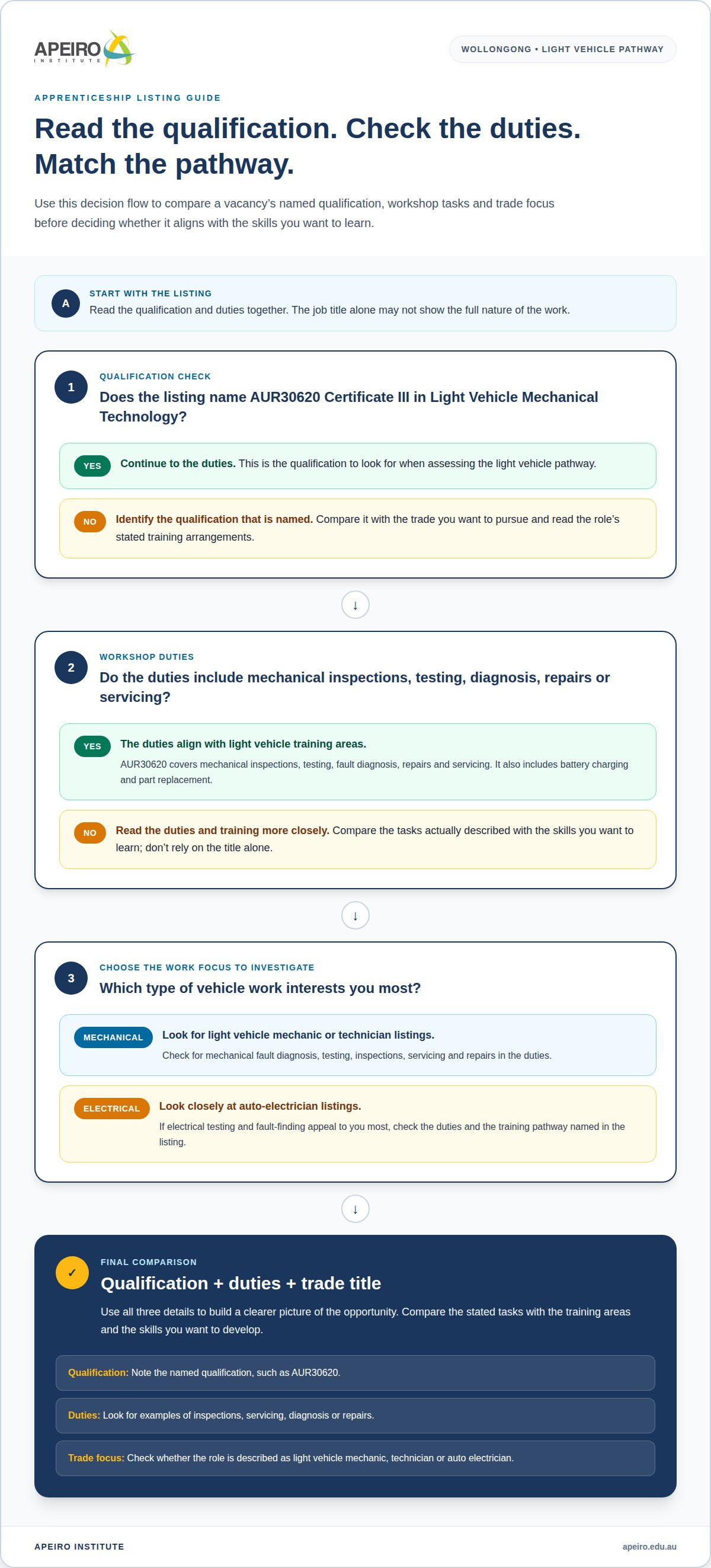
A light vehicle apprenticeship combines workshop tasks with training towards a trade qualification. The AUR30620 Certificate III in Light Vehicle Mechanical Technology is the qualification to look for when assessing this pathway.
Light vehicle trade pathway
The AUR30620 Certificate III in Light Vehicle Mechanical Technology covers mechanical inspections, testing, fault diagnosis, repairs and servicing. It also includes battery charging and part replacement. These areas show the range of tasks involved, from identifying a fault through to completing a repair. When reviewing an apprenticeship, look for the qualification and workshop duties named in the role.
The qualification provides a useful reference point for understanding the training. For example, coverage of inspections and testing indicates that apprentices learn to assess vehicle systems, not just replace parts. Compare a vacancy’s duties with these training areas to see how the practical work may relate to the qualification.
Light vehicle mechanic pathway
A light vehicle mechanic apprenticeship focuses on the inspection, servicing and repair tasks covered by AUR30620. A vehicle might need testing to identify a fault before parts are repaired or replaced. Consider whether you’re interested in varied mechanical work across servicing and diagnosis. The named qualification gives you a consistent point of comparison between apprenticeship roles.
Light vehicle and auto-electrician trades both involve vehicle systems, but the job title can signal different areas of work. A light vehicle technician pathway includes mechanical inspections and servicing. If electrical testing and fault-finding interest you most, look closely at listings labelled auto electrician and the training they name. Read the duties as well as the title to understand the work involved.
Use these steps to assess an apprenticeship listing:
- Identify the qualification named, such as AUR30620.
- Read the duties for examples of inspections, servicing, diagnosis or repairs.
- Note whether the role is described as light vehicle mechanic, technician or auto electrician.
- Compare the stated tasks with the skills you want to learn.
This comparison keeps your choice grounded in the work described. For example, if you’re interested in mechanical fault diagnosis, look for listings that mention testing and repairs. If vehicle electrical systems appeal more, focus on auto-electrician roles and their stated training pathway. The job title, qualification and duties together give a clearer picture than any one detail alone.
The Certificate III in Light Vehicle Mechanical Technology is the relevant qualification to look for when an apprenticeship names AUR30620. Its training areas offer a practical way to assess whether a light vehicle pathway matches your interests.
Paid work and nationally recognised training
An apprenticeship combines paid employment with structured training. In Wollongong, apprentices receive award wages from their first day.
Paid apprenticeship work
Workplace learning gives apprentices the chance to practise skills on the job. For example, an apprentice may observe a task, complete parts of it under supervision, then build towards more independent work. The employer provides the practical setting, while formal training develops knowledge against qualification requirements. When considering a role, look at how its duties relate to the training, not just the job title.
Paid employment and training are connected, but they serve different purposes. Workshop tasks build familiarity with tools, procedures and team routines. Training develops the underpinning knowledge needed to perform those tasks consistently. In a vehicle workshop, an apprentice might encounter a mechanical or electrical system at work, then study how to identify and inspect it through relevant training.
Qualifications and training
Trade apprenticeships generally take 3 to 4 years to complete. Structured training with a Registered Training Organisation, such as TAFE, is completed within the first 3 years of an apprenticeship program. The qualification sets the learning outcomes, while the workplace provides opportunities to apply them. Check that the qualification named in a role matches the trade you want to pursue.
Automotive training can introduce learners to vehicle mechanical and electrical systems. It offers an example of how automotive training can build system knowledge. An apprenticeship qualification takes that learning into a workplace pathway. The exact training sequence depends on the qualification and its training arrangements.
Workplace duties and learning
Apprentice duties change as skills develop and training progresses. Early tasks can introduce workshop processes; later work can apply more technical knowledge. For example, an apprentice may progress from identifying a vehicle system to inspecting it and explaining what the inspection shows. The qualification structures that development, while workplace tasks provide practical context.
Training coordination brings the employer, apprentice and Registered Training Organisation (RTO) together in the same pathway. The employer supports relevant workplace learning, and the RTO delivers structured training towards the qualification. To understand how these parts fit together, identify the qualification, training organisation and workplace duties in the apprenticeship information. This gives you a clearer picture of how study and paid work connect.
As you compare opportunities, consider the learning as well as the rostered work. A role involving vehicle systems, for example, can provide practical situations that connect with automotive training. Ask yourself whether the qualification and duties point towards the skills you want to develop. This helps you assess the pathway as a whole, rather than as a job alone.
The AUR20220 Certificate II in Automotive Air Conditioning Technology is described as the qualification needed to obtain an automotive air conditioning licence.
Apprentice mechanic vacancies in Wollongong and nearby areas
Vacancy listings can show which apprenticeship stage employers are seeking. One local example is Helensburgh, where listings include first- and second-year light automotive apprenticeships. They advertise above-award wages and training benefits. This gives applicants a practical starting point for exploring work around Wollongong.
Read each listing for its location, year level and role title. A first-year vacancy is for someone beginning an apprenticeship, while a second-year listing is aimed at an apprentice who has already progressed through training. For example, a second-year light automotive apprenticeship is different from an entry-level opportunity, even when both involve similar work. Match the stated year level with your situation before applying.
Training benefits matter alongside advertised pay. The Helensburgh listings mention both above-award wages and training benefits, so compare the full offer rather than focusing on one phrase. Note what the employer says about training, the apprenticeship qualification and day-to-day workshop duties. Those details help you judge how the role could support your trade development.
Vacancies may use different titles for related work. Search terms such as “light automotive apprentice”, “apprentice mechanic” and “apprentice technician” can reveal a range of listings. Then read the duties to understand the work involved. A role mentioning vehicle servicing and mechanical repairs, for example, points towards light vehicle tasks. The title alone may not describe the full scope.
Use a simple comparison when reviewing Wollongong-area opportunities:
- Record the suburb, such as Helensburgh, and the advertised year level.
- Note whether the listing states above-award wages or training benefits.
- Compare the qualification and duties described in each advertisement.
- Check the application instructions and prepare details that address the listed criteria.
These steps make differences between listings easier to see. A first-year opening may suit a new starter, while a second-year role is aimed at someone already in training. Keep the employer’s stated requirements in view. In your application, explain your interest in that specific position rather than relying on a general expression of interest.
Vacancy details can change as employers recruit, so use each advertisement’s wording as your guide. Focus on the role level, work location and training information shown. If an opening names a qualification, explain how your interests align with it. For a light automotive apprenticeship near Wollongong, this approach helps you assess the opportunity and prepare a relevant application.
Entry requirements and prior experience
Entry criteria can differ between automotive apprenticeship vacancies. Read each Wollongong-area listing carefully, especially its stated education, experience and application requirements.
A Year 12 requirement appears in an Unanderra apprentice fitter machinist listing. That example concerns a fitter machinist role, not a light vehicle mechanic apprenticeship. Treat it as a listing-specific criterion, rather than a general rule for automotive apprenticeships. For each opportunity, identify the exact job title and the qualifications or schooling the employer names.
Prior workshop experience can help you explain your interest. For example, describe a time you helped maintain a vehicle, used tools safely or followed a practical repair demonstration. Be precise about what you did and learned. Don’t present informal experience as a formal qualification. Instead, connect your example to tasks in the vacancy, such as vehicle servicing or mechanical inspection.
Employers may list different selection criteria, so organise your application around the actual advertisement. If a role asks for Year 12 completion, address that directly. If it focuses on practical interest, give a specific example from a project, hobby or previous workplace. A clear response helps the employer understand how your background relates to the apprentice role.
Use this short process when preparing an application:
- Match the advertised title to the trade you want, such as light vehicle mechanic.
- Note each stated education or experience requirement.
- Choose examples that demonstrate relevant practical interest.
- Describe your contribution accurately and connect it to the listed duties.
Previous work experience can also matter if you’re already in a trade. Trade Pathways for Experienced Workers (TPEW) and Recognition of Prior Learning (RPL) are options for experienced workers to explore. They relate to existing skills and experience, rather than the usual starting point for a new apprentice. For example, someone with relevant automotive work history may consider whether an experienced-worker pathway suits their next qualification step.
Keep the distinction clear: an apprenticeship application concerns an employer’s vacancy, while TPEW and RPL relate to experienced-worker pathways. A first-time applicant can focus on the role’s entry criteria and examples that show genuine interest in automotive work. An experienced worker can consider how existing skills relate to further training. In either case, use the named qualification and duties to shape your next step.
Apprentice wages and adult apprentice rates
Apprentice pay is part of assessing a Wollongong trade opportunity. The advertised rate, apprenticeship stage and age can all matter when comparing roles.
Apprentices are paid award wages from day one. This gives applicants a clear starting point when reviewing an offer. Read the wage information alongside the position title and training details. For example, consider a light vehicle apprentice vacancy as both paid work and a training pathway, not simply as an hourly figure.
Adult apprentice rates may apply to apprentices aged 21 or over, according to the Fair Work Ombudsman. Age can therefore be relevant when understanding how an apprenticeship rate is determined. If you’re changing careers at 21 or older, consider the adult apprentice category when reviewing pay information. The applicable rate still depends on the circumstances of the role and its employment arrangements.
Compare like with like. A listing may describe an above-award wage, while another states award wages without giving the same detail. For instance, the Helensburgh light automotive listings mention above-award wages and training benefits. That wording gives applicants two separate points to consider: the wage basis and the training support described.
Before assessing an offer, focus on the details provided:
- Identify whether the listing describes award wages or an above-award rate.
- Note the apprenticeship year level named in the role.
- Consider whether adult apprentice rates may apply at age 21 or over.
- Read pay information with the position’s training and duties.
These details help you frame useful questions during recruitment. If a vacancy names a first-year or second-year position, keep that stage in view when discussing pay. If you’re an adult applicant, mention your age where relevant to the rate discussion. A clear conversation can help establish how the advertised terms relate to your circumstances.
Pay is only one part of a Wollongong apprenticeship decision. The role’s location, training benefits and workshop duties also shape its value. For example, an above-award wage may appear alongside training benefits in a Helensburgh listing. Consider both details, then weigh them against the qualification and work you want to pursue.
For light vehicle training, the AUR30620 Certificate III provides the qualification pathway discussed in this article. Considering the training alongside the employment offer helps keep your decision focused on both learning and paid work. Review the wage description, apprenticeship stage and training information together before deciding how an opportunity fits your goals.
Explore light vehicle training
Apeiro Institute: Apprenticeships and Traineeships
Apeiro Institute offers Apprenticeships and Traineeships for people exploring vocational training. If you’re considering a light vehicle trade, the AUR30620 Certificate III in Light Vehicle Mechanical Technology aligns with the qualification discussed in this guide. It provides a training pathway to consider alongside local vacancies and employer requirements.
Already working in a trade? Trade Pathways for Experienced Workers (TPEW) may suit experienced workers seeking a pathway that recognises their background. The right option depends on your career stage and the qualification you want to pursue. Contact Apeiro Institute to discuss whether an experienced-worker pathway aligns with your goals.
Contact Apeiro Institute to discuss your training pathway.
Take the next step towards your trade
Choosing an automotive technician apprenticeship in Wollongong is a practical step towards a hands-on career. Your next move can be a clear conversation about the training pathway that suits your goals and experience. If you’re already working in a trade, Trade Pathways for Experienced Workers may also be relevant. Apeiro Institute offers Apprenticeships and Traineeships, alongside the UEE30920 Certificate III in Electronics and Communications.
Think about the work you want to develop towards, then consider how your current experience fits. Contact Apeiro Institute to discuss apprenticeship training or an experienced-worker pathway. You don’t need to have every career decision settled before starting the conversation.
Your trade journey can start with one useful conversation. Keep building towards work that matches your interests and strengths.
Frequently Asked Questions
What happens afterwards?
After an enquiry, the next steps depend on the role and intake. For the 2026/2027 apprentice and trainee intake, interviews take about 30 minutes, depending on the applicant’s circumstances and chosen apprenticeship. Use an interview to explain why the trade interests you and how your experience relates to the role. If you’re also exploring training, clarify which qualification fits the work you want to pursue.
What automotive mechanic apprenticeships are available in Wollongong NSW?
Local opportunities include light vehicle mechanic and technician apprenticeships. Listings in nearby Helensburgh include first- and second-year light automotive apprentice roles. A light vehicle apprenticeship commonly follows the AUR30620 Certificate III in Light Vehicle Mechanical Technology. Compare vacancies by their year level, workshop duties and named qualification. That helps you distinguish an entry-level opening from a position intended for someone already progressing through an apprenticeship.
Which Wollongong employers and dealerships offer automotive technician apprenticeships?
Wollongong Mazda has been an example of a local employer recruiting a first-year apprentice technician. Other nearby listings have advertised first- and second-year light automotive apprenticeships, although the examples don’t identify an employer. Treat these as examples, not a complete employer list. In each current vacancy, review the named business, role level, duties and application details.
What qualifications and entry requirements are needed for an automotive apprenticeship in NSW?
For light vehicle work, the AUR30620 Certificate III in Light Vehicle Mechanical Technology is the relevant apprenticeship qualification discussed here. Entry criteria depend on the vacancy. For example, a Year 12 completion requirement appeared in an Unanderra apprentice fitter machinist listing. That requirement relates to that specific role, not every automotive apprenticeship. Read the employer’s stated criteria and match your application to them.
What are the differences between light vehicle, heavy vehicle and auto electrical apprenticeships?
Light vehicle roles focus on mechanical work involving passenger vehicles, while heavy vehicle roles centre on larger vehicles such as trucks. Auto electrical apprenticeships focus more closely on vehicle electrical systems and related fault-finding. Job titles can overlap, so read the duties and qualification named in each listing. For example, a vacancy focused on mechanical servicing differs from one emphasising electrical diagnosis.
What employment outlook and career progression do automotive apprentices have in the Illawarra?
Employment prospects depend on local vacancies and employer requirements, so compare current opportunities rather than relying on a broad forecast. Helensburgh listings show that roles can seek both first- and second-year apprentices. After building trade skills, further automotive study may include AUR40216 Certificate IV in Automotive Mechanical Diagnosis or AUR50216 Diploma of Automotive Technology. These qualifications represent possible learning pathways, not guaranteed job outcomes.

Disclaimer
The information provided on this blog is for general informational and educational purposes only. While every effort is made to ensure the accuracy and reliability of the content, the author makes no representations or warranties of any kind, express or implied, about the completeness, accuracy, suitability, or availability of the information contained on this blog.
The views and opinions expressed in blog posts are those of the individual author and do not necessarily reflect the official policy or position of any organization, company, or employer.
This blog may contain links to external websites or third-party content. These links are provided for convenience only, and the author has no control over and assumes no responsibility for the content, privacy policies, or practices of any third-party sites.
Nothing on this blog constitutes professional advice (legal, financial, medical, or otherwise). Readers are encouraged to seek appropriate professional guidance before making any decisions based on the information provided here.
By using this blog, you acknowledge that any reliance on the information is at your own risk.


