

What if starting an electronics technician apprenticeship later in life is still within reach? A telecommunications technology apprenticeship typically lasts three years, and eligible apprentices across Australia can often access government-subsidised training programmes to support their studies.
It’s understandable to want clear answers before committing to a new career path, especially when applying as a mature-age apprentice. You need to know how long training takes, which qualification it leads to, and whether support may be available. This guide explains the key details to help you consider your next step with confidence.
You’ll learn about apprenticeship duration and trade qualifications, funding and eligibility, industry opportunities, registration, and applying as a mature-age apprentice through providers like Apeiro Institute. We’ll also clarify how an electronics technician pathway relates to telecommunications training, so you can make sense of the options and focus on a route that fits your goals.
Key Takeaways
- A telecommunications technology apprenticeship in Penrith lasts three years, but the qualification and training pathway depend on the trade.
- Eligible NSW-based apprentices can access fee-free training through the NSW Government’s Smart and Skilled program.
- Mature-age applicants can pursue an apprenticeship; understand how your experience and the training requirements fit the pathway.
- Local opportunities can involve practical work conditions, so learn what the role entails before choosing a direction.
- Apprentice pay depends on the applicable award, age and apprenticeship stage. Find out which details shape the rate for your circumstances.
Apprenticeship duration and trade qualifications
A telecommunications technology apprenticeship in Penrith, NSW, lasts three years. The duration and qualification outcome depend on the specific trade pathway.
Training length and completion
Use the stated duration as a planning guide, then check the requirements of the apprenticeship you’re considering. A three-year telecommunications technology apprenticeship in Penrith combines workplace experience with training towards completion. Before starting, clarify the qualification attached to the role and how progress will be assessed. This helps you understand what completion involves, rather than relying on the job title alone.
Trade qualification outcomes
The qualification is the formal outcome to consider alongside practical workplace experience. Check that its name and training match the trade you want to pursue. “Electronics technician” can describe a career goal, while an apprenticeship may use a more specific trade name, such as telecommunications technology. Assess a role by its stated training pathway, not its location or title alone.
Duration is not interchangeable across every electrotechnology apprenticeship. The three-year Penrith example applies to telecommunications technology, so it should not be treated as a universal timeframe for electronics-related trades. Compare the advertised role’s duration with its qualification and expected training before deciding whether it fits your plans. That comparison gives you a clearer view of the full commitment.
Trade pathways can also divide workplace and formal training differently. The fourth year of the NECA electrical apprenticeship consists only of on-the-job training. That example is specific to the NECA electrical apprenticeship; it does not establish a fourth year for telecommunications technology. Keep the distinction in mind when comparing electrical and electronics-related options.
If you need to change employers or leave an apprenticeship in NSW, promptly discuss your training record and next steps with your employer and training provider. Keep records of completed training and workplace experience to help explain your progress during a transition.
For a practical comparison, note the apprenticeship’s trade name, stated duration and qualification outcome. Then consider whether the work and training align with the skills you want to develop. Matching these details helps you assess the commitment and understand what the pathway is intended to achieve.
NSW apprenticeship subsidies and eligibility
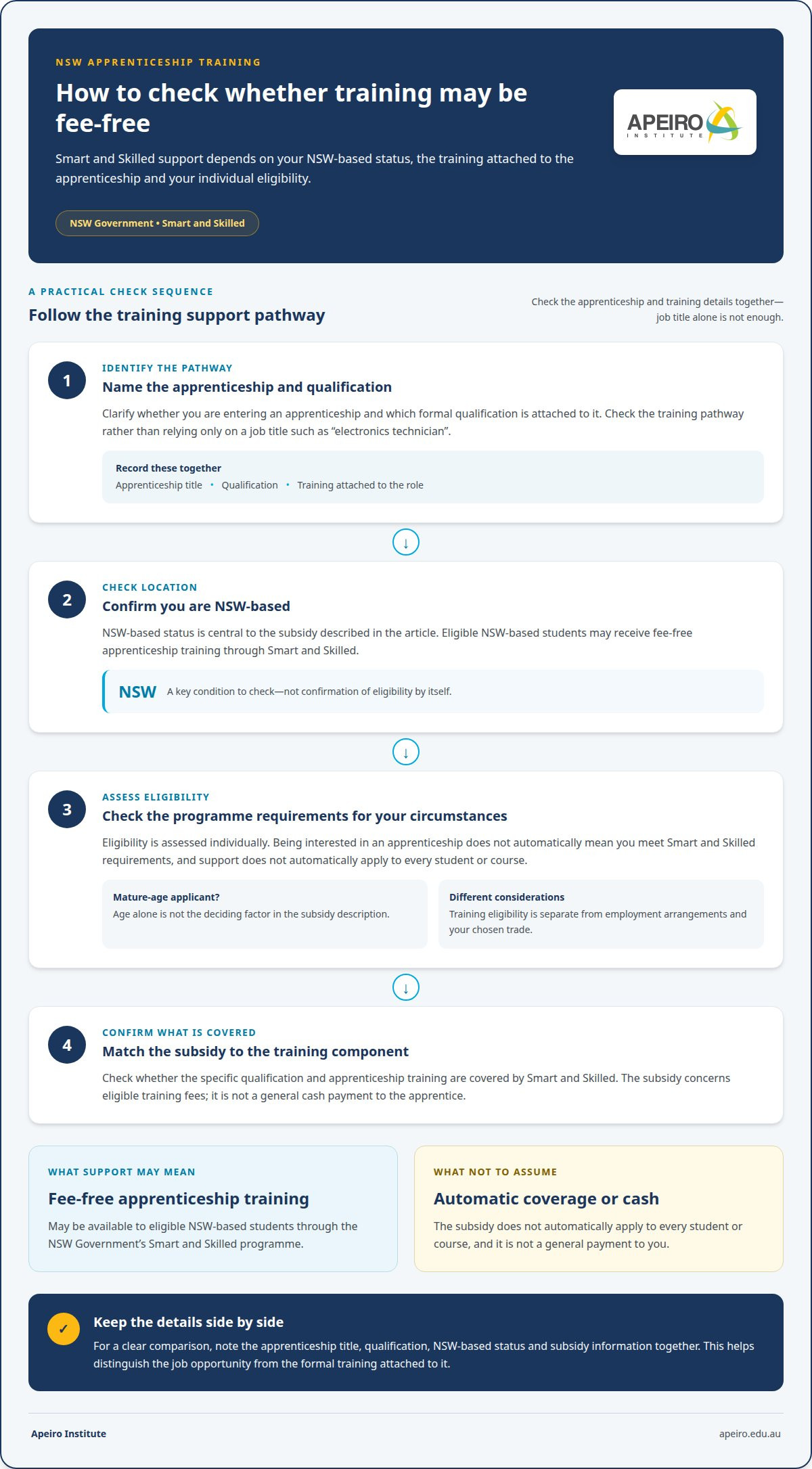
Eligible NSW-based students may receive fee-free apprenticeship training subsidised through the NSW Government’s Smart and Skilled program. Eligibility is assessed individually, so fee-free training does not automatically apply to every student or course.
For someone considering an electronics trade, distinguish the apprenticeship from its training component. Smart and Skilled subsidises training for eligible NSW-based students. The support relates to training fees, not a general payment to the apprentice. Don’t assume every electronics-related course attracts the same support.
First clarify whether you’re entering an apprenticeship and which qualification is attached to it. Then find out whether you meet the program’s eligibility requirements as a NSW-based student. These details affect whether the training is subsidised. Age alone is not the deciding factor in the program description.
Use these points to organise your planning:
- Location: NSW-based status is central to the stated subsidy.
- Training: Identify the qualification linked to your apprenticeship, rather than relying only on a job title.
- Eligibility: Distinguish being interested in an apprenticeship from meeting Smart and Skilled requirements.
- Fees: Understand that the subsidy concerns eligible apprenticeship training, not a cash payment to you.
This distinction matters for mature-age applicants, too. Applying later in life does not by itself determine whether training receives a subsidy. The relevant considerations are NSW-based status and program eligibility, separately from your employment arrangements and chosen trade.
Subsidised training can make the education component more accessible, but you still need to understand the full apprenticeship arrangement. Clarify which qualification the training leads to, how it connects with the workplace role, and whether it is covered by Smart and Skilled. These are separate considerations, even when they relate to the same apprenticeship.
As you compare pathways, record the apprenticeship title, qualification and subsidy information together. That simple step helps prevent confusion between a job opportunity and the formal training attached to it. If you’re considering structured apprenticeship and traineeship options, keep NSW Smart and Skilled eligibility in view alongside the qualification you want to complete.
Apprenticeship opportunities across NSW
Apprenticeship roles span different parts of the electrotechnology industry, so compare the work itself, not just the title. A telecommunications technology apprenticeship advertised for Penrith, NSW, includes work at heights and in confined spaces. This example shows why duties and working conditions matter alongside the qualification.
Electricity supply is another part of the wider industry, including transmission, distribution and rail transport in Australia. Each area has different working environments, so consider the practical tasks when deciding whether a role suits your interests. An electronics-focused career goal may lead you to explore related pathways, but each apprenticeship has its own trade focus.
NSW also has an industry body supporting apprenticeships and traineeships across energy-industry sectors: the NSW Utilities & Electrotechnology Industry Training Advisory Body. Its sector focus is a useful way to understand the breadth of opportunities. Energy-industry roles may relate to electricity supply, while telecommunications technology represents another specific pathway, as the Penrith example demonstrates.
When reviewing an opportunity, look for concrete details in the role description:
- Trade focus: Is the apprenticeship in telecommunications technology, electricity supply, or another electrotechnology area?
- Work setting: Does the example involve heights, confined spaces, field work or another stated environment?
- Training outcome: What qualification is connected with the role, and does it match your intended trade?
- Location: Where is the position based, and does the work require travel from that base?
The Penrith example is relevant if you’re considering telecommunications work. Its duties include work at heights and in confined spaces, so read the role requirements carefully and consider whether those conditions meet your expectations. Other telecommunications apprenticeships may have different duties, so assess each role’s stated tasks.
Longer-term industry context may also help you decide. Skill shortages at trade and post-trade technical levels in the electrotechnology industry are expected to worsen over the next five years. This outlook does not guarantee a vacancy or employment outcome, but it highlights the value of understanding apprenticeship entry routes and the technical skills different roles develop.
To narrow your options, choose the work area first, then compare named roles and their stated training. For example, distinguish a Penrith telecommunications technology apprenticeship from an electricity supply role in transmission, distribution or rail transport. That approach helps you assess the duties, setting and trade direction together, rather than treating every NSW electrotechnology opportunity as interchangeable.
Apprenticeship sign-up and registration
Starting an apprenticeship involves aligning the workplace role with its formal training. In NSW, begin by identifying the trade you want to enter, such as telecommunications technology. The Penrith example discussed earlier shows why the advertised role’s duties and training pathway should be clear before you commit.
First, define the apprenticeship you’re applying for. Note the trade name, qualification and main duties in the position description. “Electronics technician” may describe your career goal, while an available role could use a more specific title. Consider a telecommunications technology apprenticeship as that named pathway, not as a route covering every electronics trade.
Next, clarify the employment arrangement. An apprenticeship combines a workplace role with structured training, so understand who will employ you and how training connects with your day-to-day work. Ask for the expected duties, training arrangements and relevant contact people to be set out clearly. If the role involves work at heights or in confined spaces, as in the Penrith example, factor those tasks into your decision.
Then, coordinate the training details. Confirm the qualification linked to the role and how training will be delivered. Check that the workplace expectations and training pathway refer to the same trade. If a document uses a broad job title but names a specific qualification, clarify how they relate before proceeding. This helps prevent confusion about what the apprenticeship is designed to teach.
Review the paperwork carefully. Keep copies of the employment and training documents, including written details about duties, qualifications and training arrangements. Note the dates and names of the people involved. A clear record makes it easier to follow up if your tasks or training information change during sign-up.
For mature-age applicants, this preparation can make an application more focused. Describe your work experience accurately and connect it to the trade’s practical requirements. Experience may explain your interest or existing skills, but it doesn’t replace understanding the qualification and training attached to the role. Focus your application on the specific apprenticeship you’re seeking.
Before accepting, use a short final review:
- Match the trade name to the qualification and training pathway.
- Understand the employer’s stated duties and work conditions.
- Keep copies of the written employment and training details.
- Record any agreed next steps and who is responsible for them.
This process gives you a practical basis for moving from application to commencement. A NSW apprenticeship is easier to assess when the job, training and qualification details align. If a document describes a different trade or training outcome from the role discussed, resolve the mismatch before relying on it.
What is the apprentice pay rate by year and age under the relevant NSW or federal award?
There isn’t one apprentice pay rate for every electronics role in NSW. The applicable rate depends on the award or agreement covering the job, the apprentice’s age and their apprenticeship stage. Start a comparison with those details, not a general estimate or another employer’s offer.
First identify the instrument that sets pay for the specific position. The employer, industry and work covered help determine which award or agreement applies. Don’t assume an electronics technician role follows the same pay rules as an electrical or telecommunications position. Similar titles can relate to different kinds of work.
Next, check how the pay classification treats age. Some apprentice pay structures distinguish between adult and junior apprentices. The relevant age category can affect the applicable rate, so an adult starting an apprenticeship shouldn’t rely on a rate quoted for a younger entrant. Use the age category in the applicable pay instrument.
The apprenticeship stage matters, too. Pay tables may separate rates by year or progression point. For example, an apprentice in an earlier stage may fall under a different rate from someone further along. Match the stage shown in the employment and training details with the correct row in the applicable instrument.
Use this sequence to make a like-for-like comparison:
- Identify the employer’s industry and the duties attached to the role.
- Determine which award or agreement covers the position.
- Locate the classification for the apprentice’s age at commencement.
- Match the apprenticeship year or stage to the corresponding pay entry.
- Check how the stated rate is described, including its pay period and any conditions.
For a mature-age applicant, compare the adult apprentice classification with the correct training stage. Being older doesn’t automatically mean every role uses the same rate. Both the instrument’s wording and the apprenticeship details matter. Keep the employer’s written pay information with your role and training documents.
If an offer gives a rate but doesn’t identify its basis, ask for the award or agreement name and classification. Compare the stated age category, apprenticeship stage and pay period with that instrument. This gives you a clearer basis for discussing the offer with the employer and avoids relying on figures from unrelated trades.
For an electronics apprenticeship in NSW, keep the role, employer, pay instrument, age category and training stage together. These details help explain how the rate was selected and make it easier to revisit the classification if your apprenticeship progresses or your employment arrangements change.
Apeiro Institute: Apprenticeships and Traineeships
Apeiro Institute offers Apprenticeships and Traineeships for people building a vocational pathway in NSW. If you’re pursuing electronics and communications, the UEE30920 Certificate III in Electronics and Communications is a relevant qualification to explore alongside your intended apprenticeship and workplace role.
Already working in the trade? Apeiro Institute’s Trade Pathways for Experienced Workers (TPEW) may suit people seeking to formalise existing experience through a structured pathway. NSW-based students may also be eligible for Smart & Skilled funded training, subject to an individual assessment and program availability.
Consider these options alongside your experience, target qualification and apprenticeship plans. Contact Apeiro Institute to discuss the pathway that aligns with your goals.
Take the next step towards your trade
Your next move is to turn a broad career idea into a clear direction. Consider the technical work that interests you, the environment you’d like to work in and the skills you want to develop. These preferences can help focus your apprenticeship plans and explain what you’re looking for.
An electronics technician apprenticeship in NSW can be a starting point for developing practical skills while working towards a trade qualification. If you’re applying as a mature-age apprentice, your previous experience may also shape the pathway you consider. Be ready to discuss your goals and how they connect with the training you want to pursue.
Identify your preferred trade area and the questions that matter most to your decision. A conversation about your next step can help bring your plans into sharper focus.
Keep moving towards a pathway that fits your ambitions. Your experience and commitment can help you take the first step with purpose.
Frequently Asked Questions
Can I apply as a mature age apprentice?
Yes, you can pursue an apprenticeship as a mature-age applicant. Your previous work experience may also be relevant if you’re considering a pathway that recognises existing trade skills. Apeiro Institute’s Trade Pathways for Experienced Workers (TPEW) is designed for experienced workers seeking a formal qualification. If you’re new to the trade, focus on finding an apprenticeship role and training pathway that fit your goals.
How does the sign up process work?
Start by identifying the trade and employer role you want, then align the job with its training qualification. Discuss the role and training arrangements with the employer and training provider, and complete the required employment and enrolment paperwork. Keep copies of documents describing your duties and training. If you have relevant experience, raise it early so the pathway can account for your background where appropriate.
How much does the apprenticeship cost?
There isn’t one fee for every apprenticeship or qualification. Training fees depend on the qualification and your circumstances. NSW-based apprentices may be eligible for fee-free training through Smart and Skilled, following an individual eligibility assessment. Request the written fee schedule for a specific course before enrolment. Keep training fees separate from wages: an apprenticeship is paid employment, while course fees relate to training.
Is the apprenticeship nationally recognised?
The qualification can be nationally recognised when it is delivered by a registered training organisation as an accredited vocational qualification. Apeiro Institute offers the UEE30920 Certificate III in Electronics and Communications, a nationally recognised vocational qualification. Check that the qualification named in your training arrangements matches the outcome you intend to pursue. A job title alone doesn’t establish which qualification you’ll complete.
What is an electronics technician apprenticeship in NSW, and what qualification does it lead to?
It combines paid workplace learning with vocational training towards a trade qualification in an electronics-related field. The exact outcome depends on the apprenticeship pathway, so “electronics technician” doesn’t identify one universal qualification. One relevant qualification is UEE30920 Certificate III in Electronics and Communications. Use the qualification code and full name to distinguish that course from other electronics or telecommunications training options.
What are the eligibility requirements for an electronics apprenticeship in NSW?
Requirements depend on the apprenticeship role, its training qualification and any funding you’re seeking. For Smart and Skilled support, NSW-based students must meet the program’s eligibility requirements, assessed for the specific qualification. Your age alone doesn’t determine the answer in the information available here. The employer’s position description and training arrangements also matter, particularly if you’re entering a specialist trade pathway.
How do I find and apply for electronics technician apprenticeships in NSW?
Look for roles in your preferred trade area, then read each position description for its duties, qualification and training arrangements. Tailor your application to the role, highlighting relevant practical skills and experience. Before accepting, make sure the employment details and training outcome align. If you have substantial trade experience, consider whether a pathway for experienced workers better suits your qualification goal.
Which NSW employers and industries offer electronics apprenticeships?
Opportunities may be found across telecommunications and energy-related electrotechnology sectors. The NSW Utilities & Electrotechnology Industry Training Advisory Body supports and promotes apprenticeships and traineeships across energy-industry sectors. Employers and role types vary, so search by trade duties and qualification rather than relying on “electronics technician” alone. Compare the work setting and training outcome in each advertisement to find a suitable direction.

Disclaimer
The information provided on this blog is for general informational and educational purposes only. While every effort is made to ensure the accuracy and reliability of the content, the author makes no representations or warranties of any kind, express or implied, about the completeness, accuracy, suitability, or availability of the information contained on this blog.
The views and opinions expressed in blog posts are those of the individual author and do not necessarily reflect the official policy or position of any organization, company, or employer.
This blog may contain links to external websites or third-party content. These links are provided for convenience only, and the author has no control over and assumes no responsibility for the content, privacy policies, or practices of any third-party sites.
Nothing on this blog constitutes professional advice (legal, financial, medical, or otherwise). Readers are encouraged to seek appropriate professional guidance before making any decisions based on the information provided here.
By using this blog, you acknowledge that any reliance on the information is at your own risk.


