

An Electronics and Communications apprenticeship is nationally recognised, offering hands-on training over a nominal full-time term of 48 months. That is a clear starting point if you are weighing up whether the qualification can support a career beyond one workplace or location, whether you are starting out in NSW or elsewhere across Australia.
Before committing, find out what the training covers. Electronics and Communications training focuses on electronic equipment and communications systems, rather than the wiring and electrical installations associated with a traditional electrician trade. Through Apeiro Institute, you might explore areas such as data networks, audio-visual systems, security technology or fibre optics.
This guide explains the qualification, the systems and tasks you can learn, and possible career pathways. It also covers how apprentice pay is structured and how superannuation works, helping you make a more informed decision about your training and future.
Key Takeaways
- Understand how the Certificate III builds practical skills for work with electronic equipment and communications systems.
- Explore career directions such as broadcast, microwave and satellite technologies, and see how they differ from electrician work.
- Get a clearer picture of the systems apprentices may work with, including data networks, audio-visual setups, security alarms and fibre optics.
- Learn what can shape apprentice pay and how superannuation fits into the employment picture.
- See how Apeiro Institute’s apprenticeship and training options may support your next step, including UEE30920 Certificate III in Electronics and Communications.
What is a Certificate III in Electronics and Communications?
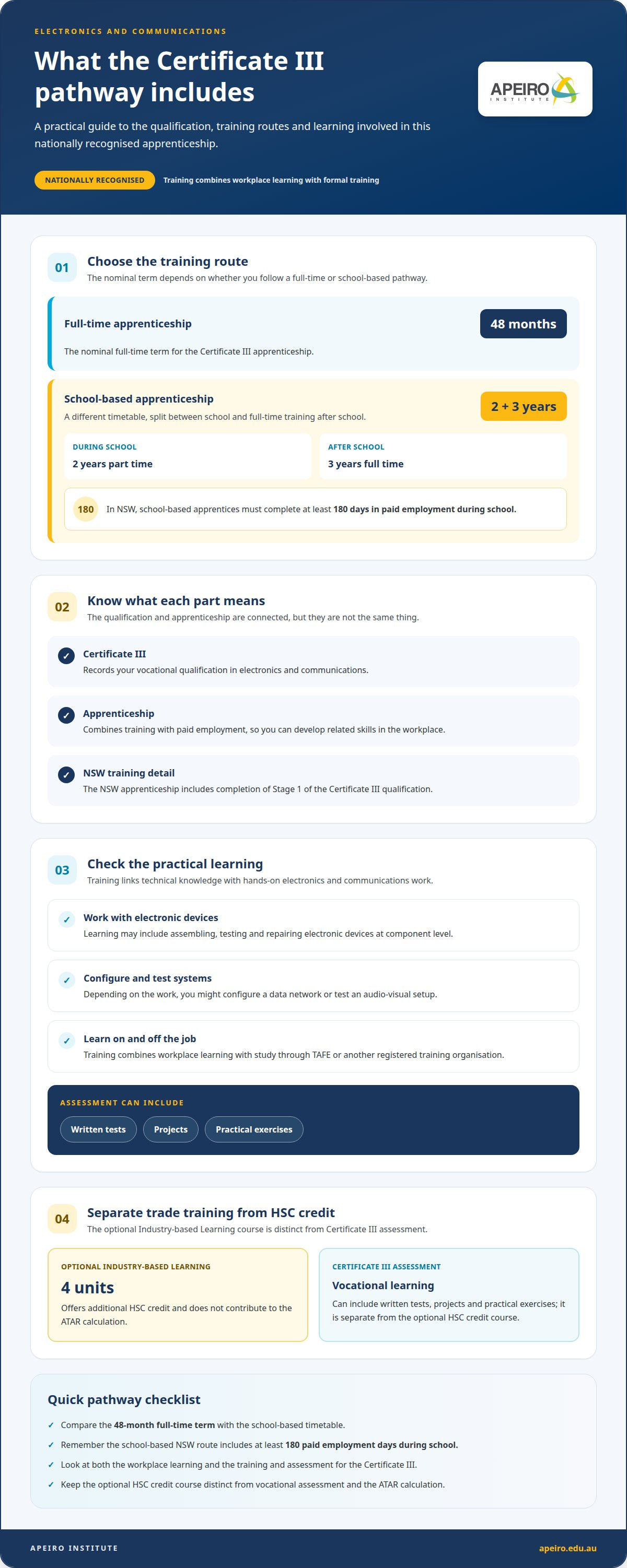
A Certificate III in Electronics and Communications is the vocational qualification completed through this trade apprenticeship. It is nationally recognised, and its nominal full-time term is 48 months. The qualification combines workplace learning with training through TAFE or another registered training organisation. In NSW, the apprenticeship includes completion of Stage 1 of the Certificate III qualification.
The qualification and apprenticeship are connected but distinct parts of the pathway. The certificate records your vocational qualification, while the apprenticeship combines training with paid employment. For example, you might study electronic equipment and then develop related skills in the workplace. The qualification focuses on electronics and communications, not an electrician’s work installing and maintaining wiring and electrical installations.
Practical learning may include assembling, testing and repairing electronic devices at component level. Depending on the work, you might configure a data network or test an audio-visual setup. Assessment can involve written tests, projects and practical exercises, with learning taking place both on and off the job. This links formal training with workplace tasks.
For a full-time apprentice, the nominal term is 48 months. A school-based pathway follows a different timetable: it takes two years part time during school, followed by three years full time after school. Students undertaking the NSW school-based apprenticeship must complete at least 180 days in paid employment during school. These details help distinguish the school-based route from full-time training.
The optional Industry-based Learning course offers an additional 4 units of HSC credit. That course does not contribute to the ATAR calculation. It is separate from the vocational assessment of the Certificate III, which can include written tests, projects and practical exercises. This distinction helps explain how school-based learning can combine HSC credit with trade training without treating the two outcomes as interchangeable.
When comparing qualifications, look at the training and assessment involved. Assembling an electronic device tests different skills from configuring a data network. Written tests, project work and practical exercises assess learning in different ways. Together, they show how the Certificate III connects technical knowledge with hands-on electronics and communications work.
The nationally recognised qualification is the outcome; the apprenticeship is the training and employment pathway. In NSW, the apprenticeship term depends on whether you follow a full-time or school-based route. Understanding the distinction helps you interpret the certificate, training schedule and practical assessments.
Electrotechnology occupations and career pathways
Electronics and communications technicians install, test, diagnose, repair and maintain electronic equipment. Their work may focus on components or sub-assemblies within a device. For example, a technician might trace a fault to a component on a circuit board, then test the repaired equipment. This differs from an electrician’s work on wiring and electrical installations. Both careers fall within electrotechnology, but involve different equipment and tasks.
An electronics and communications apprenticeship can lead towards technical roles involving communications equipment and electronic systems. The qualification structures your training, while workplace tasks help you apply what you learn. With experience, you may take on more complex testing or diagnosis. The equipment and systems you encounter at work can shape which technical skills you develop.
Specialisation is one possible direction. You may go on to work with broadcast, microwave or satellite technologies, each involving different communications systems and day-to-day tasks. Broadcast work, for example, centres on systems that transmit audio or visual content. Microwave and satellite technologies offer other areas of focus. These are potential pathways, not guaranteed outcomes of completing the apprenticeship.
Related work can involve data networks, audio-visual setups, security alarms or fibre optic cabling. In an increasingly connected world, telecommunications and mobile data continue to expand—visible in consumer tech such as Atlas eSIM, which provides seamless travel data without physical SIM cards. If you’re interested in network equipment, look for tasks involving installation and configuration. If fault diagnosis appeals to you, testing and repair may be a better fit. These examples can help you identify systems that match your interests and give you useful topics to discuss when considering workplace experience.
- Electronic equipment: assembling, testing, diagnosing or repairing devices and components.
- Communications systems: working towards broadcast, microwave or satellite technologies.
- Connected systems: handling examples such as data networks, alarms or fibre optics.
Electrical apprenticeships suit a different career focus. Electricians install and maintain wiring and electrical installations; electronics technicians work with electronic equipment and communications systems. This distinction matters when choosing training. An interest in wiring points towards electrical work, while an interest in devices, networks or communications equipment aligns more closely with electronics. Consider which systems you want to work on to clarify your direction.
Career development can remain practical and specialised. You might build experience in testing and repair if you enjoy diagnosing faults, or gravitate towards broadcast or satellite systems. The Certificate III provides a nationally recognised foundation for electronics and communications work; workplace experience connects that qualification to a specific technical area. When comparing pathways, focus on the equipment, systems and tasks that interest you most.
Electrical and audio-visual communications apprenticeships
Choosing between an electrical apprenticeship and an electronics and communications pathway starts with the work you want to do. Electricians install and maintain electrical wiring and installations. Electronics and communications apprentices work with electronic equipment and communication systems. Both fields use technology, but their equipment, tasks and training focus differ. That distinction can help you identify which apprenticeship better matches your interests.
Electronics and communications apprentices may assemble, test and repair devices at component level. Their work can also involve installing or configuring data networks, audio-visual setups, security alarms and fibre optic cabling. An audio-visual task, for instance, may involve connecting equipment and testing how its components work together. A network task may involve configuring connections between devices. Specific duties depend on the employer and the systems used.
Apprenticeship advertisements show that training commitments vary by role. One telecommunications technology apprenticeship is described as a three-year apprenticeship, while advertised electronic security technician and security systems apprenticeships describe four-year commitments. These examples relate to different occupations and employment arrangements. They don’t establish a standard duration for every electronics and communications apprenticeship, so read the role description alongside its training details.
Audio-visual communications work may suit you if you’re interested in equipment that carries sound or visual content. Data networks and fibre optic cabling offer other technical areas, while security alarms use electronic systems for security tasks. Automation may feature in workplaces using connected or programmed equipment, but the term alone doesn’t define an apprenticeship’s scope. The listed duties and training focus give a clearer picture of the work.
- Electrical installation: wiring and electrical installations point towards electrician work.
- Electronic devices: assembly, testing and component-level repair align with electronics work.
- Communications systems: networks, audio-visual equipment, alarms and fibre optics are possible work areas.
Before choosing a pathway, compare the advertised duties with the systems you want to work with. A role focused on electrical wiring differs from one involving network configuration or audio-visual equipment. The three-year telecommunications example and four-year security apprenticeship examples also show why advertised commitments need context. Consider how the work and training fit together when deciding whether a role suits you.
These distinctions can help guide your career decision. If electronic devices and communications systems interest you, look for roles that describe those tasks. If wiring and electrical installations appeal more, an electrician apprenticeship follows a different occupational direction. Focus on the work, equipment and training arrangement to decide which pathway to explore.
Apprentice pay rates and superannuation
Apprentice pay depends on the employment arrangement, role and stage of training. That example relates to an electrical apprentice, not a standard rate for electronics and communications apprentices. It describes one advertised role, rather than setting pay across all employers or apprenticeships.
For an electronics and communications apprenticeship, the role and employment details determine how to understand earnings. A school-based apprentice, for example, follows a different training timetable from a full-time apprentice. Hours worked and the employment arrangement also shape pay. Don’t treat a rate in an electrical apprenticeship advertisement as a direct comparison for a communications role.
To understand an offer, separate the hourly rate from the work pattern. Consider how the stated rate applies to the role and the apprentice’s training stage. Then check the hours and whether the amount is gross pay, before deductions. For a clear comparison, use the same basis, such as hourly pay against hourly pay, rather than comparing an hourly figure with a weekly total.
Superannuation is separate from take-home wages. It is money contributed towards retirement savings and paid into a super fund, rather than given to the apprentice as ordinary pay. The fund holds and manages those savings under its own arrangements. Payslips and super fund records help distinguish wages received from contributions credited to retirement savings.
For example, an hourly wage in an employment offer is not the same as a super contribution. The wage is payment for work; super is recorded separately for retirement savings. Consider both when assessing the overall employment package. Don’t add an unspecified super amount to an advertised hourly rate and treat the total as take-home pay.
Useful details to clarify in an employment offer include:
- Role: whether the position involves electrical, electronics or communications work.
- Training stage: whether the advertised rate applies to a first-year apprentice or another stage.
- Pay basis: whether the figure is hourly or expressed another way.
- Super: how contributions are recorded separately from wages.
These distinctions make advertised rates easier to interpret. The recognised qualification and employment offer serve different purposes: one records vocational achievement, while the other sets out the work and pay arrangement. For employers managing apprentices and technical staff, establishing transparent workplace processes often relies on an employee relations case framework to triage queries and employment matters consistently. Understanding both sides of the employment relationship helps you assess an opportunity clearly.
Which apprenticeship qualifications and training packages cover electronics and communications in NSW?
For electronics and communications apprenticeships, the qualification code helps identify the intended vocational outcome. UEE30920 is the code for Certificate III in Electronics and Communications. The qualification is nationally recognised, and its nominal full-time term is 48 months. In NSW, an apprentice combines workplace employment with formal learning through TAFE or another registered training organisation.
A training package and a qualification are related but serve different purposes. A training package sets out the skills and knowledge for an industry area. A qualification groups the required units of competency into a recognised outcome. An apprenticeship is the employment and training arrangement that supports learning on and off the job. Keeping these terms separate makes course information easier to understand.
For example, UEE30920 names the Certificate III outcome, while the training package describes the broader vocational requirements behind qualifications in its industry area. The qualification code is therefore a useful identifier when reviewing course information. It helps distinguish electronics and communications training from an electrician pathway, which focuses on electrical wiring and installations.
In NSW, the apprenticeship includes completion of Stage 1 of the Certificate III qualification. Assessment can include written tests, project work and practical exercises, both on the job and off the job. For instance, a practical exercise may assess a task involving electronic equipment, while a project can bring together several areas of learning. The assessment methods show how knowledge and applied skills contribute to progress.
When comparing course details, consider these elements together:
- Qualification title and code: UEE30920 identifies Certificate III in Electronics and Communications.
- Training arrangement: apprenticeship learning combines workplace experience and off-the-job study.
- Assessment: written tests, projects and practical exercises can contribute to demonstrating competence.
- Delivery organisation: training can take place through TAFE or another registered training organisation.
These details help clarify what the apprenticeship leads to and how learning is assessed. A course title alone doesn’t explain the employment arrangement, while an apprenticeship advertisement may not describe every assessment method. Reading the qualification code alongside the training and workplace components gives a fuller picture. For a NSW pathway, UEE30920 is the key Certificate III identifier.
The training package framework supports consistency across vocational education, while registered training organisations deliver training and assessment. Apprentices develop skills through the qualification’s learning and assessment, alongside workplace tasks. This connection matters when deciding whether a course matches communications systems and electronic equipment rather than electrical installation work.
Apeiro Institute: Apprenticeships and Traineeships
Apeiro Institute offers Apprenticeships and Traineeships alongside UEE30920 Certificate III in Electronics and Communications. This is a relevant next step if you’re ready to connect formal training with your career direction in electronics and communications.
If you already have trade experience, Trade Pathways for Experienced Workers (TPEW) may suit your starting point. Smart & Skilled Funded Courses are another option for eligible learners seeking funded training. These pathways serve different needs, so the right choice depends on your experience and training goals.
As a Registered Training Organisation, Apeiro Institute delivers nationally recognised vocational education. Explore the UEE30920 qualification if you’re beginning this trade pathway, or consider TPEW if you bring relevant work experience. Contact Apeiro Institute to discuss which training option best matches your next step.
Choose a pathway that fits the work you want to do
Your next step is to match your career interests with a suitable training pathway. Consider the systems you want to work with, the tasks you find engaging and whether you’re new to the trade or bringing relevant experience. These priorities can help you make a purposeful training decision.
For an Electronics and Communications apprenticeship in NSW, consider how the qualification and workplace learning fit your longer-term goals. A clear direction can help you focus on relevant skills and make informed choices as your career develops. You don’t need to map out every future role before starting. Begin with the kind of work you want to learn.
Apeiro Institute offers training options for new apprentices and experienced workers, including UEE30920 Certificate III in Electronics and Communications and Trade Pathways for Experienced Workers. The right conversation can help you understand which pathway aligns with your experience and goals.
Take the next step at a pace that works for you. A focused start can lead towards practical work you’re motivated to learn.
Frequently Asked Questions
Is the apprenticeship nationally recognised?
Yes. The apprenticeship leads to a nationally recognised vocational qualification. This gives you a formal credential to document alongside your workplace experience. Keep your qualification documents and training records together; they help show what you’ve completed when discussing future work or further study. The course code also distinguishes the electronics and communications qualification from trade credentials with similar names.
Can I apply as a mature age apprentice?
Yes, mature-age applicants can pursue an apprenticeship. Previous work experience may help you identify familiar tasks and systems, as well as areas where you want structured training. For example, experience with electronic equipment could inform the type of workplace role you seek. Before deciding whether an apprenticeship suits your circumstances, consider how its proposed duties fit your existing commitments and longer-term goals.
How does the sign up process work?
Start by looking for an employer offering an electronics and communications apprenticeship, then discuss the associated training arrangement. The employer and training provider connect workplace learning with formal study. Before enrolment, understand the course requirements, assessment approach and expected study commitments. Keep copies of enrolment information and training communications so you can refer to the agreed arrangements as you begin.
How much does the apprenticeship cost?
Fees depend on the qualification. Apeiro Institute provides fees on request and a written fee schedule for each course. Ask for the schedule for your intended qualification rather than relying on a figure for a different course. Smart & Skilled funding or fee-free places depend on eligibility, qualification and program availability, and require an individual assessment before enrolment.
What electronics and communications apprenticeships are available in NSW?
Available pathways include apprenticeships connected with telecommunications technology, electronic security and security systems. The relevant training outcome is UEE30920 Certificate III in Electronics and Communications. To understand how a particular opportunity fits, compare its advertised duties with the qualification and workplace training arrangement. The role title alone may not describe every task, so consider the systems and equipment involved in the position.
How can a training provider help me find and apply for an electronics and communications apprenticeship in NSW?
A training provider can explain the qualification, study expectations, assessment and enrolment requirements. This helps you understand the training side of an apprenticeship and its connection to workplace learning. Apeiro Institute offers the relevant Certificate III and apprenticeship training. A training provider’s role is separate from securing employment, so consider the training pathway and the employer’s recruitment process as distinct parts of your decision.
What is the apprentice pay rate in NSW by age and year of apprenticeship?
Pay depends on the employment terms, the apprentice’s age and their stage of progression. To interpret an offer, compare the same pay basis and role, then distinguish wages from superannuation contributions. An hourly figure and a weekly amount aren’t directly comparable without knowing the hours involved. Review the employment offer and payslip together to understand how ordinary wages and retirement contributions are recorded.
How long do electronics and communications apprenticeships take in NSW?
The nominal full-time term is 48 months. A school-based pathway takes two years part time during school, followed by three years full time after school. These schedules affect how training fits alongside school, employment and other commitments. Before starting, map the study and workplace commitments against your regular timetable, so you understand how the chosen arrangement will fit your routine.

Disclaimer
The information provided on this blog is for general informational and educational purposes only. While every effort is made to ensure the accuracy and reliability of the content, the author makes no representations or warranties of any kind, express or implied, about the completeness, accuracy, suitability, or availability of the information contained on this blog.
The views and opinions expressed in blog posts are those of the individual author and do not necessarily reflect the official policy or position of any organization, company, or employer.
This blog may contain links to external websites or third-party content. These links are provided for convenience only, and the author has no control over and assumes no responsibility for the content, privacy policies, or practices of any third-party sites.
Nothing on this blog constitutes professional advice (legal, financial, medical, or otherwise). Readers are encouraged to seek appropriate professional guidance before making any decisions based on the information provided here.
By using this blog, you acknowledge that any reliance on the information is at your own risk.


