

Automotive apprenticeship options aren't concentrated in just one area: searches commonly feature opportunities across major hubs like Penrith, Blacktown, Parramatta, and Fairfield. That gives you several places to explore as you look for an automotive apprenticeship in Western Sydney, including light vehicle roles and related trade opportunities across New South Wales.
Finding an automotive apprenticeship Western Sydney opening takes more than searching by job title. The work, location, entry requirements, and employer details all matter when you are deciding where to apply. It is also useful to understand how formal training with a trusted provider like Apeiro Institute fits alongside practical workshop work.
This guide brings together light vehicle apprenticeship insights, regional examples, New South Wales opportunities, and employer details to help you take the next step with confidence. You will find examples of roles and requirements, plus a clearer picture of where apprenticeships are advertised and how to launch your career.
Key Takeaways
- Explore automotive apprenticeship listings by role and location, including a Silverwater air-conditioning technician listing with Year 10 schooling as an entry requirement.
- Use job counts for Penrith, Blacktown, Parramatta and Fairfield to narrow your Western Sydney search.
- Understand how NSW opportunities can differ: a Kings Park diesel fitter listing seeks a second-year apprentice, while a Rydalmere plant mechanic listing advertises hourly pay.
- Know what employer contact details and role requirements to look for when preparing to enquire about a vacancy.
- Compare light vehicle, diesel and auto electrical pathways, and learn how formal training through a Registered Training Organisation fits into an apprenticeship.
Automotive light vehicle apprenticeship listings
Light vehicle listings use different job titles for related workshop work. Compare the duties, location, entry requirements and training pathway to decide which role suits your career goals.
Light automotive mechanical apprenticeships
Light automotive mechanical apprenticeships focus on working with cars and other light vehicles. Listings may describe workshop duties, the type of vehicles involved and the practical skills an apprentice will develop. Read each role description closely: the title alone may not show the daily tasks. For example, an automotive air-conditioning technician apprentice listing in Silverwater names Year 10 schooling as an entry requirement.
Light vehicle mechanic apprenticeships
A light vehicle mechanic apprenticeship combines practical workplace learning with formal training. Compare the advertised duties with your interests, such as servicing, fault-finding or mechanical repairs. Check the suburb and the employer’s contact details, too, so you can assess the commute and ask about the application process. Apprentices and trainees complete formal qualifications through a Registered Training Organisation of their choice.
Automotive trade options
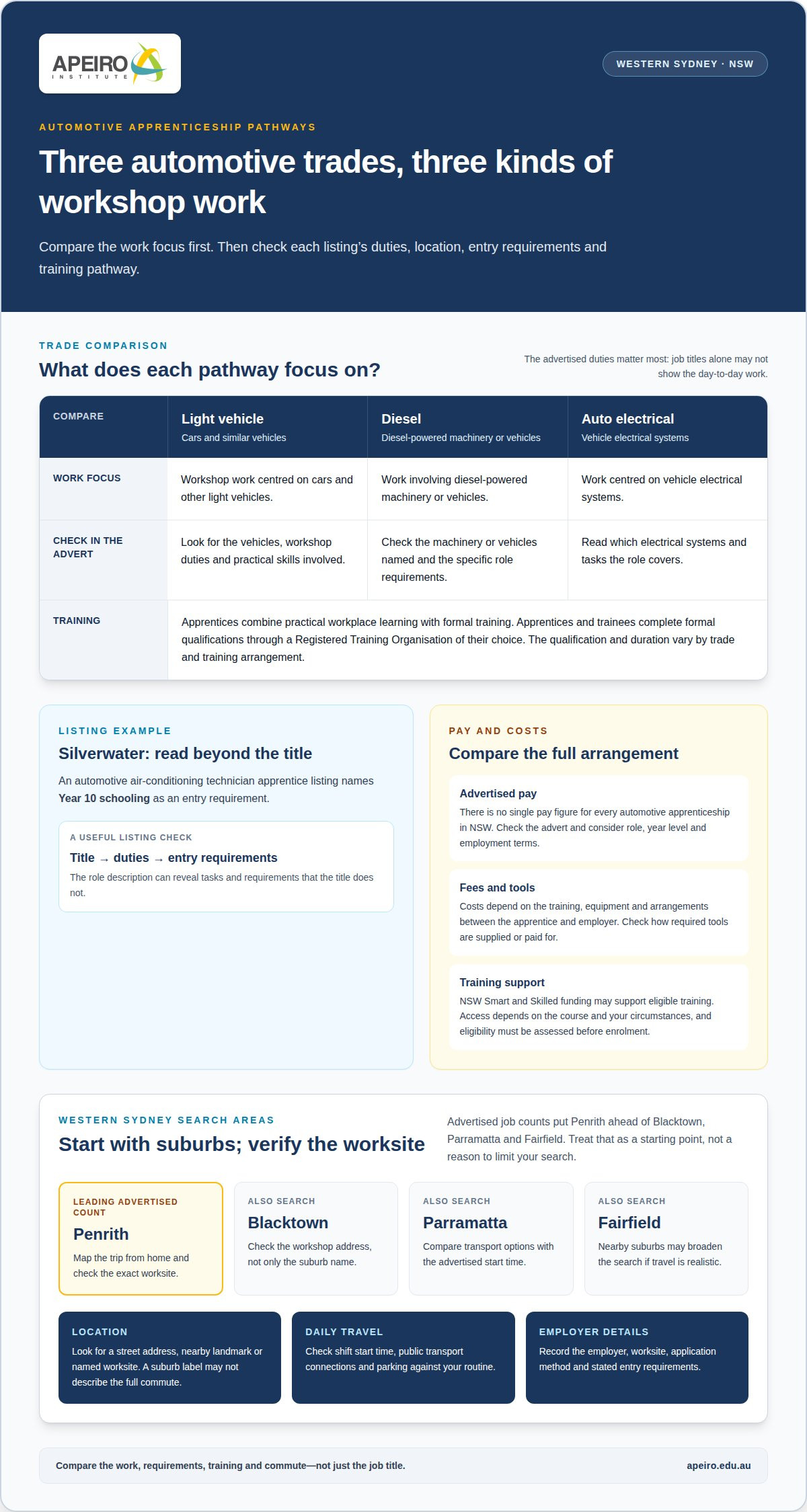
Light vehicle, diesel and auto electrical apprenticeships lead to different kinds of workshop work. Light vehicle roles centre on cars and similar vehicles; diesel roles focus on diesel-powered machinery or vehicles; auto electrical work centres on vehicle electrical systems. These distinctions can help narrow your search, but the advertised duties matter most. Compare the work setting and training pathway before choosing a direction.
Apprentice pay rates in NSW
There isn’t one pay figure for every automotive apprenticeship in NSW. Check the pay stated in each advertisement and consider the role, year level and employment terms before comparing opportunities.
Fees and tool costs depend on the training and equipment needed for the role, as well as arrangements between the apprentice and employer. Ask how required tools are supplied or paid for, and whether training costs apply to your circumstances. Consider these separately from the advertised wage when comparing listings.
An apprenticeship combines workplace learning and formal study, but duration and qualification vary by trade and training arrangement. NSW Smart and Skilled funding may support eligible training. Access depends on the course and your circumstances, and eligibility must be assessed before enrolment.
Apprenticeship locations in Western Sydney
Western Sydney has several distinct areas to include in an apprenticeship search. The listings introduced earlier place Penrith ahead of Blacktown, Parramatta and Fairfield by advertised job count. Treat that as a starting point, not a reason to limit your search to one suburb. Vacancies change, and each employer sets its own workplace location and role requirements.
Use the suburb in each advertisement to judge whether the role fits your travel options. A workshop near a main road may be easier to reach than one in an industrial area. Check the shift start time, public transport connections and parking details against your daily routine. For example, a Penrith vacancy may suit someone living nearby, while a Parramatta role could work for someone travelling from elsewhere in the region.
- Penrith: Review roles around the local business and industrial areas, then map the trip from home.
- Blacktown: Check the exact workshop address, not just the suburb listed in the advert.
- Parramatta: Compare the advertised worksite with transport options and your start time.
- Fairfield: Include nearby suburbs in your search if you can travel beyond Fairfield itself.
These areas are useful search points, but a listing’s location label may not describe the full commute. Open the advertisement and look for a street address, nearby landmarks or a named worksite. If it gives only a suburb, use the contact details to ask where the apprentice reports each day. This matters when a business operates across several sites.
Automotive workshop conditions vary with the employer and the work performed. Tasks can involve vehicles, tools and electrical systems, so safe work practices, physical stamina and suitable supervision matter. Developing physical fitness and mental focus through activities such as Pinnacle Taekwondo Martial Arts can also help apprentices handle the demanding manual routines of workshop life. Career prospects depend on the skills developed, trade pathway and experience gained at work. An apprenticeship can build a foundation for further automotive roles.
When comparing a Western Sydney vacancy with another opportunity elsewhere in Australia, weigh the work itself alongside location. A shorter commute may make an early start more manageable, while a more distant role could offer duties that better suit your interests. Neither a suburb name nor a job count tells the full story. Read the role description, confirm the worksite and consider how the travel fits your routine before applying.
For a practical location check, shortlist suitable suburbs, then compare individual advertisements. Record the employer name, worksite, application method and stated entry requirements. Penrith, Blacktown, Parramatta and Fairfield are useful starting points; nearby suburbs can broaden the search when travel is realistic. This keeps your search focused on reachable roles and relevant workshop experience.
Automotive apprenticeship opportunities in NSW
NSW listings differ by trade, location and experience level. A diesel fitter apprentice advertisement in Kings Park seeks a second-year apprentice with first-year experience. This shows why the role details matter: some openings suit school leavers, while others seek someone already progressing through an apprenticeship.
There isn’t one entry requirement that applies to every automotive apprenticeship. Employers set criteria for individual vacancies, and the listing should explain what applicants need. For example, a Silverwater automotive air-conditioning technician listing names Year 10 schooling as an entry requirement. Treat that as a condition for that advertised role, not a blanket rule for every NSW workshop.
There is no single minimum age for every automotive apprenticeship in NSW. Age and eligibility depend on the specific apprenticeship arrangement and employer requirements, so follow each vacancy’s stated criteria rather than assuming one age applies across the state.
Experience can also shape which opportunities suit you. The Kings Park diesel fitter advertisement targets a second-year apprentice with first-year experience, so it is aimed at someone who has already started training. New applicants should focus on roles accepting first-year apprentices or school leavers, then compare the duties and entry conditions before applying.
The same Kings Park listing requires a valid C class driver’s licence. That is a condition for this vacancy, not a universal requirement for every automotive apprenticeship. Read the full advertisement and note any licence, experience or schooling criteria separately. This makes it easier to identify roles that match your current qualifications and experience.
- Starting out: Look for listings that name school leavers or first-year apprentices.
- Already training: Search for opportunities that request your current year level and prior experience.
- Checking eligibility: Match each stated requirement, such as a C class licence, to your circumstances.
Before applying, identify the employer, role location and application method. Tailor your enquiry to the vacancy: mention the advertised trade, your relevant experience and how you meet its stated conditions. For a Kings Park second-year role, for example, refer to your first-year experience and licence status.
Use your school experience, practical interests and current training to decide which vacancies to pursue. A school leaver may prioritise entry-level listings, while an apprentice already in training can focus on roles seeking their experience level. Comparing the conditions in each advertisement gives you a clearer next step across NSW opportunities.
Employer and contact details
A useful apprenticeship listing connects the role with a named employer and an application channel. Before making contact, note the job title, workshop suburb and advertised duties. For example, an automotive vacancy in Western Sydney may name a workshop location but direct applications through an online form. Follow the method given in that advertisement.
Keep the employer’s name and role details together. This helps you make a clear enquiry, especially when an organisation advertises several positions. Include the exact apprenticeship title in your email subject line or phone introduction. A message about a light vehicle mechanic role is easier to direct than a general request about automotive work.
Use the contact details in the listing, such as a phone number, email address or application link. Prepare a short introduction before calling. State your name, the role you’re asking about and a relevant detail, such as your school experience or current apprenticeship year. Then ask about the next application step.
- Employer: Record the business name exactly as displayed.
- Role: Note the trade title and any stated experience level.
- Location: Save the suburb and worksite details for travel planning.
- Contact method: Use the phone, email or application channel in the advert.
- Follow-up: Keep a note of when you applied and whom you contacted.
A clear email helps an employer understand your interest. Use a subject line naming the advertised role and suburb. Briefly explain why the apprenticeship interests you, then mention relevant experience or training. Attach requested documents through the stated application process. Keep your message specific to the vacancy rather than sending the same general note to every employer.
For a phone enquiry, have the advertisement open and note the role title. Ask whether the employer is accepting applications and what information they need. If the contact is a recruitment representative, ask which business or workshop the vacancy relates to. These details help you develop a focused application and avoid confusing separate opportunities.
After applying, track each vacancy separately. A simple record can include the employer, suburb, application date, contact person and response. For example, create one entry for a Penrith workshop and another for a Blacktown employer. This makes follow-up more organised and helps you respond accurately if an employer calls about a particular role.
Keep your communication professional and practical. Use the name provided in the advertisement, check spelling before sending, and make your contact details easy to find. Follow any instructions for documents or application format. A well-organised enquiry clearly conveys your interest and helps you manage each apprenticeship application.
Employment figures can add context when you compare apprenticeship pathways, but they do not replace the details of a vacancy. Practical learning has an 82% employment figure, while academic learning has a 67% employment figure. Keep those figures separate from an employer’s own claims, and use the listing’s stated role, duties and contact method when deciding what to ask during an enquiry.
What automotive trades can you apprentice in, such as light vehicle, diesel, or auto electrical?
Automotive apprenticeships cover several trade areas, and the right fit depends on the work you want to learn. Light vehicle, diesel and auto electrical roles focus on different systems and workshop tasks. Compare the job duties, worksite and training pathway rather than choosing by title alone.
A light vehicle apprenticeship may suit someone interested in servicing and repairing cars or similar vehicles. Listings may describe general mechanical work or focus on a particular area, such as automotive air conditioning. Read the duties to see what the apprentice will work on. A role title can be broad, while the daily tasks are more specific.
Diesel apprenticeships centre on diesel-powered vehicles or equipment. The work setting shapes the experience: an employer might focus on vehicles, machinery or a mix. Look for these details in the vacancy description. If an advertisement asks for previous apprenticeship experience, it may suit someone already progressing in the trade rather than a new starter.
Auto electrical apprenticeships focus on vehicle electrical systems. This pathway may appeal if you’re interested in diagnosing electrical faults and working with vehicle components. Read the listing for specific tasks and training details. The role description helps distinguish an auto electrical position from a general mechanical apprenticeship, even when both are based in automotive workshops.
To compare options, consider the problems you’d like to solve. A light vehicle mechanic may focus on mechanical faults; a diesel apprentice may prefer larger diesel-powered equipment; an auto electrical apprentice may gravitate towards electrical diagnosis. These are broad distinctions, so check each employer’s advertised duties before deciding.
- Light vehicle: Compare the vehicle types and mechanical tasks named in each listing.
- Diesel: Look for whether the employer works with vehicles, equipment or both.
- Auto electrical: Check how much the role focuses on electrical systems and fault diagnosis.
Your preferred trade can guide your search, but keep the pathway flexible. A listing’s location, entry criteria and workplace tasks all affect whether it suits your circumstances. Someone interested in vehicle diagnosis, for example, could compare mechanical and electrical roles, then assess which duties match their interests. The training should also connect with the trade and workplace.
In Western Sydney, use these trade distinctions to sort vacancies before contacting employers. Record the role title, suburb, main duties and any experience requirements. This makes it easier to compare a light vehicle opening with a diesel or auto electrical opportunity, and to ask focused questions about the work and training.
Explore light vehicle mechanical training
Apeiro Institute: Apprenticeships and Traineeships
Apeiro Institute offers Apprenticeships and Traineeships for learners building vocational skills. If you’re exploring an automotive pathway, its AUR30620 Certificate III in Light Vehicle Mechanical Technology aligns with light vehicle training. Experienced workers can also consider Trade Pathways for Experienced Workers (TPEW), while Smart & Skilled Funded Courses may suit eligible learners seeking funded training. These options support different starting points, from developing trade skills to recognising existing experience. The right next step depends on your career direction and the training pathway you’re pursuing. For information about training options, contact Apeiro Institute.
Take your next step towards a trade career
Choosing an automotive apprenticeship in Western Sydney is a practical way to start building trade skills. Make your next move manageable: decide which workshop tasks interest you, identify the training direction you want to pursue, and prepare a clear introduction for employers. A focused application can show how your interests connect with the role, whether you’re starting out or bringing experience from another job.
If you’re weighing up training options alongside your job search, consider how formal learning can support your longer-term goals. Apeiro Institute offers Trade Pathways for Experienced Workers and the UEE30920 Certificate III in Electronics and Communications. The electronics qualification is a separate pathway, suited to learners whose interests extend beyond automotive work.
Take time to choose a direction that fits your skills and ambitions. A thoughtful first step can help you move towards a rewarding career.
Frequently Asked Questions
What automotive apprenticeships are available in Western Sydney?
Western Sydney listings include light vehicle mechanic, diesel fitter, auto electrical and automotive air-conditioning apprenticeship roles. Each vacancy sets out the work, experience sought and entry requirements. For instance, an air-conditioning technician apprenticeship is listed in Silverwater, while a diesel fitter opportunity appears in Kings Park. Compare the advertised duties with your interests, then check the training pathway and application instructions before applying.
Which Western Sydney employers and dealerships offer automotive apprenticeships?
Automotive apprenticeship vacancies are advertised by individual employers, including workshops and dealerships, but the listings covered here don’t identify specific employer or dealership names. Use each vacancy’s contact details to identify who is recruiting and where the role is based. In your enquiry, mention the advertised position and suburb, then ask about the worksite, application process and duties. This helps you direct your application to the right contact.
What is the apprentice pay rate for automotive apprentices in NSW in 2026?
There is no single pay rate for every automotive apprenticeship in NSW.

Disclaimer
The information provided on this blog is for general informational and educational purposes only. While every effort is made to ensure the accuracy and reliability of the content, the author makes no representations or warranties of any kind, express or implied, about the completeness, accuracy, suitability, or availability of the information contained on this blog.
The views and opinions expressed in blog posts are those of the individual author and do not necessarily reflect the official policy or position of any organization, company, or employer.
This blog may contain links to external websites or third-party content. These links are provided for convenience only, and the author has no control over and assumes no responsibility for the content, privacy policies, or practices of any third-party sites.
Nothing on this blog constitutes professional advice (legal, financial, medical, or otherwise). Readers are encouraged to seek appropriate professional guidance before making any decisions based on the information provided here.
By using this blog, you acknowledge that any reliance on the information is at your own risk.


