

An apprenticeship isn’t the only part of qualifying as a motor mechanic. To become a qualified motor mechanic in NSW, you need the appropriate motor vehicle tradesperson certificate and must be qualified and certified for each class of repair work you perform. A motor vehicle repairer licence is separate and is required if you run a motor vehicle repair business.
If you’re starting out, combining workplace experience with structured learning through providers like Apeiro Institute can help you develop the skills required for the trade. Already working on vehicles? Recognition of Prior Learning (RPL) may recognise relevant skills, knowledge and experience towards a formal qualification, following an assessment of your evidence.
This guide explains repair-work certificate classes, how an automotive apprenticeship combines workplace training with classroom learning, and why hands-on workshop experience matters. You’ll also find out how RPL may fit your circumstances and which training pathways can help you work towards becoming a motor mechanic. Understanding the requirements and options can help you choose a practical next step that suits your experience and goals.
Key Takeaways
- Understand why NSW requires a motor vehicle tradesperson certificate for each class of repair work you perform.
- See how an automotive apprenticeship combines practical workplace training with classroom learning.
- Explore how workplace-based training can connect learning with the skills you use on the job.
- Find out how hands-on experience can build capability in diagnosis, repairs and regular vehicle maintenance.
- Learn how Recognition of Prior Learning may turn existing skills and work experience into a formal qualification.
Required repair-work qualifications
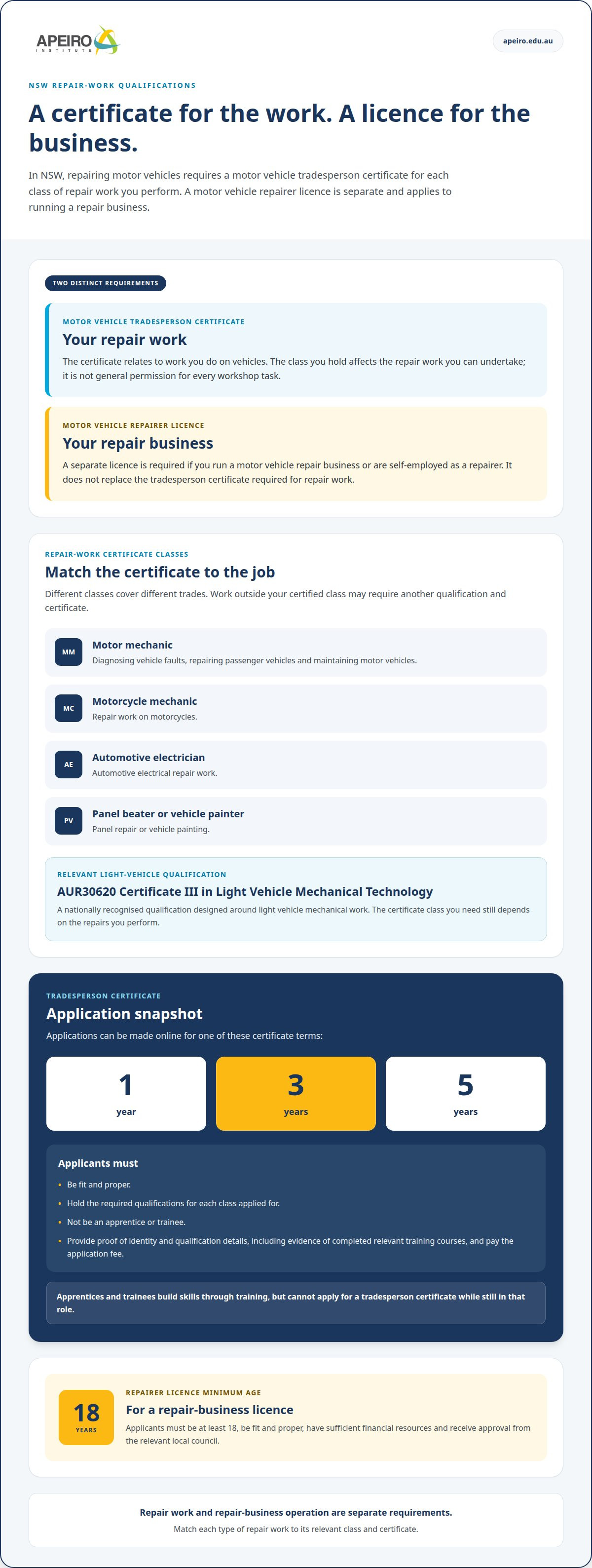
In NSW, repairing motor vehicles requires a motor vehicle tradesperson certificate, even if you hold a motor vehicle repairer licence. The repair work you can undertake may depend on your qualifications and certification. The certificate relates to your work on vehicles; the repairer licence applies to running a repair business.
Certificate classes cover different trades, rather than giving general permission for every workshop task. Listed classes include motor mechanic, motorcycle mechanic, automotive electrician, panel beater and vehicle painter work. A motor mechanic certificate covers work such as diagnosing vehicle faults, repairing passenger vehicles and maintaining motor vehicles. Work outside your certified class may require a different qualification and certificate.
- Motor mechanic: passenger vehicle diagnosis, repairs and maintenance.
- Motorcycle mechanic: repair work on motorcycles.
- Automotive electrician: automotive electrical repair work.
- Panel beater or vehicle painter: panel repair or vehicle painting.
Which Certificate III automotive mechanic courses are available in NSW? One relevant nationally recognised qualification is AUR30620 Certificate III in Light Vehicle Mechanical Technology. It’s designed around light vehicle mechanical work, while the certificate class you need depends on the repairs you perform.
If you want to move from light vehicle work into electric or specialist vehicles, identify the systems and repair tasks involved first. Then pursue relevant training and practical experience, and establish which NSW repair-work class applies. Before doing work in another class, you must hold the required qualification and tradesperson certificate for that class.
Applicants for a motor vehicle tradesperson certificate must be fit and proper, hold the required qualifications for each class, and not be an apprentice or trainee. Prepare proof of identity and qualification details, including evidence of completed relevant training courses. The application also requires fee payment. Applications can be made online for a term of 1, 3 or 5 years.
A motor vehicle tradesperson certificate differs from a motor vehicle repairer licence. If you’re self-employed as a repairer or run a motor vehicle repair business, you need the repairer licence as well. Repairer licence applicants must be at least 18 years old. They must also be fit and proper, have sufficient financial resources, and receive approval from the relevant local council.
Understanding these distinctions helps you plan the right qualification before taking on repair work. Apprentices and trainees build skills through training, but can’t apply for a tradesperson certificate while still in that role. Once qualified, match each type of repair work to its relevant class and certificate.
Automotive apprenticeships
An automotive apprenticeship combines structured learning with practical work in a workshop. This pathway can help you develop the skills and evidence needed for a motor mechanic qualification.
Automotive apprenticeship training
An automotive mechanic apprenticeship combines on-the-job training with classroom learning. In a workshop, apprentices can develop skills through tasks such as inspecting vehicle components, servicing engines and investigating faults. Classroom learning provides the underlying knowledge to understand why a repair is suitable, not just how to carry it out.
Consider how the training connects each learning area with real workshop tasks. For example, a lesson on vehicle systems becomes more meaningful when you can observe those systems during supervised work. Regular feedback from workplace supervisors can help you identify what to practise and which questions to take back to class.
As you progress, keep a record of the work you’ve completed and the skills you’ve developed. Examples might include routine servicing, replacing components or using diagnostic equipment under supervision. This record can help you and your trainer discuss progress and identify experience you still need. The goal is to connect classroom learning with the standards and tasks of your chosen automotive work.
An apprenticeship is a pathway for people learning through employment and formal training. It doesn’t mean you already hold a motor vehicle tradesperson certificate. Apprentices and trainees can’t apply for that certificate while still in the role, so completing the apprenticeship and qualification pathway matters before applying.
Course and apprenticeship costs
Automotive mechanic course and apprenticeship costs vary according to the course, training arrangement, required materials and any applicable funding. Fees are provided on request, and a written fee schedule must be obtained for each qualification. Consider the full training arrangement, not just tuition, when reviewing the cost.
Funding can affect the cost of eligible training. NSW Smart and Skilled funding may be relevant to some learners, depending on the qualification, individual eligibility and current program availability. Funding must be assessed for the exact qualification before enrolment, and isn’t guaranteed. Alongside cost, compare the qualification, practical learning and workplace requirements.
Before committing, map out the main parts of the arrangement:
- Course: identify the qualification and its learning requirements.
- Workplace: understand how practical tasks fit alongside classroom learning.
- Materials: account for any learning resources required for the course.
- Funding: establish whether an applicable funding option changes the amount payable.
This breakdown makes it easier to understand what the training cost covers. It can also help you compare an apprenticeship with other ways of gaining automotive skills, without treating a lower upfront cost as the only measure of value.
Choose training that connects the qualification with the repair work you want to perform. A clear link between course learning, supervised workshop tasks and feedback gives each part of an automotive apprenticeship a practical purpose.
Flexible, workplace-based training
Workplace-based training connects automotive learning with tasks performed in a repair workshop. An RTO can deliver nationally recognised qualifications, while relevant workplace examples help learners relate course concepts to vehicle servicing, fault diagnosis and repairs. The training should show how classroom learning and practical tasks support the same qualification.
For people aiming to become a qualified motor mechanic in NSW, flexibility means fitting learning around how skills develop at work, not skipping essential knowledge. Someone who regularly assists with servicing can connect lessons about vehicle systems with inspections and maintenance. A learner with diagnostic experience can use fault-finding examples to explore how symptoms, tests and repair decisions fit together.
A useful approach links each workplace task to a learning goal. A supervisor might demonstrate a process, observe the learner practising it, then discuss what went well and what needs more work. This turns routine workshop activity into deliberate skill development, rather than relying on repetition alone.
- Choose a task: use a real example, such as inspecting a vehicle component.
- Connect the learning: identify the relevant system or repair concept.
- Practise with guidance: apply the process under appropriate supervision.
- Review the outcome: discuss the steps, findings and areas to develop.
Work schedules and workshop demands can change, so clear communication helps keep learning plans on track. A learner and trainer can identify suitable tasks, organise learning around workplace opportunities and revisit skills that need more practice. If diagnostic work is limited for a time, course activities can still develop understanding of diagnostic principles.
Good workplace learning also makes progress visible. Keep examples of completed tasks, questions raised and feedback received. A record might describe a service inspection, the checks performed and the reasoning behind a finding. These details support useful conversations with a trainer and help identify the next skill to practise.
Before choosing a training arrangement, consider how course content connects with your automotive work. Discuss how practical learning is organised, how progress is reviewed and how the training supports your qualification. Workplace examples can make learning relevant to day-to-day workshop tasks.
Becoming a qualified motor mechanic in NSW means connecting learning goals, practical opportunities and feedback. Whether you’re working on a routine service or a vehicle fault, each task can build understanding when paired with clear instruction and purposeful practice.
Hands-on workshop experience
Workshop practice connects automotive theory with the work mechanics perform, including diagnosis, repair and regular maintenance. A learner might trace a vehicle fault from the reported symptom through testing and repair. Following that sequence shows how workshop decisions shape the completed job.
Look for opportunities to observe different tasks instead of repeating one familiar job. An oil and filter service develops different experience from investigating an engine fault. Watching a mechanic can show how they organise a repair, interpret findings and explain the next step. With appropriate supervision, practising tasks helps turn observation into practical capability.
Work experience can begin through an internship, a shadowing programme or volunteer work. Each offers a different way to observe workshop routines and how automotive teams approach tasks. During shadowing, notice how a mechanic moves from a customer’s description to a diagnosis. An internship may offer opportunities to practise suitable tasks with guidance.
Make each experience count by reflecting on the work afterwards. Record the task, what you observed, the tools or information used and what you’d like to understand better. After watching a mechanic diagnose a vehicle fault, for example, note how each test helped narrow down possible causes. Discussing the process with a supervisor or trainer can turn questions into learning goals.
- Diagnosis: follow how observations and tests help identify a vehicle fault.
- Repair: observe how a mechanic plans and completes a repair task.
- Maintenance: learn how regular servicing supports vehicle upkeep.
- Reflection: capture questions and feedback from practical experience.
Automotive competitions can also give apprentices focused practical challenges. MTA NSW hosted regional competitions in preparation for the National World Skills Competition held in 2023. Eight MTA NSW-trained apprentices competed in paint and panel-style challenges. These examples show how practical skills can be tested beyond routine workshop activity.
Experience should keep developing as vehicles and workshop practices change. Workshops, further courses and other learning opportunities can help mechanics extend their knowledge. Someone confident with regular maintenance might pursue further learning in diagnosis. Match the next opportunity to a skill gap, then apply that knowledge through relevant practical work.
Workshop experience supports learning, but doesn’t replace the qualification required for a repair-work class. Use practical tasks to build understanding, ask informed questions and strengthen your skills. Observation, supervised practice and reflection can help you identify which automotive work interests you and what to develop next.
Recognition of Prior Learning
Recognition of Prior Learning (RPL) gives experienced workers a way to seek formal qualifications using skills, knowledge and work experience they already have. RPL can be a way to have existing skills, knowledge and work experience considered toward a formal qualification, but it does not automatically grant one. For an automotive worker, the key is showing how existing experience relates to the relevant qualification.
Think about the work you’ve actually performed. A mechanic who has regularly serviced light vehicles, replaced components and investigated faults has practical experience to draw on. Someone whose work has focused on routine maintenance will have a different experience profile from a technician focused on diagnosis. Specific examples help make those differences clear.
Start by mapping your experience against the qualification you want. List the tasks you’ve completed, the vehicles or systems involved and the knowledge you used. For example, describe how you approached a recurring starting fault, which checks you performed and how you reached a repair decision. Clear detail is more useful than a broad statement such as “experienced mechanic”.
Evidence can help demonstrate the work behind your claims. Relevant material might include work records, job descriptions, training records, references or examples of completed tasks. Connect each item to a specific skill. A service record, for instance, can support an account of maintenance work, while a diagnostic report can illustrate fault-finding knowledge.
- Experience: identify relevant automotive roles and duties.
- Examples: describe tasks such as servicing, repairs or diagnosis.
- Evidence: gather records that relate to the skills claimed.
- Gaps: identify learning areas not demonstrated by existing experience.
RPL can be relevant when you’ve gained skills outside a standard training pathway. That experience might come from employment, earlier training or practical work in different settings. However, time spent in a workshop alone doesn’t show what you can do. A useful account explains the task, your role, the knowledge applied and the outcome.
Be precise about the qualification and repair work you’re aiming for. For example, describe experience with passenger vehicle servicing in terms of the tasks and skills involved. If your goal includes a different repair-work class, identify the distinct skills it requires. This keeps your evidence focused on the outcome you’re seeking.
RPL can help experienced workers seek formal recognition of existing learning, but it doesn’t change the NSW requirement to hold the relevant qualification and tradesperson certificate for each repair-work class. Organise your experience around the qualification you’re seeking, then provide evidence to show how your existing capability aligns with it. An assessment is required to determine any recognition and its effect on your training plan.
Explore a pathway for experienced workers
Apeiro Institute
Apeiro Institute offers vocational training pathways to support your next step towards automotive work, including Apprenticeships and Traineeships, Trade Pathways for Experienced Workers (TPEW) and Smart & Skilled Funded Courses. These options may suit you if you’re considering structured training or bringing existing workplace experience into a formal learning pathway.
Choose a pathway that reflects your current experience and the qualification you need for your intended repair work. NSW tradesperson certificate requirements still apply, so keep the relevant repair-work class in view as you consider training. Contact Apeiro Institute to discuss your learning pathway.
Shape your next move in the automotive trade
If you want to become a qualified motor mechanic in NSW, start with a clear picture of the work you want to do. Consider which vehicle systems interest you, which skills you want to build and how you’ll connect further learning with practical experience. A focused direction can help you choose training that supports your longer-term goals.
As your experience grows, keep track of the tasks you’ve handled and the knowledge you’ve gained. Reflecting on this can help you recognise new learning needs and plan your development, whether you’re entering the trade or building on existing experience. Progress comes through deliberate steps, applied learning and a commitment to developing your skills.
Ready to discuss a training pathway that fits your automotive goals? Contact Apeiro Institute.
Take your next step with confidence and keep building towards the work you want to do.
Frequently Asked Questions
What qualifications are required to become a motor mechanic in NSW?
You need the qualification and motor vehicle tradesperson certificate for each class of repair work you perform. For light vehicle mechanical work, AUR30620 Certificate III in Light Vehicle Mechanical Technology is a relevant qualification. For example, servicing passenger vehicles falls within motor mechanic work, while automotive electrical repairs are a separate class. Match your training to the tasks you intend to carry out, not just your workshop job title.
What are the entry requirements for an automotive mechanic apprenticeship in NSW?
Entry requirements depend on the apprenticeship and training arrangement. Before applying, prepare a clear account of your education, any workshop experience and why automotive work interests you. Some applicants may have experience with vehicles through hobbies or school activities, while others are new to the trade. Be ready to discuss your availability for workplace tasks and classroom learning, as an apprenticeship combines both.
How do you find and apply for a motor mechanic apprenticeship in NSW?
Look for automotive apprenticeship vacancies with workshops and employers, then follow the application instructions in each listing. Tailor your application to the role by describing relevant vehicle experience, practical interests and your willingness to learn. If invited to discuss the position, ask how workplace training connects with classroom learning and what tasks an apprentice may encounter. A clear application helps an employer understand your interest and starting experience.
How long does a motor mechanic apprenticeship and Certificate III take in NSW?
The time required depends on the apprenticeship and training arrangement, so there isn’t one duration that applies to every learner. An apprenticeship combines workplace training with classroom learning, while the Certificate III sets out the learning required for the qualification. Course structure, learner progress and how training is organised affect the overall pathway. Discuss how the course and workplace components fit together before planning your study commitments.
Are motor mechanics required to hold a licence or registration in NSW?
For repair work, the relevant credential is a motor vehicle tradesperson certificate, rather than a general mechanic registration. You need the appropriate certificate class for the repair work you perform. A separate motor vehicle repairer licence is required if you’re self-employed as a repairer or run a motor vehicle repair business. An employed mechanic and someone operating a repair business may have different licensing obligations.
What skills, work experience and tools do NSW motor mechanic employers expect?
Relevant skills include inspecting components, servicing vehicles, investigating faults, using diagnostic equipment under supervision, and carrying out diagnosis, repairs and maintenance. Apprenticeships combine workplace training with classroom learning. The material gives no specific employer expectations for tools.

Disclaimer
The information provided on this blog is for general informational and educational purposes only. While every effort is made to ensure the accuracy and reliability of the content, the author makes no representations or warranties of any kind, express or implied, about the completeness, accuracy, suitability, or availability of the information contained on this blog.
The views and opinions expressed in blog posts are those of the individual author and do not necessarily reflect the official policy or position of any organization, company, or employer.
This blog may contain links to external websites or third-party content. These links are provided for convenience only, and the author has no control over and assumes no responsibility for the content, privacy policies, or practices of any third-party sites.
Nothing on this blog constitutes professional advice (legal, financial, medical, or otherwise). Readers are encouraged to seek appropriate professional guidance before making any decisions based on the information provided here.
By using this blog, you acknowledge that any reliance on the information is at your own risk.


