

Could your first step into aged care be learning on the job, rather than arriving with years of experience? An Entry level aged care traineeship can combine practical workplace learning with training towards a recognised qualification. The employer, training provider and written terms determine how that arrangement works.
If you’re unsure whether you need previous care experience, how study fits around paid work or whether the role will suit you, those are sensible questions to ask. Aged care can be rewarding, but it can also be physically and emotionally demanding. Understanding the duties, supervision and study commitments can help you decide whether a traineeship is a realistic fit.
This guide covers how workplace learning and formal study may fit together, what to check before applying, and how to compare employment and training arrangements. It also explains how CHC33021 Certificate III in Individual Support (Ageing and Disability) may fit into an entry-level pathway. By the end, you’ll have practical questions to ask employers and training providers as you consider your next step.
Key Takeaways
- An Entry level aged care traineeship combines employment with structured training, but arrangements vary between opportunities.
- Compare the employer, training provider, qualification and written employment terms before accepting a role.
- Ask who supervises you, how study and assessment are scheduled, and what support is available.
- Customer service, volunteering and caring responsibilities can provide useful examples of transferable skills in an application.
- CHC33021 Certificate III in Individual Support (Ageing and Disability) is a training option to explore. Confirm current course arrangements and traineeship availability directly.
What Is an Entry-Level Aged Care Traineeship, and Who Might It Suit?
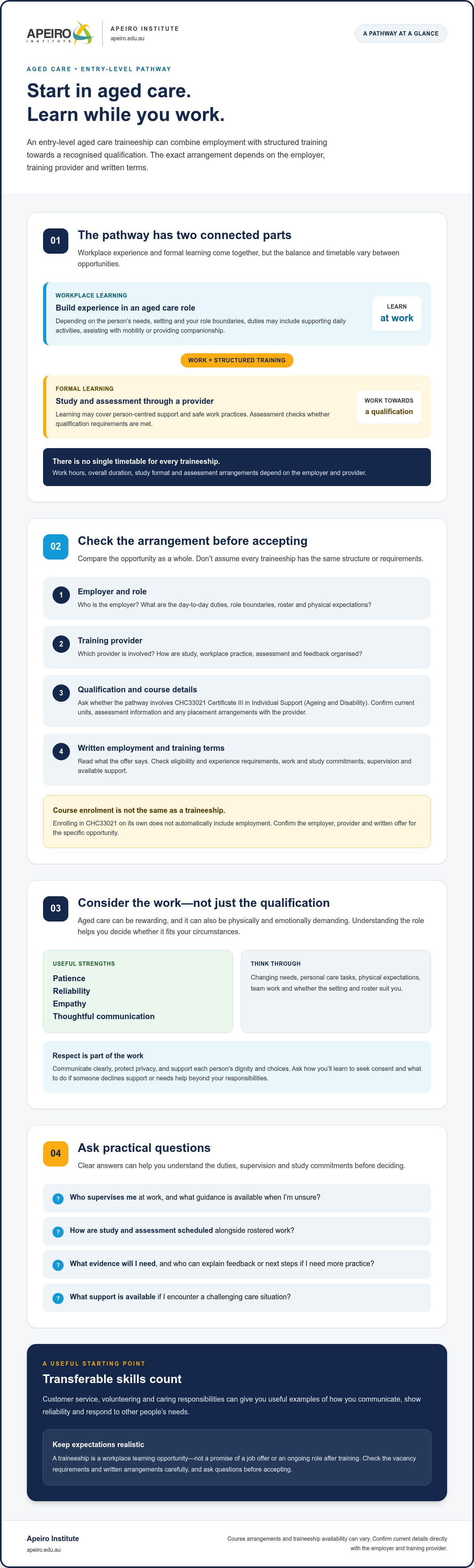
An Entry level aged care traineeship is a work-and-training pathway. You take on a role with an aged care employer while completing structured training towards a relevant qualification. The balance between paid work, study and assessment varies, so check the details of each vacancy instead of assuming all traineeships follow the same pattern.
A traineeship is different from enrolling in CHC33021 Certificate III in Individual Support (Ageing and Disability) on its own. Course enrolment does not automatically include employment. If you’re considering a traineeship, find out who the employer is, which training provider is involved and what the written offer says. Check the vacancy’s experience, age and eligibility requirements too. These can vary, so ask rather than relying on assumptions.
What Does an Aged Care Trainee Do?
Depending on the person’s needs, care setting and your role boundaries, you may support daily activities, assist with mobility or provide companionship. The employer should explain your tasks and the guidance available. The wider idea of Elderly care includes different forms of support, so day-to-day duties can vary.
Respect matters in every interaction. Communicate clearly, protect privacy and support each person’s dignity and choices. Ask how you’ll learn to seek consent, and what to do if someone declines support or needs help beyond your responsibilities.
Could Aged Care Work Suit You?
Patience, reliability, empathy and thoughtful communication can all help in care work. You don’t need to have everything figured out before applying. It is useful, though, to consider how you respond to other people’s needs and work as part of a team.
The role can be emotionally and physically demanding. You may encounter changing needs, personal care tasks or situations that call for calm, respectful communication. Ask the employer to describe typical duties, supervision, physical expectations and how trainees are supported when they’re unsure. Consider whether the work setting and roster fit your circumstances.
A traineeship is a workplace learning opportunity, not a promise of a job offer or an ongoing role after training. Read the employment and training arrangements carefully, and ask questions before accepting. Knowing what the role involves helps you decide whether this pathway is a practical next step.
How an Aged Care Traineeship Combines Workplace Learning and Study
A traineeship brings workplace experience together with structured learning. You may practise skills at work while completing learning activities and assessments through a training provider. The workplace connects learning with real support situations, while assessment checks whether you meet the qualification requirements. The balance varies, so there’s no single timetable for every Entry level aged care traineeship.
CHC33021 Certificate III in Individual Support (Ageing and Disability) is one qualification to ask about when reviewing a traineeship. Providers may differ in delivery, assessment and any placement arrangements. The Australian Government Department of Health and Aged Care provides an overview of government-funded aged care services. This offers context about the sector, but it does not set the training plan for a particular employer.
What Might the Training and Assessment Include?
Learning may cover person-centred support and safe work practices, alongside the knowledge needed to provide appropriate assistance. Before enrolling or accepting a role, ask the provider for current CHC33021 unit and assessment information. Course details can change, and providers may assess in different ways, so check the information for the specific course you’re considering.
To complete the qualification, you’ll need to meet its required assessment standards. Ask how your knowledge and workplace skills will be assessed, what evidence you’ll need to provide, and who can explain feedback or next steps if you need more practice.
How Do Work and Study Fit Together?
Depending on the arrangement, your week may include rostered paid work, supervised workplace practice and formal learning. Study could involve online activities, classes or another format. Ask the provider which options are available. Work hours and overall duration depend on the employer and provider, so confirm them before planning around other commitments.
Employers may use different training structures. Bupa’s published traineeship details, for example, describe that employer’s programme, not a standard for the whole sector. Treat any employer example as a prompt to ask what your own arrangement includes.
Before accepting, get clear answers to practical questions: Who provides the training? Who supervises you at work? Is mentoring available? When does learning happen, and how does it fit around your roster? Also ask how missed learning or assessment support is handled. If you’re comparing a traineeship with studying independently, you can explore CHC33021 training with Apeiro Institute and check current course arrangements directly.
How to Compare Entry-Level Aged Care Traineeship Opportunities
Two roles linked to the same qualification can involve different work and study arrangements. Before accepting an Entry level aged care traineeship, compare the details that affect your day-to-day work, training and employment, not just the programme description. Ask for the relevant written documents and check that they match what you’ve been told.
| What to compare | What to confirm |
|---|---|
| Employer | Which organisation employs you, and who should you contact about workplace matters? |
| Training provider | Who delivers formal training, and who can help with study or assessment questions? |
| Qualification | Is the training linked to CHC33021 Certificate III in Individual Support (Ageing and Disability), or another qualification? |
| Employment arrangement | What do the written offer and employment documents say about pay, hours, leave and other terms? |
| Support and schedule | Who supervises you, how is mentoring provided, and how do rosters fit with learning and assessment? |
What Should You Ask the Employer and Training Provider?
First, establish who employs you and who delivers your training. These may be different organisations. Ask who your workplace supervisor and training support contacts will be, how to seek guidance, and how to raise a concern or request help.
Then check roster expectations, study time and the assessment process. Review the written employment terms for the pay, hours, leave and other conditions that apply to your offer. Don’t assume another trainee’s terms apply to your role. Pay, duration and employee benefits can vary by employer and arrangement.
How Do You Check the Qualification and Provider?
Use training.gov.au to look up the qualification and check its official details. You can also use the National Register to check a training provider’s registration and the qualifications within its scope. The Australian Skills Quality Authority (ASQA) offers guidance for learners on choosing and checking a provider.
For example, Apeiro Institute lists CHC33021 Certificate III in Individual Support (Ageing and Disability) and is RTO 45394. Confirm current delivery, entry requirements and assessment arrangements directly with the provider. Before committing, check that the employer, provider and qualification details align across the written documents. This makes it easier to compare opportunities on the same basis.
How to Prepare and Apply for an Aged Care Traineeship
A strong application starts with checking whether the role, training and employment arrangements suit your circumstances. Requirements for an Entry level aged care traineeship vary between employers. Use the vacancy details as your guide instead of assuming every applicant needs the same experience or documents.
- Research the role: note the duties, setting, roster and qualification named in the vacancy.
- Check the requirements: confirm experience, availability and any screening, licence or other documentation the employer requests.
- Prepare your application: update your résumé and choose examples that show communication, reliability and teamwork.
- Write down questions: ask about study commitments, supervision, support and the employment arrangement.
What Should You Prepare Before Applying?
Your experience doesn’t have to come from a formal care job. Customer service can demonstrate patience and clear communication; volunteering may show initiative and teamwork; caring responsibilities can help you describe reliability and sensitivity to another person’s needs. Use honest, relevant examples, while respecting the privacy of anyone you’ve supported.
Before applying, check whether the vacancy asks for specific screening checks, licences or documents, and confirm the details with the employer. Don’t assume a requirement applies to every aged care position. Prepare practical questions: Who will supervise you? How will study fit around work? Who can you approach if you need help?
What Should You Expect During Recruitment?
An interview may explore why you’re interested in aged care, how you communicate respectfully and how you’d respond to boundaries or unfamiliar situations. You don’t need to claim you know everything. Show that you’re willing to learn, ask for guidance and treat people with dignity.
Be open about your availability, the support that helps you learn and any practical considerations that could affect your roster. This helps you and the employer assess whether the arrangement is suitable. Recruitment steps and timelines vary, so ask what happens next and when to expect an update.
Before accepting an offer, read the written employment and training information carefully. Check that it reflects what you discussed, including the work arrangement and who to contact with questions. If you’re still exploring the qualification, review the course information and confirm current delivery and entry details with the provider.
Explore CHC33021 course information
Your Next Step: Explore Aged Care Training with Apeiro Institute
Look at the whole arrangement before choosing a pathway: the role and its duties, who employs you, which provider delivers the training, and what the written terms say about work, study and support. A suitable option should fit your goals and circumstances, not just sound appealing in a vacancy description.
Apeiro Institute is an Australian registered training organisation, RTO 45394, offering CHC33021 Certificate III in Individual Support (Ageing and Disability). The course is one training option to consider if you’re exploring learning relevant to individual support in ageing and disability contexts. Course enrolment and a traineeship are separate decisions. Completing a qualification does not itself secure a traineeship, job or ongoing employment.
Is CHC33021 a Relevant Starting Qualification?
CHC33021 may be relevant to your plans if you want to develop knowledge and skills for individual support. Before enrolling, check the provider’s current information about course delivery, entry requirements, assessment and any placement arrangements. If you’re comparing the course with a traineeship, ask whether a particular vacancy is linked to this qualification and how the employer and provider coordinate training.
You can review CHC33021 Certificate III in Individual Support (Ageing and Disability) as one training option. Confirm current course details directly with Apeiro Institute, including any eligibility considerations. Funding isn’t automatic, and availability can depend on the relevant arrangements and your circumstances.
How Can You Take the Next Step?
If an Entry level aged care traineeship is your goal, check employer vacancies separately from course options because opportunities can change. For each role, confirm who employs you, which provider delivers the training, and what the written employment and study arrangements include. This helps you distinguish a standalone course from a work-and-training opportunity.
Start by asking Apeiro Institute about current CHC33021 arrangements and employers about any traineeship vacancies, role requirements and employment terms. Compare the answers with your priorities, including roster expectations, study commitments and the support available while you learn. Your next step can be straightforward: gather reliable information, weigh your options and decide what suits you.
Explore CHC33021 training options
Take a Confident Next Step Towards Aged Care Work
A good Entry level aged care traineeship brings workplace learning and recognised training together, but the details depend on the employer and provider. Before committing, compare the role, supervision, study arrangements and written employment terms. Check that the duties and roster suit your circumstances, and ask who you can turn to for support.
If you’re also considering study outside a traineeship, CHC33021 Certificate III in Individual Support (Ageing and Disability) is one qualification to explore. Apeiro Institute is RTO 45394 and offers this course. Confirm current course delivery, entry requirements and assessment arrangements directly. Check employer vacancies separately, as course enrolment doesn’t guarantee a traineeship or job.
You don’t need to have every answer before you begin. Ask clear questions, compare your options and choose a next step that feels realistic for you.
Frequently Asked Questions
What is an entry-level aged care traineeship?
An Entry level aged care traineeship combines employment with structured training, although the exact arrangement varies by employer and provider. It may include study towards a nationally recognised qualification such as CHC33021 Certificate III in Individual Support (Ageing and Disability). Check who employs you, who delivers the training, how supervision works and what the written terms say. Qualification completion depends on meeting the required assessment standards.
Do I need experience to start an aged care traineeship?
Not necessarily, but entry requirements vary between employers, vacancies and training providers. Some roles may be designed for people new to aged care, while others may ask for relevant experience, particular availability or screening checks. Read the current vacancy details and ask the employer what applicants need before applying. Customer service, volunteering or caring experience may also give you examples of useful skills such as communication and reliability.
Do aged care traineeships include paid work and study?
Many traineeship arrangements combine employment with formal training, but the details depend on the specific opportunity. Confirm who employs you, your expected work hours, how study is scheduled and which pay and leave terms apply. Ask whether learning time is included in the arrangement and who supports you with training. Review the written employment and training documents before accepting, rather than relying only on a general programme description.
What qualification can an aged care traineeship lead to?
Some aged care traineeships include CHC33021 Certificate III in Individual Support, with the relevant ageing specialisation or course structure confirmed by the provider. Check the exact qualification and training requirements for the vacancy, including its units and assessment arrangements. Completing a qualification depends on meeting the required assessment standards. It doesn’t guarantee a particular job, employer or ongoing position, so check the employment terms separately.
How long does an aged care traineeship take?
There isn’t one duration that applies to every aged care traineeship. The timeframe can depend on the employer’s programme, the training and assessment schedule, and your progress through the required learning. A duration listed by one employer describes that opportunity, not the wider sector. Ask the employer and training provider for the expected timeframe, how progress is assessed and what you’ll need to complete before the traineeship ends.
Can I get government-funded aged care traineeship training?
Funding depends on the programme, location, eligibility rules and current availability. Apeiro Institute offers Smart & Skilled funded training, but funding isn’t a nationwide entitlement and won’t necessarily apply to every applicant or course. Ask the provider whether funding is available for the specific CHC33021 course and whether you meet the current criteria. Confirm any fees or conditions that may apply to your circumstances before deciding.
What should I look for before accepting an aged care traineeship?
Compare the employer, training provider, qualification, work hours, study arrangements and written employment terms. Ask who will supervise you, how training and assessment work, and where to get help if you need support. Confirm any screening or documentation requirements for the specific role. Check that the written offer matches what you’ve been told, including pay and leave terms, rather than assuming another trainee’s conditions will apply to you.

Disclaimer
The information provided on this blog is for general informational and educational purposes only. While every effort is made to ensure the accuracy and reliability of the content, the author makes no representations or warranties of any kind, express or implied, about the completeness, accuracy, suitability, or availability of the information contained on this blog.
The views and opinions expressed in blog posts are those of the individual author and do not necessarily reflect the official policy or position of any organization, company, or employer.
This blog may contain links to external websites or third-party content. These links are provided for convenience only, and the author has no control over and assumes no responsibility for the content, privacy policies, or practices of any third-party sites.
Nothing on this blog constitutes professional advice (legal, financial, medical, or otherwise). Readers are encouraged to seek appropriate professional guidance before making any decisions based on the information provided here.
By using this blog, you acknowledge that any reliance on the information is at your own risk.


