

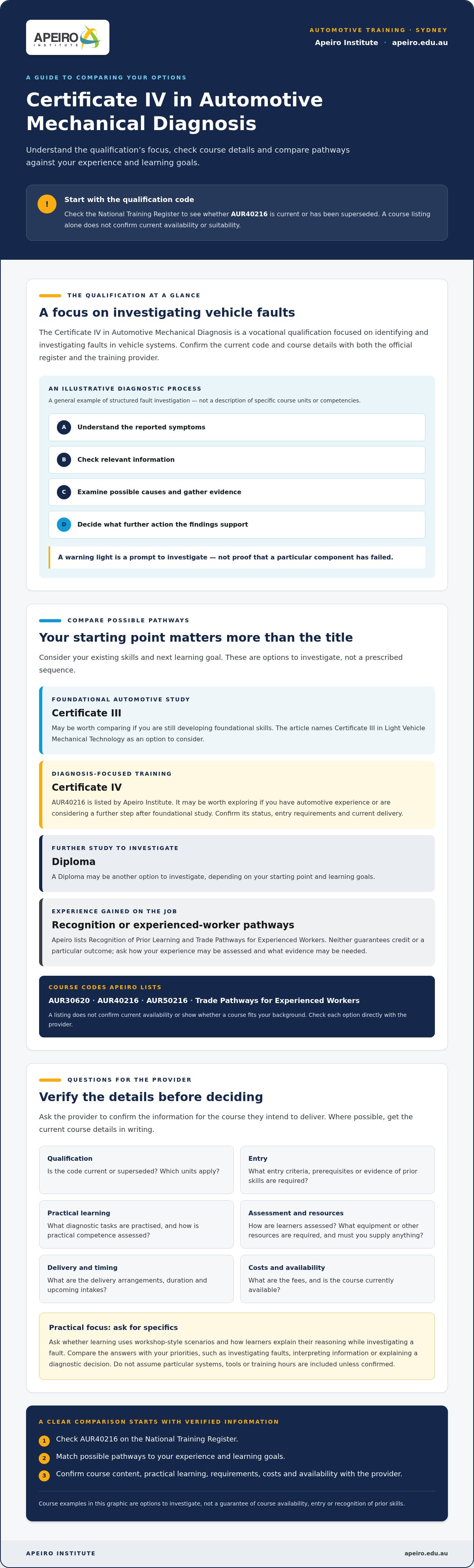
If you’re searching for Certificate IV in Automotive Mechanical Diagnosis Sydney options, compare the qualification with your experience and learning goals before deciding. A Certificate III, a Certificate IV, a Diploma or recognition of skills gained on the job may each be worth investigating, depending on your starting point.
Course titles and codes can be confusing. Apeiro Institute lists AUR40216 alongside AUR30620, AUR50216 and Trade Pathways for Experienced Workers. A listing doesn’t confirm current availability or show whether a course fits your background, so check the details directly with the provider.
This guide explains the qualification’s intended focus and how to compare it with related training and experience-based pathways. It also outlines what to ask a provider, including the current qualification code, entry requirements, units, assessment methods, delivery arrangements, fees and intakes.
Key Takeaways
- Check the official training register to confirm whether AUR40216 is current or has been superseded before comparing course information.
- Use your experience and next learning goal to assess whether a Certificate III, Certificate IV or Diploma is a pathway to investigate further.
- When comparing Certificate IV in Automotive Mechanical Diagnosis courses, verify practical learning, assessment methods and required resources with each provider.
- Ask the provider to confirm entry requirements, units, duration, fees, delivery arrangements and current availability before making an enrolment decision.
- Explore whether AUR30620, AUR40216, AUR50216 or an experience-based pathway may match your starting point. Don’t assume prior skills will be recognised automatically.
What is the Certificate IV in Automotive Mechanical Diagnosis?
The Certificate IV in Automotive Mechanical Diagnosis is a vocational qualification focused on identifying and investigating faults in vehicle systems. Check its current code and course details against the National Training Register, then confirm them with the training provider.
In practice, diagnosis means investigating what may be causing a vehicle problem before deciding what needs attention. This involves gathering information, checking possible causes and using evidence to guide the next step. It’s different from replacing a part simply because it seems like the likely cause.
For example, if a vehicle won’t start, an illustrative diagnostic process might investigate several possible causes rather than immediately fitting a new battery. This is a general example, not a statement about course content. The Auto mechanic overview provides broader context on the profession and its range of skills and training paths.
What does automotive mechanical diagnosis mean?
Diagnosis is a structured way to investigate a reported fault: understand the symptoms, check relevant information, examine possible causes and decide what further action the findings support. A warning light, for instance, is a prompt to investigate, not proof that a particular component has failed. These examples are illustrative only, not a description of specific units or competencies in the qualification.
Who might consider this qualification?
This qualification may be worth exploring if you already have automotive experience and want to build on it with diagnosis-focused training, or if you’re considering a further step after foundational automotive study. Apeiro Institute lists AUR40216 Certificate IV in Automotive Mechanical Diagnosis among its offerings, but you’ll need to confirm current delivery and availability.
Don’t rely on the course title alone to decide whether it fits. Consider your existing skills and learning goals, then check the provider’s verified entry requirements. Ask which units, assessments and entry conditions apply to the course being offered.
Your work experience may also be relevant to discuss with the provider. Apeiro lists Recognition of Prior Learning and Trade Pathways for Experienced Workers, but neither guarantees credit or a particular outcome. Ask how your experience could be assessed and what evidence may be needed. If you’re still developing foundational skills, compare the Certificate IV with Certificate III in Light Vehicle Mechanical Technology. The right starting point depends on your circumstances, not just the next qualification level.
What diagnostic skills and course details should you investigate?
A course title can suggest a focus, but the published details should show whether the learning aligns with your goals. Compare the listed qualification and units with the diagnostic knowledge you want to develop. Use course pages as a starting point, then ask the provider to clarify any gaps or unclear claims.
Qualification codes can change, and older webpages may still refer to a previous version. Check the Certificate IV in Automotive Mechanical Diagnosis on the National Training Register, the official source for qualification information. Confirm whether the code remains current or has been superseded, and check that the provider’s course information matches the version they intend to deliver.
How to assess the course’s practical focus
Ask what diagnostic tasks learners practise and how practical competence is assessed. Find out whether activities use workshop-style scenarios and how learners demonstrate their reasoning as they investigate a fault. Check what equipment or other resources are required, and whether you need to supply anything. Don’t assume particular systems, tools or training hours are included unless the provider confirms them.
Compare the answers with your learning priorities. For instance, you may want to strengthen how you investigate faults, interpret information or explain a diagnostic decision. These are prompts for discussion, not claims about the course’s units or content.
Which course details should you confirm?
Before deciding, ask the provider to confirm the current course information in writing. Check:
- the qualification code and status, and the units that apply to the course;
- entry criteria, prerequisites and any evidence of prior skills required;
- assessment methods, practical learning arrangements and required resources;
- delivery arrangements, duration, fees and upcoming intake information.
Exact units, assessment tasks, duration and delivery can vary by course offering. Don’t rely on an old listing or assume details from another provider apply. If a detail affects your ability to study, ask for a clear explanation before enrolling.
You can also review Apeiro’s Certificate III in Light Vehicle Mechanical Technology and ask how its current course details compare with your goals and experience.
How does the Certificate IV compare with other automotive pathways?
Qualification level can help you orient your research, but it doesn’t establish whether a course suits your experience or goals. Compare the current course scope, entry criteria and intended learning outcomes. Use the table below as a starting point, not as a claim that one qualification automatically leads to another or grants credit towards it.
| Qualification | Learner starting point to consider | Focus and questions to verify |
|---|---|---|
| AUR30620 Certificate III in Light Vehicle Mechanical Technology | You’re considering foundational training in light vehicle mechanical technology, or want to check whether this course matches your existing skills. | Review the current course scope and ask what skills it develops, what entry criteria apply and how learning is assessed. |
| AUR40216 Certificate IV in Automotive Mechanical Diagnosis | You’re exploring a diagnosis-focused option and want to check its fit with your previous training or work experience. | Confirm the code is current, then check the published units, entry requirements and practical assessment arrangements with the provider. |
| AUR50216 Diploma of Automotive Technology | You’re looking into diploma-level automotive study and need to understand its scope before deciding whether it suits your aims. | Ask the provider to explain the course’s verified learning outcomes, entry criteria and how its focus differs from the other options. |
Certificate III, Certificate IV and Diploma: what should learners compare?
Don’t choose by level alone. Read the current qualification information and provider course outline, then compare the scope and entry criteria with what you want to learn. For foundational pathway context, review Apeiro’s Certificate III in Light Vehicle Mechanical Technology. Apply the same checks when comparing Certificate IV courses, and confirm current availability directly with each provider.
For broader industry context, the Australian Automotive Aftermarket Association represents the automotive aftermarket sector. Its information may help you consider the wider industry, but it doesn’t replace checking a qualification’s current details or whether a course suits your learning needs.
Could experience-based training or RPL be relevant?
If you’ve built relevant skills at work, ask a provider whether Recognition of Prior Learning (RPL) or Trade Pathways for Experienced Workers may be worth discussing. Neither guarantees credit or a particular result. Ask what evidence is required, such as records of relevant work or training, and how it will be assessed. Apeiro lists both options, but confirm which pathway is currently available and appropriate for your circumstances.
How can you check whether this diagnosis course suits you?
Start with your goals, not just the qualification title. Clarify what you want to learn, review your experience, verify the current course details, then discuss your questions with the provider. This helps you compare official information with your skills and study needs. The provider will need to assess your individual eligibility and suitability.
What should you prepare before contacting a provider?
A little preparation can make the conversation more useful. Note down:
- automotive tasks you’ve completed and the types of experience you’ve gained;
- relevant employment history, training and formal qualifications;
- records that may help explain your experience, such as training documents or work evidence, if you want to ask about Recognition of Prior Learning;
- your learning goals and any practical constraints that could affect your study.
These details can help you ask focused questions, but they don’t establish eligibility or guarantee credit. Ask the provider what evidence they need and how it may be considered.
Which questions help you compare providers?
Use the same questions with each provider. This makes it easier to distinguish confirmed course details from general descriptions.
- Qualification: What is the current qualification code, and how can I check its status on the official training register?
- Entry: What entry criteria or prior skills apply, and how will my background be assessed?
- Learning and assessment: What does practical learning involve, how is competence assessed, and what resources should I have access to?
- Delivery and support: How is the course delivered, what study support is available, and are there any workplace requirements?
- Commitment: What are the confirmed fees, duration and intake details for this course?
Ask the provider to confirm details that affect your decision. Course information can change, so don’t rely on third-party summaries or assume arrangements are the same across providers. If a requirement or delivery detail is unclear, ask how it affects your circumstances before deciding whether to enrol.
Visit Apeiro’s website to review its training options.
Explore Apeiro’s automotive training options and take your next step
Choosing a course is easier when you compare the options with your experience and intended direction. Apeiro Institute is an Australian Registered Training Organisation, RTO 45394, and lists several automotive qualifications and experience-based pathways. Course status and availability can change, so confirm current details before making plans.
How can Apeiro help you explore automotive study options?
Apeiro lists AUR40216 Certificate IV in Automotive Mechanical Diagnosis, AUR30620 Certificate III in Light Vehicle Mechanical Technology, AUR50216 Diploma of Automotive Technology, Trade Pathways for Experienced Workers and Recognition of Prior Learning. These are options to discuss, not a promise that every course is currently available or that one pathway automatically leads to another.
Explain what automotive work or training you’ve completed and what you hope to learn. Ask whether the Certificate IV’s verified scope fits those goals, or whether another listed qualification or experience-based pathway may be more relevant. Check where and how the specific course is delivered rather than relying on a search result or old listing.
What should you do before deciding?
Compare the provider’s current course information with your skills, goals and study requirements. If you’re considering RPL or a Trade Pathways for Experienced Workers option, ask what evidence is needed and how your experience will be considered. Recognition or credit isn’t automatic, so seek a clear explanation of the process and possible outcomes.
Before you decide, confirm these points with Apeiro:
- Qualification code: Which code applies, and is it current on the official training register?
- Course status: Is the qualification currently being delivered, and are places or intakes available?
- Eligibility: What entry criteria apply to your background, and how will relevant experience be assessed?
- Delivery details: What are the confirmed arrangements, assessment methods, duration, fees and any workplace requirements?
These answers give you a sound basis for comparing options without relying on assumptions. If a detail affects your ability to study, ask the provider to clarify it before enrolling.
Choose your next automotive training step with confidence
The right pathway depends on your current skills, study goals and verified course requirements, not qualification level alone. Check the qualification code and course status, then confirm entry criteria, assessment, delivery arrangements, fees and duration directly with the provider. If you’re comparing course information, take care not to rely on outdated listings.
Apeiro Institute is a Registered Training Organisation, RTO 45394, and lists automotive Certificate III, Certificate IV and Diploma qualifications. These options may give you a starting point for a conversation about which pathway to explore. Confirm current delivery and availability, and discuss any recognition of existing skills with the provider.
Bring your experience, questions and learning priorities to that discussion. You don’t need to have every detail worked out before taking the next step.
With clear information and the right questions, you can choose a training direction that feels practical for your circumstances and supports your continued learning.
Frequently Asked Questions
What is a Certificate IV in Automotive Mechanical Diagnosis?
It’s a vocational qualification focused on identifying and investigating faults in vehicles. The qualification code and course details can change, so check the current information on the National Training Register and confirm the course being offered with the provider. Review its units, entry criteria, practical learning and assessment methods to see whether the diagnosis focus matches your goals and existing skills.
What does an automotive mechanical diagnostician do?
An automotive mechanical diagnostician investigates vehicle faults in a structured way, using available information and checks to help identify possible causes. The aim is to assess what’s happening before deciding what action may be needed, rather than replacing parts based on a guess. The specific work can depend on the vehicle and fault. Course information should explain what diagnostic learning is included, so ask the provider for current details.
Is AUR40216 still a current qualification?
As of September 2026, AUR40216 is listed as the current Certificate IV in Automotive Mechanical Diagnosis qualification in the information available for this article. Some providers also list AUR40226, so don’t rely on course pages or older references alone. Check the National Training Register for the definitive current status, then confirm with the provider which qualification code applies to its course and whether it’s currently being delivered.
What is the difference between Certificate III and Certificate IV in automotive training?
AUR30620 Certificate III in Light Vehicle Mechanical Technology and AUR40216 Certificate IV in Automotive Mechanical Diagnosis have different qualification titles and stated focuses. The Certificate III title refers to light vehicle mechanical technology, while the Certificate IV title signals a diagnosis focus. Don’t assume one is automatically the next step or that completing one grants credit towards another. Compare current course scopes, entry criteria and learning outcomes with your needs.
Can my automotive work experience count towards this qualification?
Your experience may be relevant to discuss with a provider, but it doesn’t automatically count towards a qualification or guarantee credit. Ask whether Recognition of Prior Learning or Trade Pathways for Experienced Workers may suit your circumstances, and what evidence an assessment would require. Records of employment, previous training or examples of relevant work may help explain your background. The provider must assess your evidence and confirm any possible outcome.
What should I check before enrolling in an automotive diagnosis course?
Confirm the qualification code and current status through the National Training Register, then ask the provider to verify course availability, entry requirements, units, assessment methods and practical learning arrangements. Check delivery details, required resources, duration, fees and intake information directly, as these can vary between offerings. If you have workplace or study constraints, ask whether they affect participation. International students should also verify whether this specific course is available to them and its CRICOS status.
Does completing this qualification guarantee a job as an automotive diagnostician?
No. Completing a qualification doesn’t guarantee a job, a particular role or an employment outcome. The course may contribute to your training, but employers make their own recruitment decisions and may consider experience, skills and other requirements. Before enrolling, check what the qualification covers and whether it aligns with your goals. A provider can explain course details, but can’t promise that study will lead to a specific job.
Disclaimer
The information provided on this blog is for general informational and educational purposes only. While every effort is made to ensure the accuracy and reliability of the content, the author makes no representations or warranties of any kind, express or implied, about the completeness, accuracy, suitability, or availability of the information contained on this blog.
The views and opinions expressed in blog posts are those of the individual author and do not necessarily reflect the official policy or position of any organization, company, or employer.
This blog may contain links to external websites or third-party content. These links are provided for convenience only, and the author has no control over and assumes no responsibility for the content, privacy policies, or practices of any third-party sites.
Nothing on this blog constitutes professional advice (legal, financial, medical, or otherwise). Readers are encouraged to seek appropriate professional guidance before making any decisions based on the information provided here.
By using this blog, you acknowledge that any reliance on the information is at your own risk.


