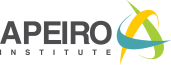

In August 2026, battery electric vehicles accounted for a record 24.9% of all new car sales in Australia, officially outselling petrol-only vehicles for the first time. If you've spent years on the workshop floor, you've likely felt the ground shifting beneath your hoist. It's frustrating to feel stuck in basic servicing roles when you know the industry is moving toward complex electronic systems and high-voltage drivetrains. This is why many experienced mechanics are now looking toward the diploma of automotive technology to future-proof their careers. You shouldn't let your hard-earned expertise go unrecognised while the technology evolves without you.
We understand that formalising years of workshop experience can feel like a daunting task. This guide shows you exactly how the AUR50216 qualification transforms skilled mechanics into master technicians and workshop managers. You'll learn how to gain high-level diagnostic skills and qualify for senior roles that often command salaries around $93,000 per year. We will explore the Trade Pathways for Experienced Workers (TPEW), the impact of the latest EV trends, and how this nationally recognised qualification provides the bridge to your next professional milestone.
Key Takeaways
- Understand how the shift from traditional mechanical repairs to complex electronic diagnostics makes advanced training essential for modern workshops.
- Discover the core competencies required to master engine management systems and evaluate faults in heavy-duty vehicle components.
- Learn how to fast-track your progress through Recognition of Prior Learning (RPL), using your existing workshop experience to secure a diploma of automotive technology.
- Identify the clear career pathways available to graduates, moving from the workshop floor into high-level diagnostic or management positions.
- Explore how specialised trade pathways for experienced workers can help you formalise your skills and achieve a nationally recognised qualification.
Why the Diploma of Automotive Technology is Essential in 2026
The AUR50216 qualification represents the absolute peak of vocational automotive training in Australia. In 2026, our industry has moved far beyond simple component replacement. We've seen a massive shift in vehicle complexity, where mechanical systems are now entirely integrated with sophisticated software. While many professionals started their journey with a Certificate III in Light Vehicle Mechanical Technology, that entry-level qualification is now just the starting line. Ambitious technicians recognise that the diploma of automotive technology is what separates a standard mechanic from a master diagnostic specialist.
There's an urgent, growing demand for experts who can do more than just turn a wrench. Modern workshops need leaders who can handle complex technical reporting and system-wide analysis. If you want to move into high-responsibility roles, you need to prove you can manage the data and diagnostic protocols that define the current landscape. This diploma provides that proof, giving you the authority to oversee workshop operations and mentor junior staff with confidence.
The Evolution of the Automotive Technician
Modern vehicle sub-systems now require a level of analytical thinking that was once reserved for engineers. You can't rely on "trial and error" when dealing with integrated software networks and advanced Automotive engineering principles. Systematic evaluation is the new standard. Employers prioritise diploma holders because they possess the critical thinking skills to diagnose intermittent faults that baffle less experienced staff. It's about moving from being a "parts changer" to becoming a forensic analyst of automotive systems.
Meeting National Industry Standards
Holding a nationally recognised qualification ensures your skills are respected and valid across every state in Australia. The diploma of automotive technology aligns perfectly with the latest Australian automotive safety and environmental regulations, which have become significantly stricter in 2026. This training ensures you're equipped to handle the rigorous compliance requirements of a modern, eco-conscious workshop environment. It provides a level of professional security and standing that years of uncertified experience simply cannot provide. The AUR50216 Diploma of Automotive Technology stands as the definitive benchmark for senior technical and workshop leadership roles in 2026.
Core Competencies: Mastering Advanced Diagnostic and Systems Analysis
The diploma of automotive technology shifts your focus from the "how" of mechanical repairs to the "why" of system failures. It moves you deep into the world of petrol and diesel engine management systems, where you'll learn to evaluate how minute sensor data influences overall vehicle performance. This isn't just about reading error codes. It's about understanding the underlying logic of the Engine Control Unit (ECU) and how it interacts with every other component. You'll also tackle heavy-duty systems, analysing complex faults in braking, steering, and suspension that directly impact vehicle stability and safety.
A comprehensive Automotive Technology program highlights these high-level analytical skills as the essential toolkit for a master technician. Beyond the tools, you'll develop the ability to conduct technical research and present detailed reports to clients or workshop owners. This professional edge is what prepares you for the responsibility of designing or modifying automotive electrical and mechanical systems to meet specific performance standards. If you're looking to formalise these high-level skills, you can explore our Trade Pathways for Experienced Workers to see how your current expertise fits into this advanced framework.
Advanced Electrical and Electronic Diagnostics
Modern vehicle architecture is a sophisticated web of communication. To find the root cause of complex electrical gremlins, you must master networked systems like CAN bus and LIN bus. The diploma teaches you to use advanced oscilloscopes and scan tools for deep-system analysis. You'll move from basic wiring repairs to evaluating integrated circuits. This transition is vital because modern vehicles rely on seamless data flow between dozens of separate control modules. Mastering this allows you to diagnose faults that standard diagnostic tools might miss.
Transmission and Driveline Evaluation
Drivetrains are more integrated than ever before. You'll learn to analyse performance issues across automatic, manual, and hybrid transmission systems. This includes diagnosing subtle driveline vibrations and mechanical failures that often stump less experienced mechanics. A major focus is the evaluation of the interaction between the transmission control module and the engine ECU. Understanding this synergy is crucial for maintaining the efficiency and longevity of modern drivetrains, especially as hybrid technology becomes more common in the Australian market.
Fast-Tracking Your Qualification: RPL and Trade Pathways
If you've spent years diagnosing complex faults and managing workshop workflow, you've already mastered many of the skills required for the diploma of automotive technology. Starting from scratch in a classroom doesn't make sense for a senior mechanic. This is where Recognition of Prior Learning (RPL) becomes a game-changer. It's a formal process that acknowledges the high-level expertise you've gained on the tools. By proving your existing technical skills, you can significantly reduce both the time and cost involved in securing your qualification.
The Trade Pathways for Experienced Workers (TPEW) program is specifically designed for professionals like you. It focuses on identifying the gaps between your current knowledge and the requirements of the AUR50216 training package. You can find the Official Government Qualification Details to see how the units are structured. For many, this pathway turns years of uncertified workshop experience into a diploma of automotive technology, providing a nationally recognised credential that opens doors to management and specialist diagnostic roles.
The RPL Assessment Process Explained
The assessment isn't about sitting exams. It's about showing what you can do. You'll need to gather a portfolio of evidence that demonstrates your proficiency in advanced diagnostics and systems analysis. This typically includes work samples, detailed technical reports you've written for customers, and references from previous employers or workshop managers. An expert assessor then reviews this evidence, mapping your real-world skills directly to the national training standards. It's a collaborative process where the goal is to learn how to formalise your trade experience without redundant training.
Balancing Work and Upskilling
We know that taking time off work isn't always an option in a busy Australian workshop. That's why flexible delivery options are central to this pathway. You can continue earning while you learn, applying new diagnostic theories to the vehicles on your hoist every day. This immediate application reinforces your skills and benefits your employer simultaneously. RPL is a rigorous assessment of competence, not a shortcut to a qualification. It requires genuine proof that you meet the high standards expected of a modern master technician. This approach ensures your diploma carries the full weight of industry authority when you apply for that next promotion.
Career Outcomes: From the Workshop Floor to Automotive Management
Completing the diploma of automotive technology is the most effective way to shift your career from general repairs to high-level technical and management roles. While a qualified mechanic in Australia typically earns between $80,000 and $90,000 per year, moving into specialist positions often brings a significant increase in both salary and professional standing. It's about moving away from repetitive servicing and toward the complex problem-solving that modern workshops desperately need. This qualification prepares you for a range of diverse career paths, including:
- Senior Diagnostic Technician: Leading the charge on the most difficult electronic and mechanical faults.
- Automotive Workshop Manager: Overseeing daily operations, managing staff, and ensuring profitability.
- Service Advisor: Acting as the technical bridge between the workshop floor and the customer.
- Fleet Manager: Organising the maintenance and compliance for large-scale vehicle fleets.
- Technical Trainer: Sharing your master-level expertise with the next generation of apprentices.
For those with an entrepreneurial spirit, the diploma provides the essential technical foundation needed to start and successfully run your own automotive business. You'll have the confidence to handle high-end diagnostics that smaller, generalist shops often have to turn away. It's the difference between being a worker in a shop and being the person who understands the entire system.
Specialising in Advanced Diagnostics
The role of the "Master Tech" is becoming the backbone of modern dealerships and independent performance centres. High-end European workshops, in particular, require technicians who can navigate complex software environments and integrated vehicle networks. This level of expertise is exactly what allows you to command the average Diagnostic Technician salary of approximately $93,000 per year. If you're currently working on the floor, it's the perfect time to bridge the gap from Certificate III to Diploma level and secure your place in these elite environments.
Stepping into Leadership Roles
Transitioning into management requires a different set of skills than those used on the hoist. You'll need to master workshop workflows, staff mentoring, and customer relations while keeping an eye on the bottom line. The diploma of automotive technology provides the "business logic" that complements your mechanical expertise. You'll learn how to produce technical reports, manage workshop finances, and implement safety protocols that meet 2026 industry standards. It's a pathway that turns a skilled tradesperson into a strategic leader who can drive a workshop's success with precision and authority.
Apply for the TPEW pathway to fast-track your management career
Study the AUR50216 Diploma of Automotive Technology with Apeiro Institute
Choosing where to study is just as important as the qualification itself. At Apeiro Institute, we've built a learning environment that bridges the gap between classroom theory and the fast-paced reality of a modern workshop. Our diploma of automotive technology program is designed to be practical, relevant, and deeply aligned with what Australian employers are looking for in 2026. We don't just teach you the units; we prepare you for the high-pressure diagnostic environments and leadership responsibilities we've discussed throughout this guide.
Our trainers are the heartbeat of our institute. They aren't just instructors; they act as mentors who bring years of current, hands-on experience from the Australian automotive industry directly to your learning sessions. This means you aren't just learning from a textbook. You're getting real-world insights into the latest EV trends and diagnostic challenges that are happening on workshop floors right now. This local expertise ensures our graduates are truly job-ready and possess the confidence to handle high-level technical analysis from the moment they receive their qualification.
Supportive Learning for International Students
For those joining us from overseas, we provide dedicated, student-centred support to help you meet CRICOS requirements while you gain world-class automotive skills. Our community is incredibly diverse, with students from over 38 different nationalities learning and growing together across our national campus network. This creates a rich, inclusive atmosphere where everyone feels welcome and supported. We understand the unique challenges of studying in a new country, and our team is here to guide you every step of the way. If you want to see how this fits into the broader picture of Australian education, check out the complete guide to vocational courses for international students.
Ready to Advance Your Career?
Taking the next step in your professional journey shouldn't be a complicated or intimidating process. We've streamlined our enrolment for both local trade professionals and international applicants to make it as smooth as possible. We focus on your personal growth and career goals, ensuring you feel secure in your educational choice. If you have years of experience, we recommend starting with a preliminary RPL assessment today. This allows us to recognise your hard-earned expertise and map it against the diploma of automotive technology units. It's time to stop feeling stuck in basic roles and start moving toward that workshop manager or master technician position you've worked so hard to earn.
Secure Your Place at the Top of the Trade
The automotive landscape is changing rapidly. With electric vehicles now making up nearly a quarter of new car sales, the need for master-level diagnostic skills has never been higher. By securing a diploma of automotive technology, you're doing more than just earning a certificate; you're future-proofing your career against a shifting market. You've seen how Recognition of Prior Learning can turn your years on the workshop floor into a nationally recognised qualification, allowing you to step into management or senior technical roles with confidence.
Apeiro Institute is a Nationally Recognised RTO (45394) and CRICOS Provider (03703M). As specialists in Trade Pathways for Experienced Workers, we're here to act as your expert guide. We'll help you bridge the gap between your current experience and your future goals as a workshop leader or master technician.
Your expertise is valuable. It's time to get the professional recognition you deserve and lead the way in the next generation of automotive excellence.
Frequently Asked Questions
What is the difference between a Certificate III and a Diploma of Automotive Technology?
A Certificate III in Light Vehicle Mechanical Technology is the standard entry point for a trade career, focusing on core servicing and repairs. In contrast, the diploma of automotive technology covers advanced diagnostic logic and workshop management. While a Cert III qualifies you to work as a mechanic, the Diploma prepares you for senior roles like Master Technician or Workshop Manager. It involves deeper analysis of integrated vehicle systems rather than routine maintenance.
Can I get my Diploma through RPL if I have 10 years of experience as a mechanic?
You can certainly apply for Recognition of Prior Learning (RPL) if you have extensive workshop experience. Apeiro Institute specialises in Trade Pathways for Experienced Workers (TPEW), allowing senior mechanics to formalise their years of hands-on knowledge. You'll need to provide evidence such as work samples, employer references, and technical reports. This process acknowledges your existing expertise, potentially reducing the units you need to study to secure your diploma of automotive technology.
Is the AUR50216 qualification nationally recognised across all Australian states?
Yes, the AUR50216 is a nationally recognised qualification under the Australian Qualifications Framework (AQF). This means your certification is valid and respected by employers in every state and territory across Australia. Whether you're working in a metropolitan dealership or a regional independent workshop, this diploma provides a consistent benchmark of high-level technical skill. It ensures your expertise meets the rigorous national standards required for senior automotive diagnostic and leadership roles.
What are the entry requirements for the Diploma of Automotive Technology?
To enrol in the AUR50216 qualification, students typically must have completed a Certificate IV level qualification in a relevant automotive field. Common prerequisites include the AUR40216 Certificate IV in Automotive Mechanical Diagnosis or the AUR40816 Certificate IV in Automotive Mechanical Overhauling. These foundations ensure you have the necessary diagnostic background to succeed at the diploma level. International students must also meet specific English language and visa requirements for CRICOS-registered courses.
How long does it take to complete the Diploma if I study full-time?
The full-time course duration for the AUR50216 qualification is 26 weeks, which includes a two-week break. This intensive timeframe is designed to help you gain advanced skills efficiently so you can move into higher-paying roles sooner. The schedule balances theoretical knowledge with practical application, ensuring you're ready for the demands of a modern workshop. For those using the RPL pathway, the time required may be significantly less depending on your documented industry experience.
Does this course cover electric and hybrid vehicle systems?
Yes, modern automotive training packages focus heavily on emerging technologies. The curriculum includes the analysis and evaluation of faults in hybrid and battery electric vehicle (BEV) systems. As these vehicles accounted for nearly 25% of new car sales in August 2026, mastering these high-voltage systems is essential. You'll learn to safely diagnose and repair complex electronic drivetrains, ensuring you remain a valuable asset in an increasingly electrified Australian automotive market.
Will I need to find my own work placement during the course?
Many students are already employed in the industry and use their current workplace for practical components. For those who aren't currently working, Apeiro Institute provides support and guidance to help you find suitable environments to apply your skills. While we don't offer job placement guarantees, our industry-aligned training is designed to make you highly attractive to employers. We focus on ensuring you have the practical vocational outcomes needed to thrive in high-level workshop roles.
What kind of salary increase can I expect after completing my Diploma?
While individual results vary, moving from a standard mechanic role to a Diagnostic Technician can lead to a noticeable pay rise. Industry data from September 2026 suggests that the average salary for a Diagnostic Technician is approximately $93,000 per year. This is a significant step up from the average mechanic salary, which typically ranges between $80,000 and $90,000. Completing your diploma also qualifies you for workshop management positions, which often carry higher earning potential.
Disclaimer
The information provided on this blog is for general informational and educational purposes only. While every effort is made to ensure the accuracy and reliability of the content, the author makes no representations or warranties of any kind, express or implied, about the completeness, accuracy, suitability, or availability of the information contained on this blog.
The views and opinions expressed in blog posts are those of the individual author and do not necessarily reflect the official policy or position of any organization, company, or employer.
This blog may contain links to external websites or third-party content. These links are provided for convenience only, and the author has no control over and assumes no responsibility for the content, privacy policies, or practices of any third-party sites.
Nothing on this blog constitutes professional advice (legal, financial, medical, or otherwise). Readers are encouraged to seek appropriate professional guidance before making any decisions based on the information provided here.
By using this blog, you acknowledge that any reliance on the information is at your own risk.


