

If you’re asking, “Can I work while studying Certificate III in Individual Support?”, the answer depends on your work rights and how you organise study, assessments, paid shifts and placement.
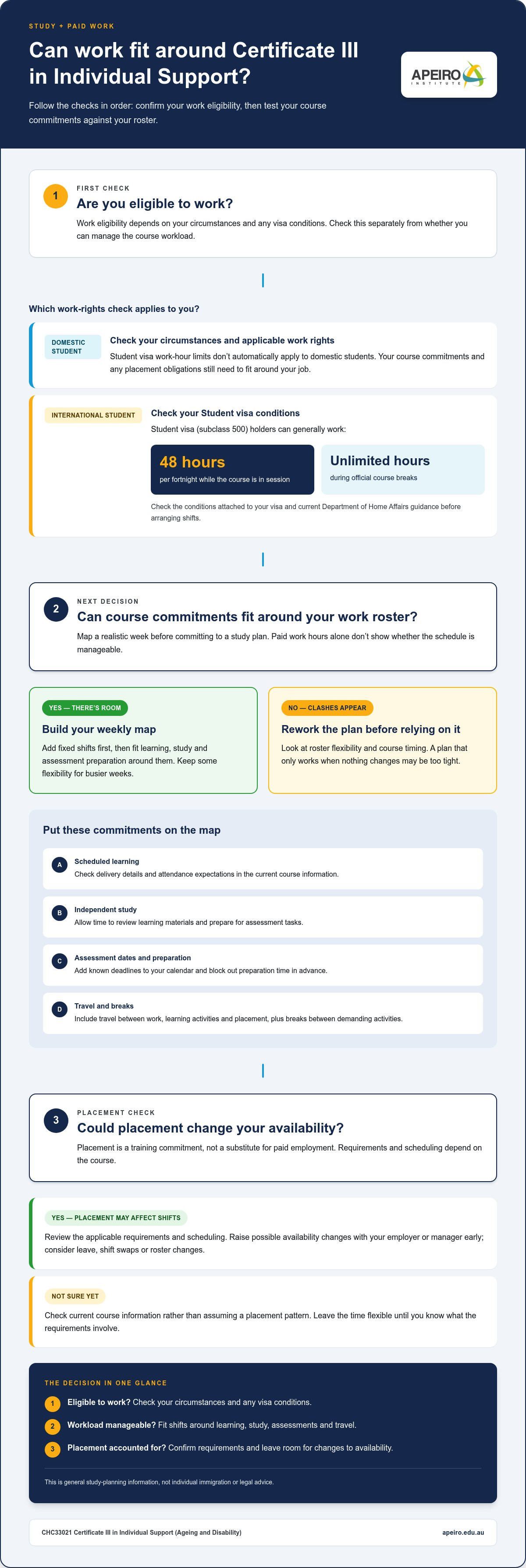
It’s understandable to worry that course commitments could clash with your roster, or that the rules differ for domestic and international students. International students on a Student visa can work up to 48 hours per fortnight while their course is in session, with unlimited hours during official course breaks. Domestic students aren’t subject to those student visa work limits.
This guide explains how work eligibility, study commitments and placement can affect your schedule. It also offers practical steps for building a realistic plan before enrolling. Apeiro Institute offers CHC33021 Certificate III in Individual Support (Ageing and Disability), a qualification to consider as you plan your next steps.
Key Takeaways
- Can I work while studying Certificate III in Individual Support? The answer depends on your work eligibility and whether you can manage the course commitments.
- Map scheduled learning, independent study and assessment deadlines against your usual work roster before committing to a study plan.
- Separate work eligibility from workload, and use official Department of Home Affairs guidance to check current student visa conditions.
- Use a practical checklist to organise work around course activities and applicable placement requirements.
- Explore Apeiro Institute’s CHC33021 Certificate III in Individual Support (Ageing and Disability) as you plan your next steps.
Can you work while studying Certificate III in Individual Support?
Yes, many students combine paid work with study, provided they’re eligible to work and can meet their course commitments. Whether it’s manageable depends on your roster, study habits and the timing of course activities, including any required placement. Regular evening shifts may be easier to plan around than changing shifts that conflict with scheduled learning or practical commitments.
Separate two questions: are you allowed to work, and can you manage the workload? Work eligibility depends on your circumstances and any visa conditions. Capacity depends on the time and energy you can set aside for learning, assessment and practical requirements. This article provides general study-planning information, not individual immigration or legal advice.
In short: Work eligibility determines whether you can work. Your course commitments and available time determine how much work you can realistically balance with study.
What does Certificate III in Individual Support involve?
CHC33021 Certificate III in Individual Support (Ageing and Disability) is a vocational qualification that involves learning and assessment, and may include practical requirements. These activities shape your weekly routine. Before planning shifts around them, review the course information for delivery details, attendance expectations, assessment timing and applicable placement requirements.
Allow for changes in workload from week to week. An assessment deadline may require more preparation time than a quieter period, while practical requirements may affect your availability. Leave some room in your plan instead of treating every study hour as interchangeable.
Does the answer differ for domestic and international students?
Domestic students: Your work eligibility depends on your circumstances and applicable work rights. Student visa work-hour limits don’t automatically apply to domestic students, but course commitments still need to fit around your job, study time and any placement obligations.
International students: Work eligibility may be subject to visa conditions. As at October 2026, Student visa (subclass 500) holders can generally work up to 48 hours per fortnight while their course is in session, with unlimited hours during official course breaks. Check the conditions attached to your visa and current Department of Home Affairs guidance to understand what applies to you before arranging shifts.
For either group, test your plan against a realistic week. Add fixed shifts first, then schedule learning, independent study, assessments and any placement. If placement could change your availability, consider early how you’ll manage that with your employer and other responsibilities. A plan that only works when nothing changes may be too tight.
So, Can I work while studying Certificate III in Individual Support? For many students, yes, but the answer depends on both work eligibility and the practical demands of study. Considering those separately is a useful starting point for deciding whether CHC33021 fits your circumstances.
How study, assessment and placement affect your work schedule
Work hours are only part of the picture. A roster that looks manageable on paper can become difficult when study, assessment preparation, travel and placement compete for the same time. Map course commitments across a typical week, and consider how they might change as you progress.
Paid work hours alone don’t show whether a study plan is manageable. Predictability matters too. Regular shifts may be easier to plan around than a roster that changes at short notice. Travel between work, learning activities and placement also takes time. Leave room for rest, particularly during busy assessment periods.
Which course commitments should you allow time for?
Build your estimate from current course information rather than assumptions about a standard week. Check scheduled learning and attendance expectations, independent study, assessment dates and preparation, and any practical requirements. The mix and timing can vary with delivery arrangements, so use the schedule and assessment information for the course you’re considering.
Assessments can take more time than completing the final task. You may need to review learning materials, gather information or practise skills beforehand. Add known deadlines to your calendar and block out preparation time in advance. This makes it easier to see where study can fit alongside your shifts.
How can placement fit around paid employment?
Placement is a training commitment, not a substitute for paid employment. Its requirements and scheduling depend on the course, so review the current information before making firm arrangements. If placement may affect your availability, raise it with your employer or manager early. Advance notice gives you more time to consider leave, shift swaps or roster changes.
Don’t plan around an assumed placement pattern. Find out what the applicable requirements involve, then compare them with your roster and other responsibilities. If dates are not yet part of your plan, leave that time flexible rather than treating it as available for paid shifts.
A weekly map can help you spot clashes early:
- Mark fixed commitments: Add confirmed shifts, scheduled learning and known assessment dates.
- Allow for the in-between time: Include travel, preparation and breaks between demanding activities.
- Flag periods that could change: Note placement or assessment periods that may need different work arrangements.
- Review the plan: Compare it with current course information and update it when dates or commitments change.
Review the CHC33021 Certificate III in Individual Support (Ageing and Disability) course information alongside your roster. This can help you understand the commitments to account for as you organise work and study.
Work rules and study flexibility: what to check before you enrol
Separate your right to work from the time and energy you’ll need for training. Work rules depend on your circumstances, while workload depends on course activities and your other responsibilities. Course delivery arrangements may affect how you organise your week, but they don’t change conditions attached to a student visa.
Visa conditions determine whether, and under what limits, you can work. Course requirements determine the time needed to complete your training. Both matter, but they’re different questions. Use this comparison as a starting point, then check the official information that applies to you.
| Student group | Work eligibility to check | Workload to plan |
|---|---|---|
| Domestic students | Check your personal circumstances and any conditions affecting your right to work. Student visa work limits don’t automatically apply to domestic students. | Compare your roster with scheduled learning, assessment deadlines, practical requirements and personal responsibilities. |
| International students | Check the conditions attached to your own visa and current Department of Home Affairs guidance. As at October 2026, Student visa (subclass 500) holders can generally work up to 48 hours per fortnight while their course is in session, and unlimited hours during official course breaks. Verify how the rules apply to your visa. | Plan study and applicable course requirements separately from permitted work hours. Course flexibility doesn’t increase a visa work-hour limit or change when it applies. |
What should international students check about work rights?
Start with your visa grant details and the conditions attached to your visa. Then review the Department of Home Affairs’ current Student visa (subclass 500) information before relying on a work-hour limit or break condition. Rules can depend on your circumstances, so general information isn’t individual immigration advice.
Check how the Department defines your course’s in-session periods and official breaks, and confirm the current rules before arranging shifts. If your visa conditions or circumstances are unclear, seek appropriate immigration advice rather than relying on a general article.
What should domestic students check about course commitments?
For domestic students, focus on the actual course schedule and your capacity to meet it. Compare learning activities, assessment preparation and applicable placement with paid shifts, caring responsibilities and travel time. A roster that fits during a quieter study period may become difficult around an assessment or practical requirement, so allow room for changes.
Use current course information to understand the expected activities and timing. If you have fixed work or family commitments, mark them alongside course dates and consider where you could adjust your routine if demands overlap. Work rights and available study time are separate considerations. Having permission to work doesn’t mean every workload will be manageable.
How to plan work around Certificate III study: a practical checklist
A useful plan accounts for real commitments, not just the hours you hope to have free. Work through this checklist before settling on a study routine. Use current course information for dates and requirements, and revisit your plan if your circumstances change.
- Confirm your work eligibility. Check the conditions that apply to your circumstances. If you’re an international student, review your own visa conditions and current Department of Home Affairs information before accepting or changing shifts.
- Gather course details. Set aside the current timetable, assessment information and placement requirements. Note fixed learning activities, deadlines and practical commitments before deciding how much work you can take on.
- Mark immovable commitments first. Add confirmed work shifts, scheduled learning, assessment dates and caring responsibilities to a weekly calendar. This shows where study time is genuinely available.
- Block out regular study time. Reserve manageable periods for reading, assessment preparation and practical learning. Include travel and rest, so your calendar reflects a week you can sustain.
- Plan for placement early. Check the applicable requirements and dates using current course information. If placement may affect your availability, discuss it with your employer or manager as early as practical, and explore leave, shift swaps or roster changes where needed.
- Make a back-up plan. Decide what you could adjust if a shift changes, assessments cluster together or caring responsibilities arise. Options might include swapping a shift, temporarily reducing availability or rearranging study blocks, while keeping any visa conditions in view.
Build a realistic weekly work-and-study plan
Put fixed commitments in your calendar first, then add study blocks around them. If a shift finishes late, for example, avoid scheduling demanding assessment work immediately afterwards. Choose a more suitable time and protect it. Leave buffer space for travel, roster changes and everyday responsibilities. A plan with breathing room is more likely to hold up during a busy week.
What if your work roster changes or study gets demanding?
Review your calendar when new assessment dates or placement information becomes available. If the plan is becoming difficult to manage, adjust your work availability early rather than waiting for commitments to collide. Course staff can explain relevant study-planning processes. International students should also ensure any work changes stay within their verified visa conditions. Use this plan to assess both your eligibility and your capacity before committing.
Explore CHC33021 Certificate III in Individual Support (Ageing and Disability)
Start CHC33021 Certificate III in Individual Support with a clear plan
Studying while working can be achievable, but a confident decision starts with understanding both your work rights and your course commitments. Before you begin, consider whether your work pattern can accommodate learning, assessment preparation and any applicable placement. Also think about how you’ll respond if your roster changes or personal responsibilities take up more time than expected.
Apeiro Institute offers CHC33021 Certificate III in Individual Support (Ageing and Disability). Reviewing the course information alongside your calendar can help you judge whether the qualification fits your circumstances.
Questions to resolve before committing to study
A practical plan doesn’t need to predict every change, but it should account for fixed commitments and leave room to respond when plans shift.
- Can your work pattern accommodate study? Compare your shifts with current course information about learning activities, assessment and applicable placement. Include travel and caring responsibilities.
- Have you checked your work eligibility? If you’re an international student, review the conditions attached to your visa and current Department of Home Affairs guidance. A general summary isn’t a substitute for checking what applies to you.
- Is there room for deadlines and rest? Consider how you’ll manage busier assessment periods without relying on every available hour, and decide what could change if an unexpected responsibility arises.
If one answer is uncertain, gather current information and revise your calendar before making a commitment. For example, if a fixed shift overlaps with a known course activity, identify a realistic alternative rather than hoping the clash will resolve itself.
How to take the next step with confidence
Review the course information and note any questions that affect how you’ll organise work and study. Check the course activities, assessment information and applicable placement requirements, then compare them with your roster and responsibilities. You don’t need a perfect schedule from day one, but you do need a realistic starting point and a way to adapt it.
Use your work eligibility, available study time and course commitments to decide whether CHC33021 is right for you. Exploring the course is a practical next step.
Explore CHC33021 Certificate III in Individual Support (Ageing and Disability)
Make your next step a confident one
Can I work while studying Certificate III in Individual Support? The answer depends on more than fitting study around a roster. It also means choosing a plan you can adjust as course commitments, work and life change. Picture a typical busy week and ask whether it leaves room for learning, deadlines and rest.
Start by reviewing the CHC33021 course information, noting what you need to understand about study commitments, and comparing those details with your responsibilities. A considered first step can make returning to study feel more manageable.
With a realistic plan in place, you can move towards study with a clearer sense of what works for you.
Frequently Asked Questions
Can I work full-time while studying Certificate III in Individual Support?
It may be possible, but full-time work can leave limited time for course activities and assessment preparation. Compare your roster with scheduled learning, deadlines and practical requirements before taking on a full work week. Rotating shifts, for example, may make it harder to attend fixed activities or maintain a regular study routine. If your calendar has no room for rest or unexpected changes, consider whether another work pattern would be more sustainable.
How many hours can international students work while studying in Australia?
As at October 2026, Student visa (subclass 500) holders can generally work up to 48 hours per fortnight while their course is in session, and unlimited hours during official course breaks. Your own visa conditions and the Department of Home Affairs’ current guidance are the key sources for your situation. Check how hours are counted before accepting extra shifts, and don’t assume a course timetable changes your visa conditions.
Can I work while completing placement for Certificate III in Individual Support?
Possibly, but placement may take up time you’d usually allocate to paid shifts, so plan around its actual schedule and requirements. If placement is unpaid and a mandatory part of your course, it generally isn’t counted towards the student visa work limit; other unpaid work may be treated differently. International students should verify the current rule with the Department of Home Affairs. Discuss likely availability changes with your employer early.
Is Certificate III in Individual Support flexible enough to study while working?
It depends on the course’s current delivery arrangements and your work pattern. Don’t assume that “flexible” means fully self-paced or that every activity can be completed around shifts. Check which activities have set times, how assessment deadlines are organised and what practical requirements apply. Then test those details against a real week in your calendar, including travel and responsibilities outside work and study.
What happens if my work roster clashes with a class or placement?
Act as soon as you spot the clash. Compare the dates with your course information, then discuss possible roster changes with your employer or manager. If the issue concerns a course requirement or process, raise it with relevant course staff early rather than missing a commitment and hoping it can be fixed later. Avoid assuming a replacement time is available.
Can domestic students work while studying Certificate III in Individual Support?
Yes, domestic students can generally work while studying, subject to their circumstances and any conditions that apply to them. The main planning question is whether your job leaves enough time for course activities and personal responsibilities. If you have caring commitments on certain days, for instance, add them to your calendar alongside shifts and study tasks before deciding how much extra work you can reasonably accept.
Does studying Certificate III in Individual Support guarantee a job?
No. Completing a qualification doesn’t guarantee employment, and hiring decisions are made by employers. The course can help you develop relevant knowledge and skills for individual support work, but job outcomes can depend on vacancies, role requirements, experience and an employer’s selection process. Treat study as a step towards building your capabilities, not a promise of a particular role or employment result.
Explore Apeiro Institute’s CHC33021 Certificate III in Individual Support (Ageing and Disability) and plan your next step.

Disclaimer
The information provided on this blog is for general informational and educational purposes only. While every effort is made to ensure the accuracy and reliability of the content, the author makes no representations or warranties of any kind, express or implied, about the completeness, accuracy, suitability, or availability of the information contained on this blog.
The views and opinions expressed in blog posts are those of the individual author and do not necessarily reflect the official policy or position of any organization, company, or employer.
This blog may contain links to external websites or third-party content. These links are provided for convenience only, and the author has no control over and assumes no responsibility for the content, privacy policies, or practices of any third-party sites.
Nothing on this blog constitutes professional advice (legal, financial, medical, or otherwise). Readers are encouraged to seek appropriate professional guidance before making any decisions based on the information provided here.
By using this blog, you acknowledge that any reliance on the information is at your own risk.


