

What jobs can I get after a CHC33021 traineeship? The qualification can prepare you to apply for entry-level individual-support roles, but it does not guarantee a particular job. Your day-to-day duties will depend on the vacancy and may differ between residential care, disability services, and support in people’s homes or communities.
Job titles often overlap, so compare the work involved rather than relying on a title alone. You might enjoy helping older people with daily routines, supporting people with disability to build independence, or providing practical assistance in the community. Your strengths and preferred work style can help you narrow down these options.
This guide outlines common roles linked to CHC33021, the settings where they may be found, and the work each can involve. You’ll also learn how to assess a vacancy, match it to your skills, and consider further study as a possible next step.
Key Takeaways
- What jobs can I get after a CHC33021 traineeship? Consider roles such as aged care worker, disability support worker, personal care assistant, home care assistant, or community support worker.
- Compare residential care, in-home support, and community-based services to understand how the setting affects the work.
- Think about the tasks and interactions you enjoy, along with your communication skills, reliability, patience, and ability to maintain respectful boundaries.
- Before applying, compare each vacancy’s duties and selection criteria with your training and practical experience.
- Use your career goals to decide whether to pursue an entry-level role or explore further study.
What jobs can you get after a CHC33021 traineeship?
A CHC33021 traineeship can prepare you to apply for individual-support roles such as aged care worker, personal care assistant, or disability support worker. Depending on the vacancy and your skills, you could also consider home care assistant or community support roles. To answer “What jobs can I get after a CHC33021 traineeship?”, compare the responsibilities in each vacancy, not just the job title.
Titles and duties vary between employers and services. A personal care assistant in one workplace may perform tasks similar to an aged care worker elsewhere. The setting, the people receiving support, the position description, and workplace procedures all shape the work. The qualification develops relevant skills, but it does not guarantee a particular job.
A structured qualification such as CHC33021 Certificate III in Individual Support (Ageing and Disability) develops nationally recognised individual-support skills. The role you pursue will depend on how your training and experience align with the employer’s requirements.
Aged-care and personal-care roles
Aged care workers and personal care assistants support older people with daily living. Depending on the role, tasks may include assisting with personal care, meals, mobility, or other routines. Good support respects each person’s preferences, privacy, and dignity. How you offer assistance matters as much as completing the task.
In residential aged care, you work within a shared service environment and support residents as part of a team. At home, assistance takes place in someone’s own living space and may focus on agreed daily routines. Neither setting is automatically a better fit. Check the position description and workplace procedures to understand the duties.
Disability, home-care and community-support roles
Disability support workers may assist people to take part in everyday activities, make choices, and build independence. Community support roles can involve helping someone participate in activities or access their local community. The balance between practical assistance and community participation depends on the person’s goals and the service.
Home care assistants and some disability support workers provide one-to-one support in a person’s home. This may involve helping with daily living while respecting the person’s routines and choices. Before applying, consider whether the setting and tasks suit your strengths, and compare the requirements with your training and experience.
Person-centred support means working with someone in a way that respects their choices, needs, and goals. It calls for clear communication, reliability, and respectful boundaries. These qualities help you provide support without taking over, whether you’re assisting with a daily routine or helping someone participate in the community.
How do CHC33021 jobs differ across care settings?
The setting can change the rhythm of a support role, even when the aim is to assist someone in a way that respects their needs and choices. CHC33021 covers individual support in ageing and disability contexts, but the qualification alone does not define your daily tasks. Those depend on the position, the people you support, workplace procedures, and any relevant support plans.
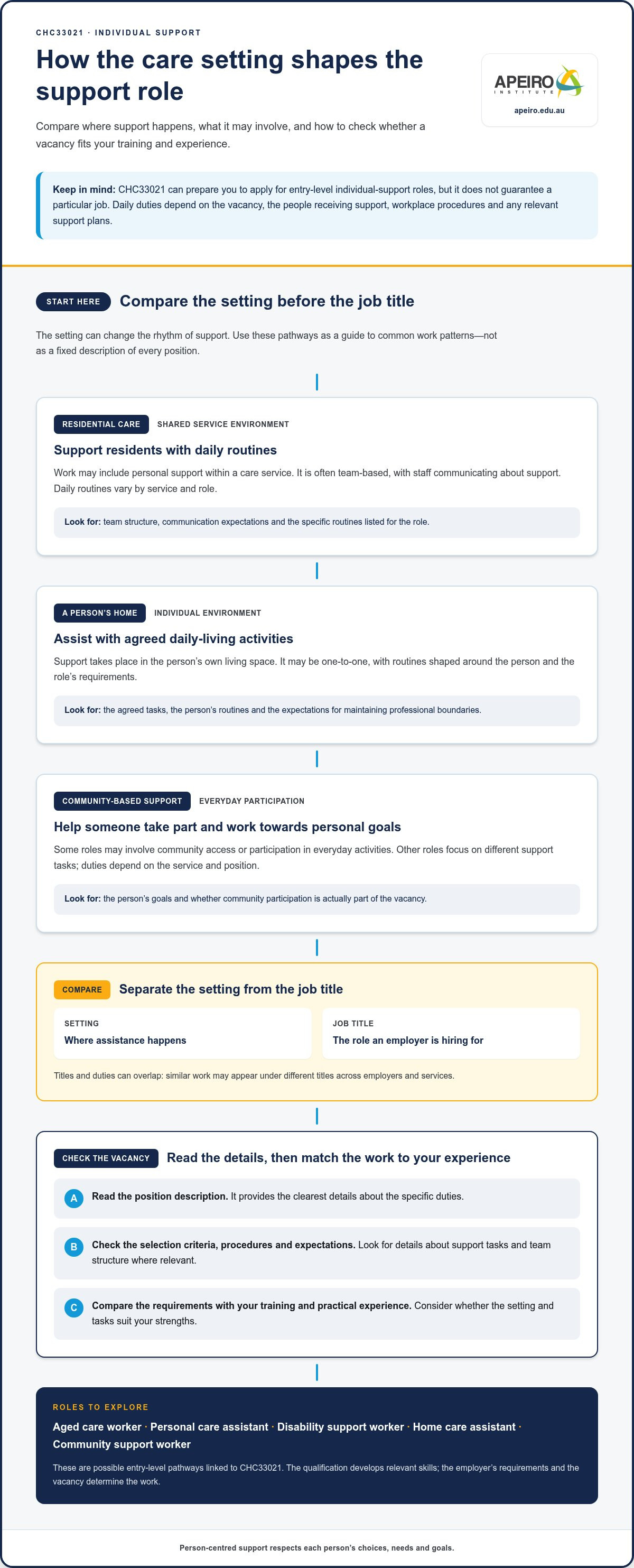
Use this comparison to understand common work patterns, not as a fixed description of every job. A vacancy’s position description provides the clearest details about its specific duties.
| Setting | Typical support focus | Work-style considerations |
|---|---|---|
| Residential care | Supporting residents with daily routines and personal support within a care service. | Work is often team-based, with staff communicating about support. Daily routines vary by service and role. |
| A person’s home | Assistance with agreed daily-living activities in the person’s own environment. | Support may be one-to-one, with routines shaped around the person and the role’s requirements. |
| Community-based support | Helping a person participate in everyday activities and work towards personal goals. | Some roles may involve community access; others focus on different support tasks. Duties depend on the service and role. |
Residential care compared with support at home
In residential care, you’re part of a workplace team supporting people in a shared service environment. Communication with colleagues helps staff follow support plans and coordinate their work. At home, assistance takes place in an individual’s own space. You may work more directly with one person, supporting agreed routines while maintaining professional boundaries.
Neither setting guarantees a predictable daily schedule. Before applying, look for details about support tasks, team structure, and expectations in the position description. Similar job titles can involve different work across employers and services.
Disability support compared with community-based support
Disability support may focus on a person’s independence, choices, and personal goals, with assistance shaped around their everyday life. Community-based support describes where some assistance happens, rather than one specific job. A disability support role might include community participation, but that is not a duty in every position.
A support setting tells you where assistance happens; a job title tells you the role an employer is hiring for. Keep this distinction in mind as you compare vacancies. Read the listed duties and selection criteria, then consider how they fit your experience and the support approach you want to develop.
As you explore the CHC33021 Certificate III in Individual Support (Ageing and Disability), consider which setting and support approach match your interests. You can also review the current qualification details on training.gov.au and compare them with the duties and requirements in Australian vacancies.
Which CHC33021 career pathway could suit your strengths?
To choose a direction, compare three things: the setting you prefer, the support tasks you’re comfortable with, and how you like to interact with people. These preferences can help you explore aged care, disability, home care, or community support vacancies. They are a starting point, not a guarantee that a particular role will be available or suit you in practice.
Think about what helps you do your best work. Do you enjoy coordinating with a team, building a consistent one-to-one support relationship, or helping people take part in community activities? The question “What jobs can I get after a CHC33021 traineeship?” is easier to answer when you focus on the day-to-day duties you’re prepared to take on, rather than making assumptions about an entire sector.
Match your preferred work style to a setting
Team-based settings may suit people who value regular communication with colleagues and shared routines. One-to-one support may appeal if you’re comfortable focusing on an individual’s needs and following their established preferences. Community-facing work can involve adapting to different activities and environments. These are broad patterns, not rules. The actual role and service shape the working style.
Consider the support tasks as well as the setting. For example, think about your comfort with personal care, assisting with daily activities, and supporting someone to make their own choices. Reflect on how you balance:
- Patience: Can you give someone time and support at their pace?
- Communication: Can you listen carefully, share information clearly, and work respectfully with others?
- Reliability: Can people count on you to follow agreed routines and workplace procedures?
- Boundaries: Can you offer practical support while respecting a person’s privacy, independence, and choices?
You don’t need to fit one fixed profile. Consistency can be valuable in ongoing support relationships, while flexibility helps you respond appropriately when needs or plans change.
Check the actual duties before applying
Once a role interests you, read the position description closely. Look for the work setting, daily tasks, reporting responsibilities, and required skills. A title such as “support worker” may cover different duties between employers, so use the vacancy details rather than the title alone to picture the work.
Compare the requirements with the units you completed and the practical experience gained during training. Note where your learning relates to the role’s tasks, and prepare clear examples of what you’ve practised. If a requirement is unfamiliar, identify it before applying so you can make an informed decision about your readiness.
Employers set the scope and selection criteria for each vacancy. Your preferences can guide which opportunities you explore, but the position description shows what that particular job involves. Use it to assess whether the role fits your strengths and current skills.
What affects your chances of getting a job after CHC33021?
Completing CHC33021 does not guarantee a specific job. The qualification is nationally recognised and can build skills relevant to individual-support roles, but employers select applicants against the requirements of each vacancy. Your practical competence, communication, and ability to explain how you provide respectful support can all matter during recruitment.
Holding the qualification and being the right applicant for a particular role are different things. A vacancy may call for experience, skills, or checks that vary between employers, services, and Australian jurisdictions. Read the criteria carefully and assess how your training and experience relate to the work described.
What a qualification can and cannot promise
CHC33021 provides a structured foundation for support work. It does not guarantee an interview, an offer, or a particular job title. Employers make decisions based on their role requirements and selection process, as well as how applicants demonstrate their suitability.
A qualification can prepare you for relevant work, but employment depends on the role’s requirements and an employer’s selection decision. Keep this in mind as you consider roles and prepare applications. It recognises the value of your training while acknowledging that outcomes depend on more than holding a certificate.
A practical checklist before applying
Use this checklist to make each application more focused:
- Read the role description: Note the setting, expected tasks, reporting responsibilities, and essential criteria. Don’t assume a familiar job title means the duties will be the same everywhere.
- Match your skills to the criteria: Review the units you completed and your practical experience. Identify relevant examples, such as following instructions, assisting respectfully with daily activities, or communicating with someone about their preferences.
- Prepare evidence, not just claims: Think of specific examples that show reliability, clear communication, and person-centred practice. Explain what you did and how you respected the person’s choices and boundaries.
- Check role-specific requirements: Screening, clearances, first aid, and other prerequisites can depend on the position and jurisdiction. Use current official government guidance for the relevant state or territory, and follow the employer’s stated requirements.
- Review your application: Make sure your resume and responses address the selection criteria, and describe your training and experience accurately.
Practical competence involves more than knowing the steps in a task. Employers may also look for sound communication, care in following workplace procedures, and an understanding of when to seek guidance. If a role asks for something you haven’t done, be honest about your experience and focus on the skills you can demonstrate.
A considered application helps an employer see how your skills relate to their needs. It cannot guarantee a result, but it gives you a clear way to present your preparation and decide whether a vacancy is a good match.
Where can CHC33021 take you next?
After completing CHC33021, you could explore entry-level roles such as aged care worker, personal care assistant, disability support worker, home care assistant, or community support worker. The best next step depends on the work you want to do and how your skills match a vacancy’s requirements. If you’re still asking, “What jobs can I get after a CHC33021 traineeship?”, use real job descriptions to compare options rather than treating a qualification as a promise of employment.
The CHC33021 Certificate III in Individual Support (Ageing and Disability) provides a structured learning pathway for developing individual-support skills. Completing it can help you prepare for relevant work, while your experience, preferences, and an employer’s selection criteria shape which opportunities are a suitable match.
Build experience and consider further study
Workplace experience can help you identify which tasks and settings suit you. As you gain confidence, notice whether you prefer team-based routines, one-to-one assistance, or supporting people to take part in everyday community activities. Reflecting on these experiences can help you make more informed decisions about the roles you pursue.
Further study is another option, not a required step or automatic promotion. If you want to build broader community services knowledge and explore work with wider responsibilities, you could consider a relevant qualification such as the Diploma of Community Services. Compare its learning outcomes with your goals and the positions you’d like to work towards before deciding whether it’s the right move.
Experience and study can complement each other, but neither determines a single career outcome. Your interests may change as you learn more about the work. That can help you focus future applications or decide whether additional learning would support your direction.
Choose a next step that fits your goal
Start with a practical comparison. Choose a few vacancies that interest you, note their settings and duties, then compare their essential criteria with your skills and experience. If you’re considering study, read the course information and consider how its content connects with the roles you’re aiming for. This helps you make a choice based on your priorities, rather than a general idea of what a qualification should lead to.
Apeiro Institute is a Registered Training Organisation, RTO 45394, offering CHC33021 and related vocational pathways. Explore the individual-support training option and consider how it aligns with your next learning goal. Training can support your preparation for a career step, without guaranteeing a particular job or employment outcome.
Explore individual support training with Apeiro Institute
Take your next step with confidence
Your next move doesn’t need to map out your whole career. Start by choosing a direction that interests you, then compare the actual duties and requirements with the skills you’ve developed. If you’re still wondering, “What jobs can I get after a CHC33021 traineeship?”, use the question to guide your research, not to limit your options. The right role may become clearer as you gain experience and learn more about the work.
If you’d like to build your skills through structured study, Apeiro Institute offers the CHC33021 Certificate III in Individual Support (Ageing and Disability). Apeiro is a Registered Training Organisation, RTO 45394. Explore the training and consider how it could support your goals, without assuming it guarantees a particular job.
Every considered step helps you move towards work that feels meaningful and well suited to you. Shape your pathway one decision at a time.
Frequently Asked Questions
What jobs can I get after a CHC33021 traineeship?
CHC33021 may support applications for individual-support roles, including aged care worker, personal care assistant, disability support worker, home care assistant, and community support worker. If you’re asking, “What jobs can I get after a CHC33021 traineeship?”, compare actual vacancies rather than relying on titles alone. Note whether a role focuses on personal care, daily routines, or community participation, then check that the duties align with your training and experience. Completing the traineeship does not guarantee employment.
Can I work in disability support after completing CHC33021?
Yes, disability support is one pathway you could explore, as CHC33021 covers individual-support learning relevant to disability contexts. A vacancy may ask for experience, checks, or other requirements in addition to the qualification. Before applying, read the role description and identify any criteria you’ll need to address. Requirements can vary by role and jurisdiction, so use current employer information and relevant official guidance to understand what applies.
Can I work in aged care with a CHC33021 traineeship?
Yes, aged care is a common employment pathway associated with the Certificate III in Individual Support. Depending on the employer and setting, roles may include aged care worker or personal care assistant, with duties involving support for daily living. Compare the vacancy’s responsibilities with what you’ve learnt and practised during training. Check any stated screening requirements against current guidance, as requirements can differ between positions.
Does completing a CHC33021 traineeship guarantee me a job?
No. Completing CHC33021 does not guarantee a job, interview, or particular role. The qualification provides recognised learning, while employers make hiring decisions based on the vacancy’s criteria and each applicant’s suitability. Practical experience and communication can help you explain how you’d approach the work. Prepare a specific example of following instructions or responding respectfully to someone’s preferences, then connect it clearly to a selection criterion.
What is the difference between a CHC33021 traineeship and a course?
CHC33021 is the qualification, while a traineeship is a workplace-based training arrangement linked to completing a qualification. Course delivery can take different forms, so learners may have different schedules and workplace arrangements. Before you begin, review the written training details to understand how learning, assessment, and workplace practice fit together. This helps you plan around your responsibilities and understand what participation involves.
Can I study further after CHC33021?
Yes, further study may be an option, depending on your goals, the course pathway, and its entry requirements. You might choose to build workplace experience first or consider a related qualification to broaden your community services knowledge. The CHC52025 Diploma of Community Services is one possible pathway to investigate. Compare its course information with the roles or responsibilities you’re interested in, check the current entry details, and explore Apeiro Institute’s individual-support training to take your next learning step.

Disclaimer
The information provided on this blog is for general informational and educational purposes only. While every effort is made to ensure the accuracy and reliability of the content, the author makes no representations or warranties of any kind, express or implied, about the completeness, accuracy, suitability, or availability of the information contained on this blog.
The views and opinions expressed in blog posts are those of the individual author and do not necessarily reflect the official policy or position of any organization, company, or employer.
This blog may contain links to external websites or third-party content. These links are provided for convenience only, and the author has no control over and assumes no responsibility for the content, privacy policies, or practices of any third-party sites.
Nothing on this blog constitutes professional advice (legal, financial, medical, or otherwise). Readers are encouraged to seek appropriate professional guidance before making any decisions based on the information provided here.
By using this blog, you acknowledge that any reliance on the information is at your own risk.


